What is a Four-Quadrant Annual Conference?

Hollywood figured it out for movies.
Associations can steal the formula for events.
Hollywood has a name for the highest grossing and rarest kind of movie.
The four-quadrant movie.
It’s a movie that targets the four major demographics of movie goers.
Males over 25.
Females over 25.
Males under 25.
Females under 25.
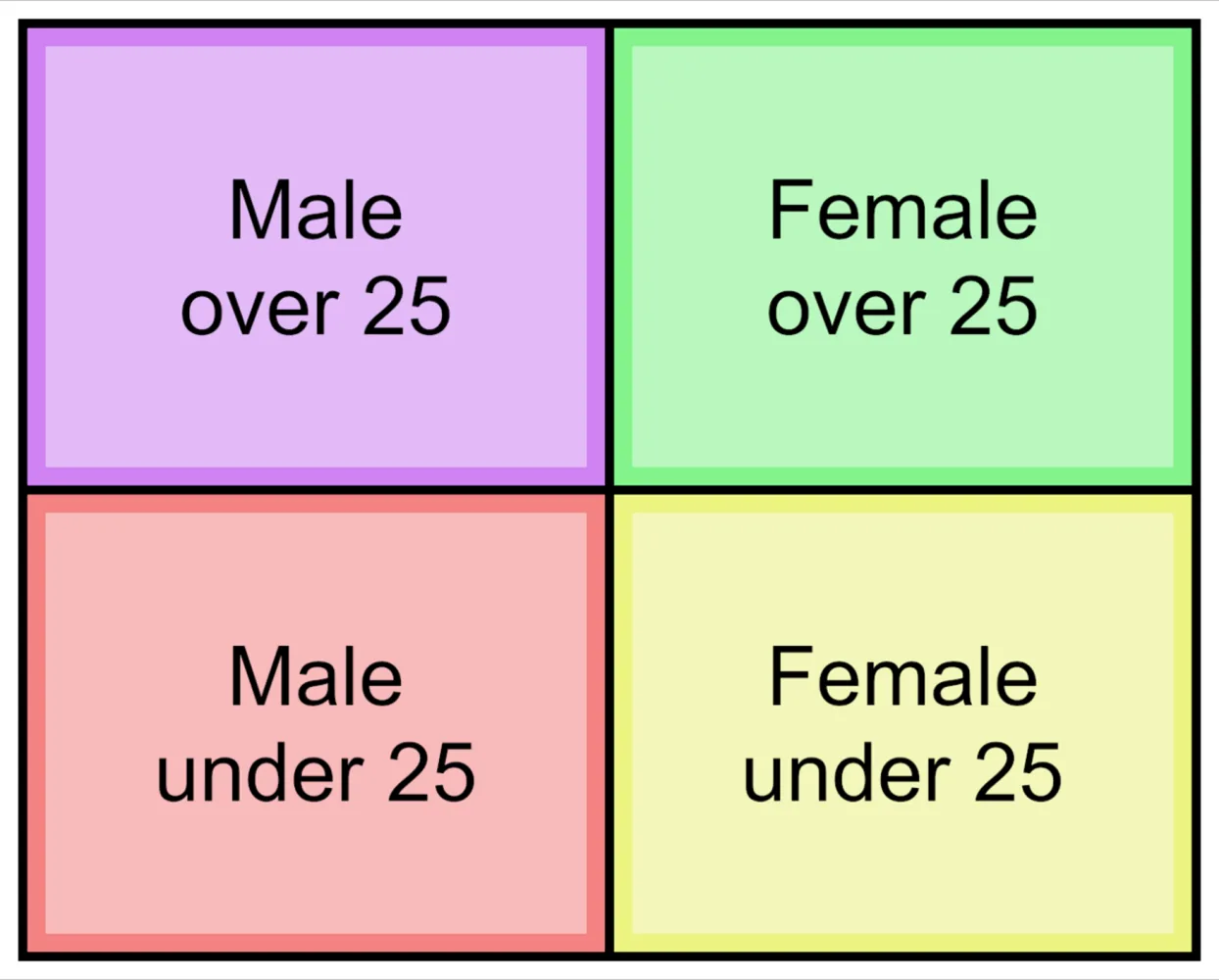
A Four Quadrant movie has something for everyone at the same time, in the same movie.
Titanic is the classic example. But there is no one genre that 4 quadrants movies live on.
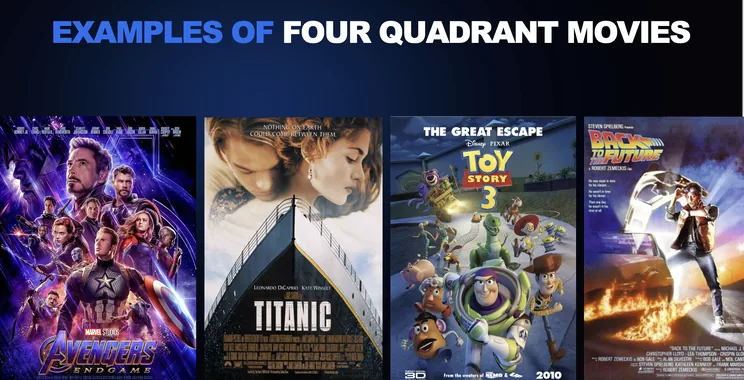
A disaster movie for one quadrant.
A romance for another.
A cartoon movie with princesses and unicorns yet another.
I haven't seen the new Spider-Man:Brand New Day movie yet, but I'd be willing to bet the farm it's a 4 quadrant movie.
Here's the part most people don't know.
Studios almost never greenlight a movie that only serves one quadrant. Two quadrants is typically the minimum to get made.
You see more indy films serving one quadrant only.
And the bigger the budget, the more quadrants the film has to win.
But that's not the interesting part.
The interesting part is what happens when a movie goes four-quadrant.
It stops being a movie and becomes an event.
People plan around it.
People see it together, across generations.
And when the sequel is announced, nobody has to be convinced to come back.
Now here's the question I want to put in your head: What kind of movie is your annual conference?
Most Annual Conferences Are One-Quadrant Movies
For most associations, the annual conference is the single biggest deliverable for their members.
In many associations, the annual conference represents more than half the operating budget.
For plenty of members, it's the only touchpoint all year.
And most of them are programmed like a one-quadrant movie.
Wall-to-wall education for the learners.
Or a packed reception schedule for the connectors.
Or an awards gala for the honorees.
One quadrant, served beautifully.
Three quadrants, left hoping something happens in the hallway.
Then registration softens, and we survey members about what topics they want, and we can't figure out why the answers don't fix anything.
The real question isn't
"What content do our members want?"
The real question is:
Who are the four audiences sitting in the same ballroom, and what did we build for each of them?
The Four Quadrants of an Event
Here's where events differ from movies. Hollywood's quadrants are demographics. Age and gender.
For events, demographics tell you almost nothing.
Two 55-year-old executives at the same table can be at that event for completely different reasons.
One is hunting for strategy. One is there because these are her people.
The four quadrants of an event aren't demographics. They're the four kinds of values people seek that live at different stages.
This comes from more than 60 years of adult development research, which I've spent years translating into something you can actually put on an agenda.
I call it "Value Stages" and the more you build your event around value stages the more Stage Intelligence in you build.
Each quadrant walks in with a different subconscious question.
Value Stage 1 of 4: Self-Centric
These people attend your event primarily for Status & Stuff.
Their question: "What do I get?"
This attendee wants access to something other people don't get.
The test: would someone post about your event to people who aren't there?
One important caveat that changes everything: status does not mean expensive. A behind-the-scenes tour beats an expensive generic giveaway. Access is the currency, not budget.
Important research note. At this stage, almost no one will write on their post-conference evaluation that they would like more stuff and cooler locations. They understand it's a social faux pas to do so. But they DO care about it. Don't believe me? Look at what pictures your attendees of your last conference posted online. Nuff said.
Value Stage 2 of 4: Group-Centric
These people attend your event for Belonging.
Their question: "Who do I belong with?"
And no, networking doesn't cover this. I explained this in depth in this article on Networking is NOT Belonging.
Networking says "I met three useful contacts." Belonging says "I found my people."
The test: where in your event does someone go from "I'm attending this conference" to "these are my people"?
Creating a clear line in the sand of who you are and who you are not is paramount for this value stage.
Value Stage 3 of 4: Skill-Centric
These people attend your event for Content.
Their question: "What can I learn?"
This attendee has enough friends and doesn't need another Yeti water bottle.
This stage is making a HUGE trade-off to attend your event.
"Is this event valuable enough for me to let three days worth worth of work pile up while I'm here?"
The test: what can your members do differently Monday morning directly because of this event?
Our data at Talkadot backs this up hard. Across hundreds of thousands of audience feedback submissions at association events, presentations on sales and revenue earn a 67.9% "would definitely attend again" rating.
Motivation and mindset keynotes: 59.3%, the lightest pull of any major topic.
Motivation is more for the keynote and plenary sessions to keep the energy going, but for the concurrent sessions, practical wins by a landslide.
Value Stage 4 of 4: The Achiever
This person shows up for Strategy & Vision.
Their question: "Where is our industry going?"
This is your senior leader who doesn't need another how-to session.
Value Stage 3 asks "how can I do this better?" Value Stage 4 asks "Should we even be doing this anymore and what should we be doing instead?"
The test: does your event give them a conversation they can't get anywhere else?
Two Facts You Have to Hold at the Same Time
- Fact one: your members tell you the truth in surveys.
- Fact two: your members hide the truth in surveys.
Both are true.
Members are brutally honest about their frustrations. But nobody, and I mean nobody, writes "I come for the free stuff and the photo ops" on a member survey. It doesn't match the professional image they need to present.
So Value Stage 1 never shows up in your data, and if you program only from surveys, you'll starve an entire quadrant.
The survey tells you what people will admit. The camera roll tells you what they value.
Why This Requires Intentionality
Here's the trap, and I say it with love because we all fall into it.
Every one of us has a default quadrant. It's the value we personally seek, and we unconsciously design entire events around it.
The education-minded director builds an 8am-to-9pm session schedule.
Then attendees go home and say the best part was the conversation with Susan in the hallway. And we treat Susan in the hallway as an accident. The hallway may be the product.
We just never designed it on purpose. So here it is in one sentence:
Look at your agenda and point to where each quadrant intentionally happens.
Not "we value community." Point to it.
Where is Status & Stuff?
Where is Belonging?
Where is Content?
Where is Strategy?
If you can't point to it, you haven't designed it. You're hoping. And hope is not an event strategy. Your events that crushed? I'd bet they hit all four quadrants, whether you planned it or not.
The ones that fell flat were over-indexed on one. The four-quadrant checklist just makes the magic repeatable.
We Just Tested This With the People Who Run Association Events
Last week I spent half a day working through this framework with dozens of executive directors of state societies of association executives, the people who collectively serve more than 14,000 association professionals.
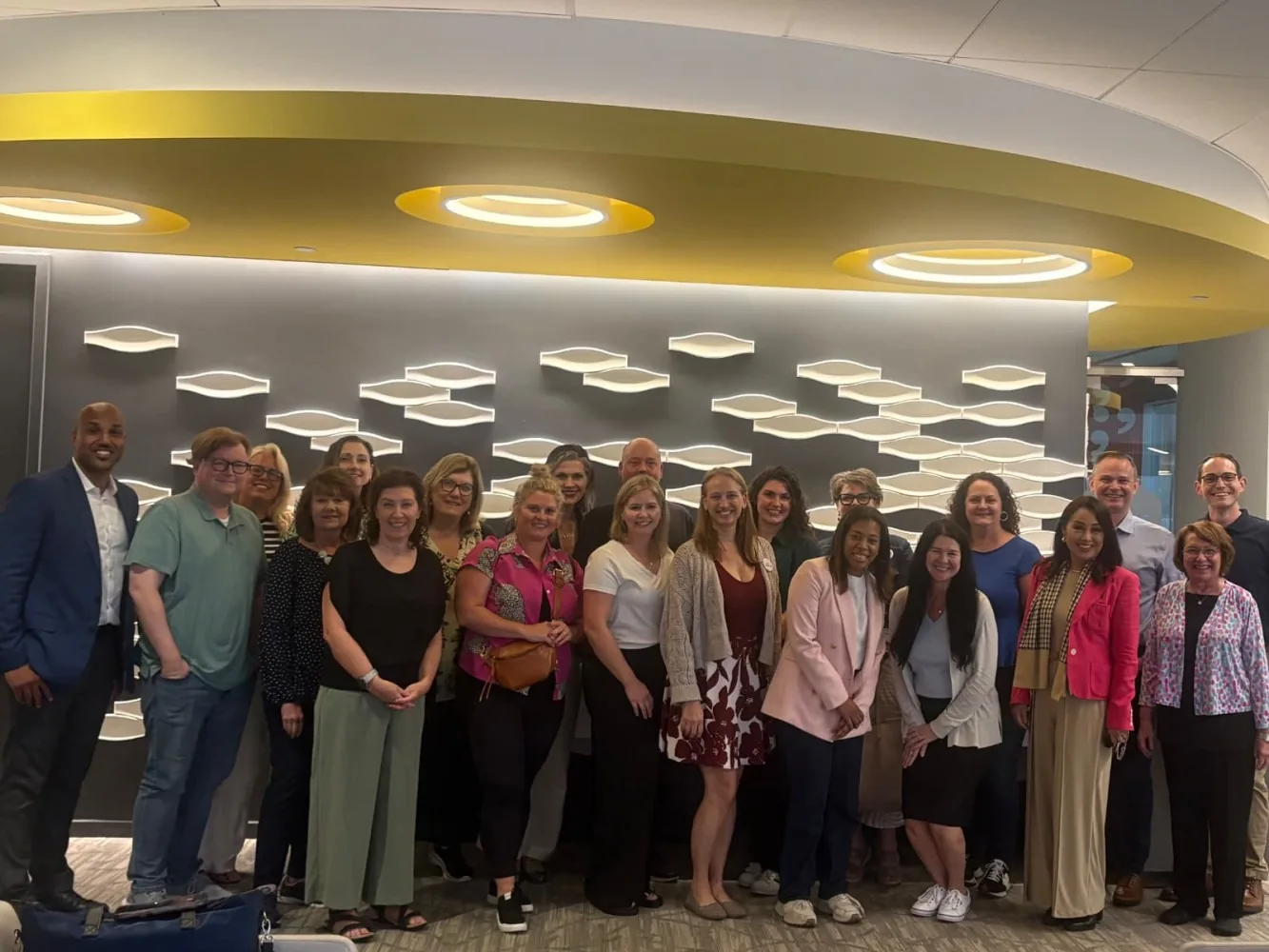
This was part of something I'm proud to make official: Talkadot is partnering with the, Association Leadership Coalition (Formerly known as ASA, Association Societies Alliance) to improve how the entire association event space gets designed, measured, and booked.
Why does this partnership matter?
Hollywood gets audience data. Streaming platforms get audience data. Associations get a post-event survey with a low response rate of only the people who hate you are love you.
At Talkadot and ALC, we're changing that.
And here's the thing about that room of executive directors: we didn't just teach. We crowdsourced. Every idea got captured, and we're turning all of it into something bigger. The Playbook Is Coming Together with ALC, we're building the Association Event Design Playbook: featuring dozens of field-tested ideas from the people running these events right now, each one with a big-budget version and a shoestring version.
We covered how each association is building out each quadrant of the value stages.
A "status" example that I loved is that one association put a sticker on every hotel room mirror that said "You look fabulous. Can't wait to see you downstairs." It had the Association's name and the sponsor's name (who paid for the production and cost to have hotel staff place it on the mirrors...we break down all of this too)
It cost the association nothing (in fact it generated revenue) and created a flood of social media posts from the attendees.
Nick Friedman and Omar Soliman invited me to present at their COLLEGE HUNKS HAULING JUNK AND MOVING annual conference they call Reunion. Something they did that I loved was giving five-year franchise owners a custom letterman jacket, earned on stage, they many wear at future events. A glass award dies on a shelf. A wearable wins. CHHJ is probably one of the best case studies for creating a winning culture for a company, period.
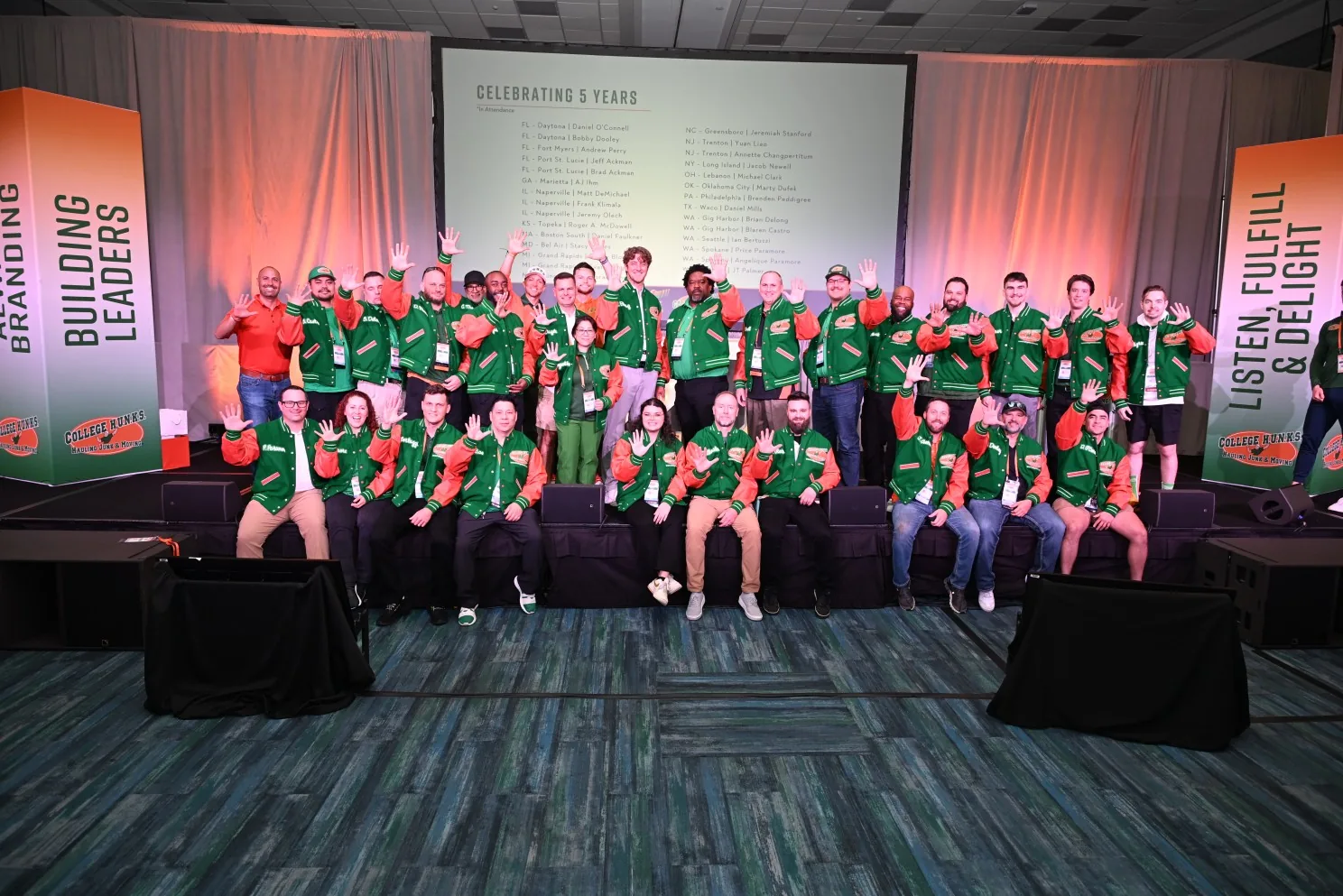
This is an incredible way of creating belonging through what I call the "Belonging Equation" More on that for another post.
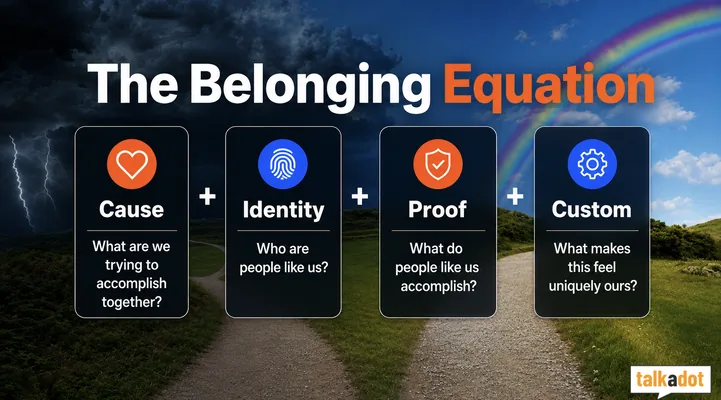
The Bigger Pattern
Zoom out and you'll see why this matters beyond events. Every medium you touch is reorganizing itself around what each individual person values.
Spotify doesn't hand every listener the same playlist. Netflix doesn't show every viewer the same row of movies. Even LinkedIn, where you're reading this, rebuilt its entire feed on large language models this year so it can understand what each professional actually finds valuable, meaning over keywords, and serve them more of it.
Personalization at scale is the defining strategy of this decade.
Live events are the last mass medium still programmed one-size-fits-all.
You can't run an algorithm on a ballroom. But you don't need one.
You need four questions, asked on purpose, every time you build an agenda:
- What do they get?
- Who do they belong with?
- What can they learn?
- Where are we going?
That's a four-quadrant event.
The Payoff
Four-quadrant movies get sequels, because audiences demand them.
Four-quadrant events get something better: members who register for next year before they've unpacked from this year.
Members who recruit their coworkers. Members who would miss it if it disappeared.
Because an event people attend is never. thegoal. The goal is building an experience people would miss.
If you plan annual conferences (or know someone who does) my question to you is this, (and I actually want to know, seriously):
What's the one thing at your event your members would genuinely miss if it disappeared?
If it's really good, you just might get an invitation to have it published in our industry wide report.
Arel Moodie is a frequent keynote speaker at association annual conferences, and the co-founder of Talkadot, the platform that captures verified audience feedback at live events, and a partner of the Association Leadership Coalition . The Association Event Design Playbook, built with executive directors from state societies across the country, is coming soon. Subscribe to this newsletter for more content like this.