How Much Does a Keynote Speaker Cost? (2026 Fee Benchmarks)
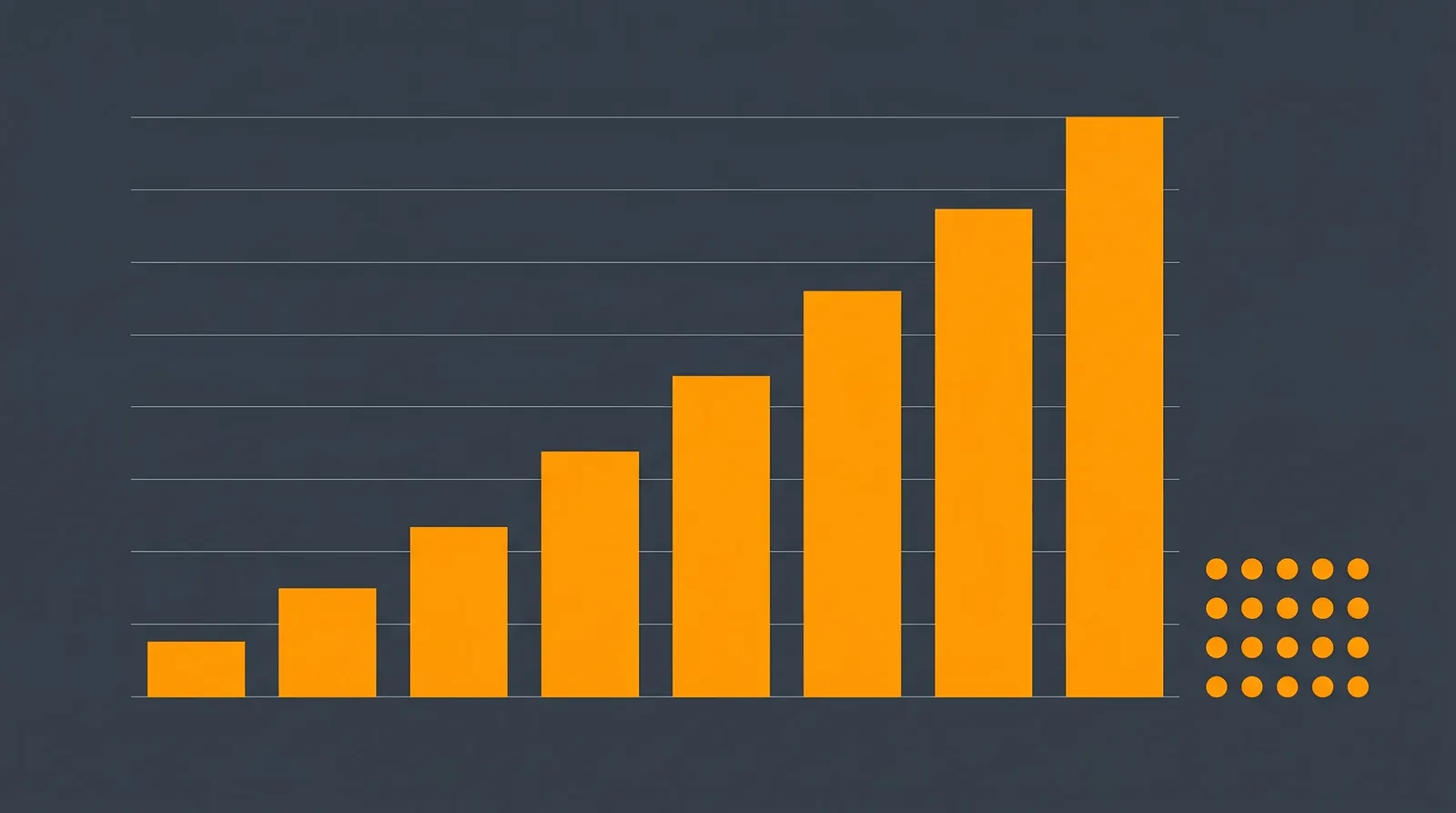
A keynote speaker costs $2,500 at the market median, with the 25th percentile at $1,000, the 75th at $5,000, and the 90th at $10,000. Those benchmarks have held every year since 2023. Corporate event planners should anchor at $4,500. Roughly 1 in 22 fee-logging speakers reaches $20,000 or more per event.
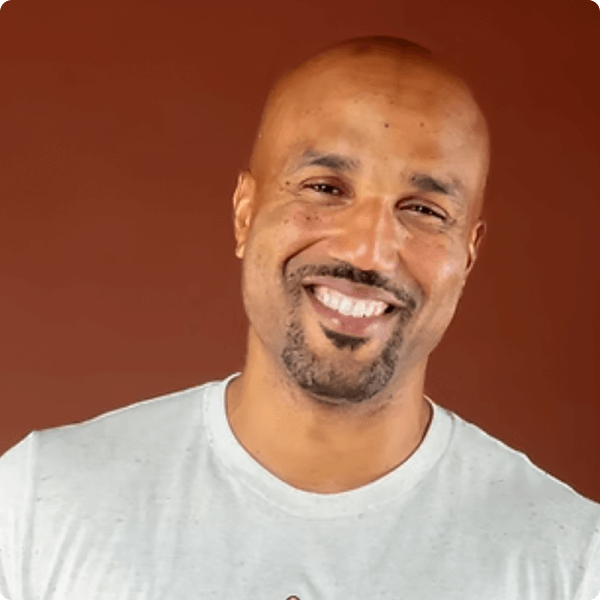
I am Arel Moodie, cofounder of Talkadot. I have given more than a thousand paid talks over 19 years. Talkadot is a platform that helps event planners find and book professional speakers using real audience feedback data, and helps speakers capture audience feedback, testimonials, and leads through a simple QR code. The fee data below is from Talkadot's State of the Speaking Industry 2026 report, built on more than a million verified audience survey responses across tens of thousands of speaking engagements (January 2023 through March 2026). Every number in this guide traces to that dataset. No ranges invented. No bureau estimates. Just what the platform actually shows.
The Honest Answer Is Wider Than Most Pages Tell You
Most pages that answer this question give you a range. "$5,000 to $50,000 depending on the speaker." That is technically true and completely useless.
Here is the actual structure.
The speaker fee market has five tiers. The majority of professional speakers - the ones with paying clients, verified audience data, and a legitimate track record - sit in the $1,000 to $10,000 range. The marquee and celebrity tier sits above that. The emerging speaker tier sits below.
Talkadot platform data shows the percentile breakpoints have not moved in three years. A thousand dollars at the 25th percentile. Twenty five hundred at the median. Five thousand at the 75th. Ten thousand at the 90th. (SOSI-005, SOSI-029)
The $20,000-plus tier is a structurally stable 5 percent of fee-logging speakers. It has not grown since 2023. Roughly 1 in 22 speakers reaches it. (SOSI-030)
That matters for a planner. It means the ceiling is not opening up. The fee inflation you may have seen in the last few years has come from bureau commission stacking and post-COVID demand surges, not from the underlying speaker fee structure shifting.
The 5 Fee Tiers
Not every speaker sits in the same bucket. Here is how the tiers break down, what you get at each level, and where the data anchors them.
Tier 1: $500 - $2,500 (Emerging and Local Experts)
Local subject-matter experts, topic specialists with 10 to 20 paid talks under their belt, and newer pros building their track record. Strong value per dollar if you can find one with verified audience-feedback data. The risk is lower proof of performance at scale.
The 25th percentile ($1,000) and median ($2,500) both sit in this range. Most of the speaker market is here.
Audience quality check: Ask for at least 15 to 30 post-event survey responses per recent talk. Fewer than 10 responses at this tier is a flag, not a data point.
Tier 2: $2,500 - $10,000 (Working Professionals)
This is the Goldilocks Zone for most mid-market corporate and association planners. Speakers in this range have real audience data, repeat-booking history, and enough experience to handle a live room.
The 75th percentile ($5,000) and 90th percentile ($10,000) anchor this tier. Talkadot data shows speakers with 150 or more post-event survey respondents earn a $7,500 median, placing them firmly in this range. (SOSI-018)
The bombshell finding: audience quality scores cluster at 99-plus across all fee tiers. Ratings do not differentiate speakers. A Tier 2 speaker with 150 audience responses often produces the same audience satisfaction signal as a Tier 4 speaker with 12 responses. The proof is in the number who responded, not the rating itself.
Tier 3: $10,000 - $25,000 (Established Names and Niche Authorities)
Speakers who have either built a known brand in their niche (bestselling book, major media feature, specific industry authority) or who work heavily in topics like Performance Management where demand concentrates.
Performance Management commands a $10,000 median fee on the Talkadot platform. The category is small, so the signal is preliminary, but it is the highest-paid niche on the platform. (SOSI-013)
Bureau representation starts here. When you book through a bureau at this tier, expect the speaker's net fee to be in the $7,000 to $17,000 range with the bureau adding 20 to 30 percent to your invoice.
Audience quality check: You should be able to get a clear audience-feedback track record at this price point. If the bureau or speaker cannot produce it, ask why.
Tier 4: $25,000 - $75,000 (Bureau-Represented, Recognized Names)
Speakers with national name recognition, major keynote credits (Fortune 500 conferences, national association meetings), and typically bureau-exclusive representation. The 20 to 30 percent bureau commission at this tier represents a real dollar amount - $5,000 to $22,500 added to your cost on top of the speaker's net fee.
Most mid-market planners do not need to spend in this range. Talkadot data shows audience satisfaction scores do not increase as fees increase past $10,000. You are paying for name recognition and risk reduction, not for a measurably better audience experience.
Tier 5: $75,000 and above (Marquee and Celebrity)
CEOs of major public companies, bestselling authors with national media footprints, former heads of state, Olympic gold medalists. This tier operates through exclusive bureau arrangements.
This guide is not about Tier 5. If your budget is here, call Harry Walker, CAA Speakers, or Washington Speakers Bureau. If your budget is not here, the rest of this guide is where your decision lives.
2026 Benchmark Data: What You Should Expect to Pay
The most useful number is not the market-wide median. It is the median for your segment.
Median fees by buyer segment (Talkadot State of the Speaking Industry 2026)
| Buyer segment | Median fee |
|---|---|
| Corporate Teams | $4,500 |
| Government | $4,000 |
| Associations | $3,215 |
| Technology | $3,000 |
| K-12 Education | $3,000 |
| SMBs | $3,000 |
| Nonprofits | $2,450 |
| Higher Education | $2,200 |
| Health & Wellness | $1,600 |
| Startups | $1,050 |
Source: Talkadot's State of the Speaking Industry 2026, based on more than a million verified audience survey responses across tens of thousands of speaking engagements. Median fees by segment: SOSI-006.
If you are a corporate event planner, $4,500 is your anchor. The market-wide 90th percentile is $10,000 (SOSI-005), so if a bureau quotes you $25,000 for a mid-market keynote, you are paying well above the band where the audience data says the value sits. You can usually find a speaker whose feedback you can actually audit inside that range.
Government planners: Talkadot has 150-plus events across 90-plus government speakers, which makes the $4,000 median and $10,000 at the 90th percentile a sample you can take seriously. (SOSI-007)
Startup planners: the $1,050 median is real, but at this level you are in a thin tier. A workshop format from the same speaker at a reduced fee often outperforms a keynote on audience-satisfaction-per-dollar.
Talkadot is free for event planners. See fee data and verified audience scores side by side at talkadot.com/find-a-speaker.
How topic specialization affects the fee you pay
Speakers focused on two topic categories earn roughly 50 percent more per event than speakers spread across five or more. (SOSI-010)
What that means for you: a speaker with eight topics listed on their website is probably priced below market for their actual quality. A speaker with two topics listed is probably priced at or above market for their positioning.
AI speaking is the outlier. The fee spread from the 25th to the 90th percentile is roughly $15,000 - some AI speakers charge under $2,000, others command $17,000 for the same topic label. Domain specificity is the variable. An AI speaker who applies AI to healthcare, or to financial services, or to supply chain, is in a different pricing tier than a generic AI speaker. (SOSI-011)
What Is Actually Included in the Fee (and What Is Not)
Most planners receive a quote and assume it is all-in. It is not.
A standard speaker fee typically includes: - The talk itself (agreed length, agreed topic) - One pre-event call (15 to 30 minutes) for logistics and context
A standard speaker fee typically does NOT include: - Travel, hotel, and ground transportation (can add $500 to $3,000 for domestic) - Custom content development beyond the speaker's existing material - Video recording rights (often priced separately, $500 to $2,500) - Post-event audience survey deployment and data sharing - A dedicated speaker-host introduction and close - A workshop or breakout session the day after the keynote
When you receive a quote, ask the speaker or bureau explicitly: "What is included in this fee, and what will be billed separately?" The answer tells you whether the $8,000 quote is really $8,000 or closer to $11,500 when travel and rights are added.
The Bureau Commission Math: What You Actually Pay vs What the Speaker Gets
In my 19 years in this industry, planners tell me bureau commissions typically run 20 to 30 percent of the speaker fee. The bureau charges it to you, not to the speaker. The speaker quotes their fee. The bureau adds the commission on top.
Here is what the math looks like at three price points.
| Speaker's quoted fee | Bureau commission (25%) | Your invoice | What speaker nets |
|---|---|---|---|
| $5,000 | $1,250 | $6,250 | $5,000 |
| $10,000 | $2,500 | $12,500 | $10,000 |
| $20,000 | $5,000 | $25,000 | $20,000 |
The commission is structural. It is not negotiable in most bureau arrangements. It is also rarely shown as a line item on the invoice - the invoice quotes the gross amount.
To be clear about how Talkadot works: Talkadot is free for event planners, and Talkadot earns a 20 to 30 percent take rate on the speaker side when a booking runs through the platform. The difference from a bureau is not the absence of a fee. It is that you see a speaker's real audience-feedback data before you book, rather than taking curation on trust.
What you get for the bureau commission: - Bureau vetting and curation - Logistical backstop (the bureau handles contracts, travel, and the "speaker calls in sick" contingency) - Legal protection if something goes wrong - Relationships with speakers who do not take direct inquiries
What you do not get: - Pricing transparency - Verified audience-feedback data on the speaker's recent talks - The ability to compare fees across speakers in a structured way
For mid-market events ($2,500 to $10,000 speaker fee range), most planners can vet candidates themselves using audience feedback data. Talkadot shows verified audience-feedback data alongside speaker fees, which is the vetting infrastructure most mid-market planners need to book direct with confidence. For high-stakes events where the bureau backstop is worth the commission, that is the right call.
Negotiation Levers
You can negotiate keynote speaker fees. Most planners do not know which levers work.
What does not move the number much
- Asking for a lower fee without giving anything. Speakers, and bureaus representing speakers, discount less than most buyers expect.
- Referencing a competing quote without a specific number. Vague negotiating signals are ignored.
What moves the number
Format trade. A keynote-plus-workshop bundle is often within 10 to 20 percent of the keynote-only price. The speaker gets more stage time, a deeper relationship with your organization, and a higher chance of being rebooked. That is worth something to them. Talkadot data shows speakers with repeat bookings are 2.5 times more likely to offer both a keynote and a workshop, which tells you format flexibility is common at this tier. (SOSI-015)
Multi-event commitment. If you can offer two or three events in the same year (different divisions, regional chapters, a follow-up workshop), you have real negotiating power. Speakers price volume differently. The first event is priced at the market rate. The second and third can come in at 20 to 40 percent below.
Calendar timing. Q1 and Q4 are peak booking periods. June, July, and August are thin. Booking an August event in May will get you a different answer than booking a November event in September.
Virtual delivery. Virtual keynotes typically run 20 to 40 percent below in-person fees. No travel cost, shorter format, lower production burden. If your event can go virtual or hybrid for the keynote portion, the savings are real.
Inclusions, not just dollars. A post-event audience feedback data clause, custom content development, or extended Q&A can be traded against fee. The speaker may be unwilling to lower the headline fee but willing to add $2,000 worth of inclusions at no additional cost.
When to Spend More vs When to Spend Less
If you have booked a speaker who looked strong on paper and underdelivered in the room, the fee was not the problem. The problem was no verifiable audience data before you signed the contract.
Spending more makes sense when: - The event has C-suite or board attendance where the speaker is a reputational signal, not just content delivery - You need a speaker with verifiable credentials in a specific regulated industry (healthcare, financial services, law) - The bureau backstop is worth the commission because a failure would damage internal relationships - A named speaker will drive registrations (this is the one scenario where name recognition has measurable ROI)
Spending less makes sense when: - The audience will respond to content quality and delivery, not to name recognition - You have time to vet candidates yourself through a marketplace with audience feedback data - You are buying for a recurring event and want a relationship, not a transaction - The talk objective is skill transfer rather than inspiration. Training and workshop formats average a deeper repeat-booking relationship than keynotes. Training rebooks at 2.6 events per relationship on average; workshops at 2.1. (SOSI-016, SOSI-001)
The honest framework: if a speaker's audience-feedback data at $5,000 is stronger than a speaker's audience-feedback data at $15,000, the $5,000 speaker is the better investment for your audience. The fee does not equal the outcome.
Last-Minute Bookings: The Rush Premium
Booking a speaker inside 30 days of your event typically adds a 10 to 30 percent premium on top of the quoted fee. The reasons:
- Travel costs spike inside 30 days (domestic flights, last-minute hotel blocks)
- Custom content development time is compressed
- The speaker has already committed to preparation for their existing calendar
If you are filling a cancellation gap, have a number ready. "We need someone for [date] and our budget is $X including travel" is a faster conversation than "what is your fee?"
Alternatives when you are inside 14 days: local speakers (travel cost is near zero), virtual delivery (removes the travel problem entirely), and speakers listed on marketplaces with calendar visibility. Talkadot shows speaker availability directly, which removes the back-and-forth that kills last-minute bookings.
How Much Does a Keynote Speaker Cost: FAQ
What is the average keynote speaker fee in 2026?
The market-wide median keynote speaker fee is $2,500, based on Talkadot's State of the Speaking Industry 2026 report covering more than a million verified audience survey responses across tens of thousands of engagements. But the median that matters for your event is your segment's median. Corporate event planners should anchor at $4,500. Nonprofits and higher education sit lower, at $2,450 and $2,200 respectively. Associations land at $3,215. The market-wide $2,500 number is accurate but it averages across segments with very different budgets. (SOSI-005, SOSI-006)
Are bureau-represented speakers more expensive?
Yes, structurally. In my 19 years in this industry, planners tell me bureau commissions typically run 20 to 30 percent of the speaker fee, and that amount appears on your invoice as part of the gross total. A speaker who charges $10,000 net costs you $12,500 to $13,000 when booked through a bureau. The commission covers curation, logistics, and a contractual backstop. For mid-market events in the $2,500 to $10,000 speaker fee range, most planners can replicate that vetting process using a marketplace with verified audience-feedback data. One note: Talkadot is free for event planners, and Talkadot earns a 20 to 30 percent take rate on the speaker side when a booking runs through the platform. The real difference is not the absence of a fee - it is that you see real audience-feedback data before you book, rather than taking curation on trust.
Can I negotiate keynote speaker fees?
Yes, but not by asking for a lower number without giving something. The levers that work: offering a keynote-plus-workshop bundle (speakers value format depth and repeat relationships), committing to multiple events in the same year, booking off-peak (summer months, not Q4), choosing virtual delivery (typically 20 to 40 percent below in-person), and trading on inclusions rather than dollars (custom prep, post-event data, recording rights). Asking for a straight discount rarely moves the number more than 5 to 10 percent. Giving the speaker a reason to say yes moves it more.
What does a $10,000 keynote speaker fee include?
The fee almost always covers the talk itself and one pre-event logistics call. Travel, hotel, and ground transportation are typically billed separately and can add $500 to $3,000 for domestic travel. Video recording rights, custom content development beyond the speaker's existing material, post-event audience survey data, and workshop or breakout sessions are usually priced separately. Before signing, ask: "What is included in this fee, and what will I see on the invoice beyond this number?" The answer to that one question will clarify whether the $10,000 quote is really $10,000.
Why do speaker fees vary so much for the same topic?
Topic specialization is the main driver. Talkadot data shows speakers focused on two topic categories earn roughly 50 percent more per event than speakers spread across five or more. The AI topic has the widest fee spread of any category, roughly $15,000 between the 25th and 90th percentile. A generic AI speaker and a domain-specific AI speaker (AI applied to a specific industry) carry completely different price points under the same topic label. Fee variation within a topic usually signals a difference in depth, not quality of delivery. (SOSI-010, SOSI-011)
Is there a virtual vs in-person fee difference?
Yes. Virtual keynotes typically run 20 to 40 percent below in-person fees. The savings come from eliminated travel costs (speaker side) and typically shorter format (45 to 60 minutes virtual vs 60 to 90 minutes in-person). Some speakers apply the same fee to both, but most professional speakers with transparent pricing will price virtual below in-person. If the quoted fee is identical for both formats, that is a negotiation opening.
What happens to fees for last-minute bookings?
Booking a speaker inside 30 days of your event typically adds a 10 to 30 percent rush premium. Inside 14 days, you are working in a constrained market where availability matters more than optimal fit. The fastest fixes: local speakers (no travel cost), virtual delivery (removes the travel timeline entirely), and direct marketplace bookings where you can see speaker availability without the back-and-forth of bureau logistics. Plan back from your event by at least 4 months for mid-tier speakers to avoid the premium entirely.
Related Resources
- How to find a keynote speaker for a corporate event - the vetting checklist that turns this fee data into a shortlist.
- Speaker bureau vs speaker marketplace: which should I use? - the full bureau commission breakdown and when each channel is the right call.
- The ROI of hiring a keynote speaker - how to frame the investment internally and what the data says about measurable outcomes.
Talkadot is free for event planners. If you want to see real audience-feedback scores alongside fee data before you book, start at talkadot.com/find-a-speaker.
Published: 2026-06-16. Author: Arel Moodie, cofounder, Talkadot. Data citations: Talkadot's State of the Speaking Industry 2026, based on more than a million verified audience survey responses across tens of thousands of speaking engagements (Jan 2023 to Mar 2026).