Where Event Planners Overpay for Speakers: The 2026 Price-Demand Gap

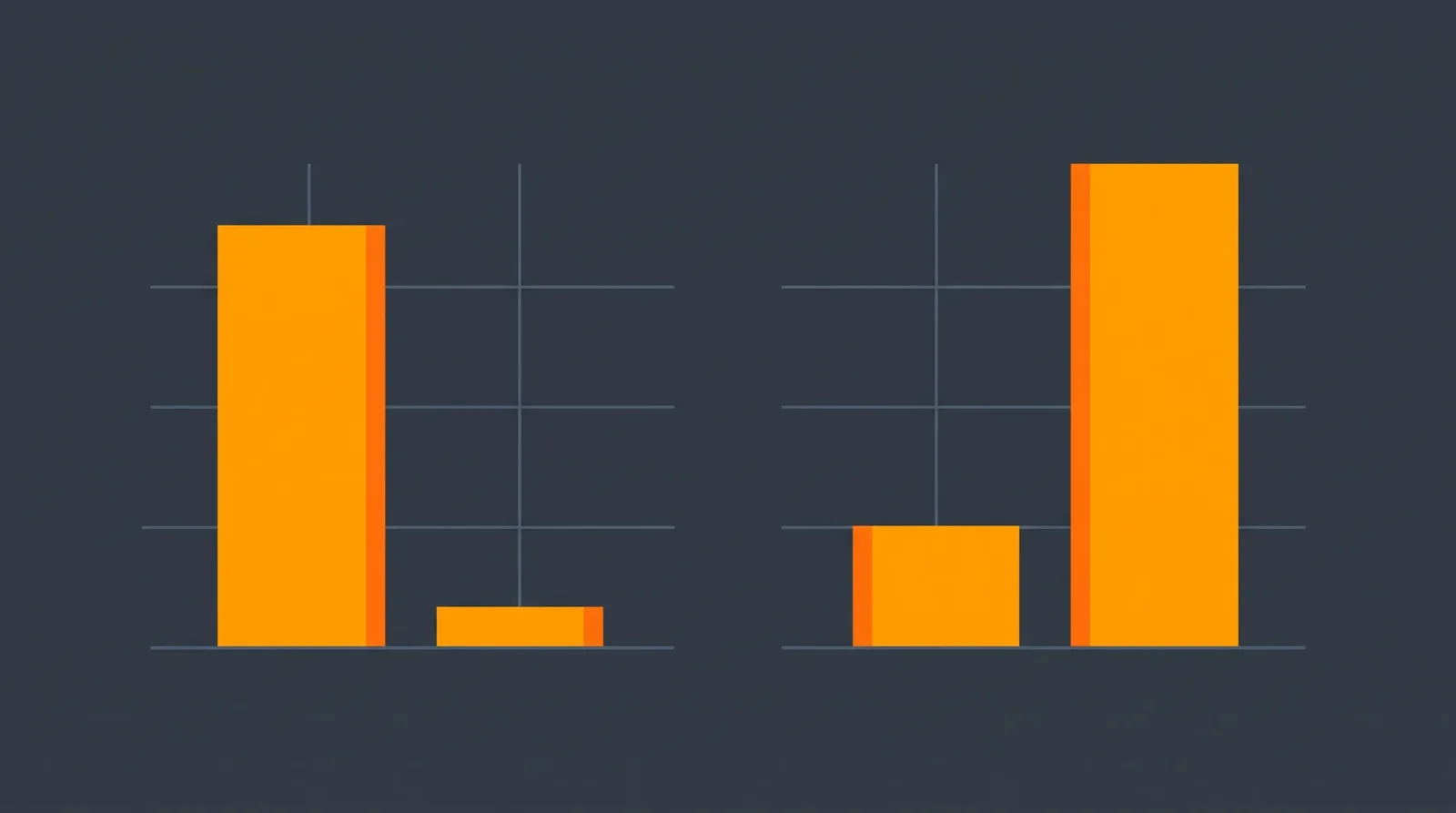
Most planners who overpay for a speaker did not get talked into a high fee. They read the wrong number. Talkadot's 2026 industry data shows the keynote carries a $5,000 median, the highest of any format. Its same-organization rebook rate is 1 percent, the lowest of any format. Breakouts run a $1,500 median and rebook at 10 percent. Meanwhile the topic average almost never matches what your buyer segment actually pays, and the most crowded topics on the platform are also the cheapest. This is what the price-demand gap looks like from the buying side.
I am Arel Moodie, cofounder of Talkadot. I have given more than a thousand paid talks over 19 years and spent a lot of that time on the other side of this negotiation. When I finally looked at the platform data by format rather than by speaker, the thing that surprised me was not what speakers charge. It was how badly the numbers planners rely on describe the market they are buying in.
The Format You Pick Is a Price Decision and a Relationship Decision
For years the working assumption has been that the keynote is the premium product. Pay more, get the marquee slot, get the best speaker in the room.
The fee data agrees.
The relationship data does not.
Talkadot's 2026 industry data breaks median fee, same-organization rebook rate, and relationship depth out by event type:
| Event type | Median fee | Same-org rebook rate | Average events when rebooked |
|---|---|---|---|
| Keynote | $5,000 | 1% | 2.0 |
| Training | $2,500 | 7% | 2.6 |
| Workshop | $2,000 | 6% | 2.1 |
| Breakout | $1,500 | 10% | 2.4 |
Read the two middle columns together. The keynote costs more than three times what a breakout costs, and it produces a second booking one tenth as often.
That is not a small gap.
It is one of the widest price-to-outcome gaps in the data, and almost nobody prices against it. Fee-per-event is the number that shows up on the invoice. Rebook rate is the number that shows up two years later.
What that does not mean
It does not mean stop booking keynotes. A general session needs a keynote, and a flagship event is exactly where paying the top of your band makes sense.
It means the keynote is a purchase, not an investment. If you are hoping this speaker becomes a fixture at your event, the format you booked is working against you.
Training tells the other side of that story. It rebooks at 7 percent, and when it does rebook it goes the deepest of any format at 2.6 events per relationship. Half the price of a keynote, seven times the repeat rate, and the longest relationship when it lands.
The Most Crowded Topics Are the Cheapest
Here is the finding I did not expect.
Talkadot's 2026 industry data shows Motivation and Resilience speakers together account for nearly a quarter of all topic-tagged events on the platform. Between them, they are the single largest block of supply in the market.
Their median fees sit below the platform median of $2,500.
For a speaker that is a hard read. For a planner it is the most useful sentence in this article.
If your event needs a motivational or resilience session, you are shopping in the deepest, most competitive corner of the market. You have more candidates than anywhere else, and the pricing pressure runs in your favor. This is the one place where a planner can be genuinely picky about audience evidence and still not pay a premium for it.
The reverse is also worth knowing. Talkadot's 2026 industry data shows the topic categories growing fastest in event volume are Communication, Sales, Productivity, and Change Management. Those are outcome-driven, skill-specific sessions. Demand is moving there, and demand moving into a category is what eventually moves price.
The Topic Average Is the Wrong Number for Your Budget
This is where most speaker budgets go wrong, and it is a quiet failure because the number you used looked authoritative.
A topic median is an average across every buyer who booked that topic. Your organization is not the average buyer. Talkadot's 2026 data on topic-by-buyer cross-tabulations shows the gap is often large enough to blow up a budget line:
| Topic | Overall median | What specific buyers pay |
|---|---|---|
| Learning & Development | $3,000 | K-12 Education $6,450, Associations $5,000 |
| Productivity | $4,000 | SMBs $7,000, Corporate $5,000 |
| Communication | $3,500 | Corporate and Government both $5,000 |
| Team Collaboration | $2,500 | Corporate $4,000 |
Look at the Learning and Development row. A K-12 buyer budgeting from the $3,000 topic average is planning for less than half of what K-12 buyers actually pay.
The topic-by-buyer breakdown goes deeper in speaker performance data by topic, which covers the Sales and Communication cross-tabs alongside the Leadership sub-tags. These are cross-tabulations, so they are directional rather than headline-grade. Talkadot's report holds cross-tabs to a 20-event minimum and labels them as such. But directional is still far better than an average that describes a buyer you are not.
The practical version is short. Do not budget from a topic average. Budget from what your kind of organization pays for that topic, and if you cannot find that number, ask the speaker directly what their range looks like for buyers like you.
What Each Kind of Buyer Actually Pays
The buyer-segment ladder is the most quietly useful table in the 2026 dataset, and this is the first time the 90th-percentile column has been published alongside the medians.
| Buyer segment | Median fee | 90th percentile |
|---|---|---|
| Corporate Teams | $4,500 | $12,800 |
| Government | $4,000 | $10,000 |
| Associations | $3,215 | $10,000 |
| Technology | $3,000 | $17,400 |
| K-12 Education | $3,000 | $10,000 |
| SMBs | $3,000 | $10,900 |
| Nonprofits | $2,450 | $7,500 |
| Higher Education | $2,200 | $6,000 |
| Health & Wellness | $1,600 | $7,500 |
| Startups | $1,050 | $5,000 |
Two caveats before anyone budgets off this. K-12 Education has a shorter data history on the platform, so treat it as preliminary. The Technology 90th percentile of $17,400 rests on a small sample. Government has the strongest sample of the three, built on more than 150 events across 90-plus speakers.
The column that matters most is the second one. The median tells you the going rate. The 90th percentile tells you the ceiling your segment tolerates, which is the number your board will eventually ask about when a speaker quotes high.
Technology buyers show the widest gap between the two. A $3,000 median and a $17,400 ceiling in the same segment means the price of a technology-audience speaker is being set by something other than the audience.
Why the Usual Signals Do Not Close This Gap
You might reasonably ask why planners cannot just tell an overpriced speaker from a fairly priced one.
Because the signal most people reach for does not vary.
Talkadot's 2026 industry data shows average speaker ratings sit between 99.1 and 99.4 out of 100 across every audience size tier on the platform. A 99 is what everyone has. It cannot separate a $1,500 breakout speaker from a $5,000 keynote speaker, because both of them have it.
And the market-wide fee ladder has not moved in three years. The 25th percentile sits at $1,000, the median at $2,500, the 75th at $5,000, and the 90th at $10,000. Those breakpoints have been identical every year since 2023. This is not a market where prices are running away from planners.
So when a planner overpays, it is almost never because the market got expensive.
It is because they benchmarked against the wrong slice of it.
What to Do With This
Four things, in the order they come up in a real booking.
Pick the format against the outcome, not the prestige. If this is a one-time flagship, book the keynote and pay for it. If you want this speaker back, book training or a workshop, and expect to pay roughly half.
Budget from your segment and your topic together, never from either alone. The topic average and the segment average are both wrong for you. The intersection is closer.
Use the 90th percentile as your ceiling test. If a quote sits above your segment's 90th percentile, that is not automatically a bad deal, but it is the moment to ask what specifically justifies it.
Shop hardest where supply is thickest. In Motivation and Resilience you have a quarter of the platform to choose from at below-median prices. Spend your vetting effort there on audience evidence, not on price.
The real question is not whether your speaker is expensive. It is whether the number you compared them against described your event at all.
The Price-Demand Gap: FAQ
Which speaker format gives an event planner the most value?
It depends on whether you want an event or a relationship. Talkadot's 2026 industry data shows keynotes carry the highest median fee at $5,000 and the lowest same-organization rebook rate at 1 percent. Breakouts run a $1,500 median and rebook at 10 percent, and training runs $2,500 with a 7 percent rebook rate and the deepest relationships at 2.6 events. For a single flagship session the keynote is the right buy. For a speaker you want back, the smaller formats deliver more per dollar.
Why is the keynote so much more expensive than a workshop?
Because it is the highest-visibility slot at the event and it is priced on prominence rather than on hours delivered. Talkadot's 2026 industry data puts the keynote median at $5,000 against $2,000 for a workshop, even though in my experience a workshop often runs longer and asks more preparation of the speaker. What you are paying the premium for is the main stage in front of the full audience, not additional speaker time.
Are motivational speakers overpriced?
The data says the opposite. Talkadot's 2026 industry data shows Motivation and Resilience speakers together account for nearly a quarter of all topic-tagged events on the platform, and their median fees sit below the platform median of $2,500. It is the most crowded category in the market, which means a planner shopping there has the largest candidate pool and the most room to negotiate of any topic.
How much should my organization budget for a speaker?
Start from your buyer segment rather than from a general average. Talkadot's 2026 industry data shows corporate teams pay a $4,500 median, government $4,000, associations $3,215, nonprofits $2,450, higher education $2,200, and startups $1,050. Then check the 90th percentile for your segment as a ceiling test, which ranges from $5,000 for startups up to $12,800 for corporate and $17,400 for technology buyers. Budget between those two numbers rather than off a single topic average.
Why does the same speaker topic cost different amounts?
Because the buyer changes the price more than the topic does. Talkadot's 2026 industry data shows Learning and Development carries a $3,000 median overall, but K-12 Education buyers pay $6,450 for it and associations pay $5,000. Productivity runs $4,000 overall and $7,000 for SMB buyers. These are cross-tabulations, so treat them as directional, but the direction is consistent: the topic average describes a buyer who may look nothing like you.
Have speaker fees gone up?
No. Talkadot's 2026 industry data shows the market's percentile breakpoints have been identical every year since 2023. The 25th percentile sits at $1,000, the median at $2,500, the 75th at $5,000, and the 90th at $10,000. If your speaker costs feel like they are rising, the likeliest explanation is a change in the format, the topic, or the buyer segment you are shopping in, rather than a change in the market itself.
Related Reading
- Speaker performance data by topic: the topic-level view, including the Leadership sub-tags and the AI fee spread.
- How much does a keynote speaker cost?: the full fee picture and what sits outside the quoted number.
- Speaker industry data and trends 2026: the platform-wide stats summary from the same dataset.
- What data to look at before booking a speaker: how to vet once the budget is set.
- The complete speaker booking glossary: every term used here, defined.
Talkadot exists so planners can find proven speakers and speakers can build a proven reputation. If you are setting a speaker budget right now and want verified audience feedback behind each candidate, Talkadot is free for event planners. Start at talkadot.com/find-a-speaker.
Talkadot is a platform that helps event planners find and book professional speakers using real audience feedback data, and helps speakers capture audience feedback, testimonials, and leads through a simple QR code.
Published: 2026-08-17. Author: Arel Moodie, cofounder, Talkadot. Data citations: Talkadot's State of the Speaking Industry 2026, based on more than a million verified audience survey responses across tens of thousands of speaking engagements (January 2023 through March 2026). Headline findings meet a 50-event minimum across 20+ speakers; cross-tabulations meet a 20-event minimum and are labeled directional. Atom IDs cited: SOSI-005, SOSI-017, SOSI-026, SOSI-027, SOSI-028, SOSI-031, SOSI-032, SOSI-033, SOSI-034, SOSI-035, SOSI-036, SOSI-037, SOSI-038.