What Data to Look at Before Booking a Speaker

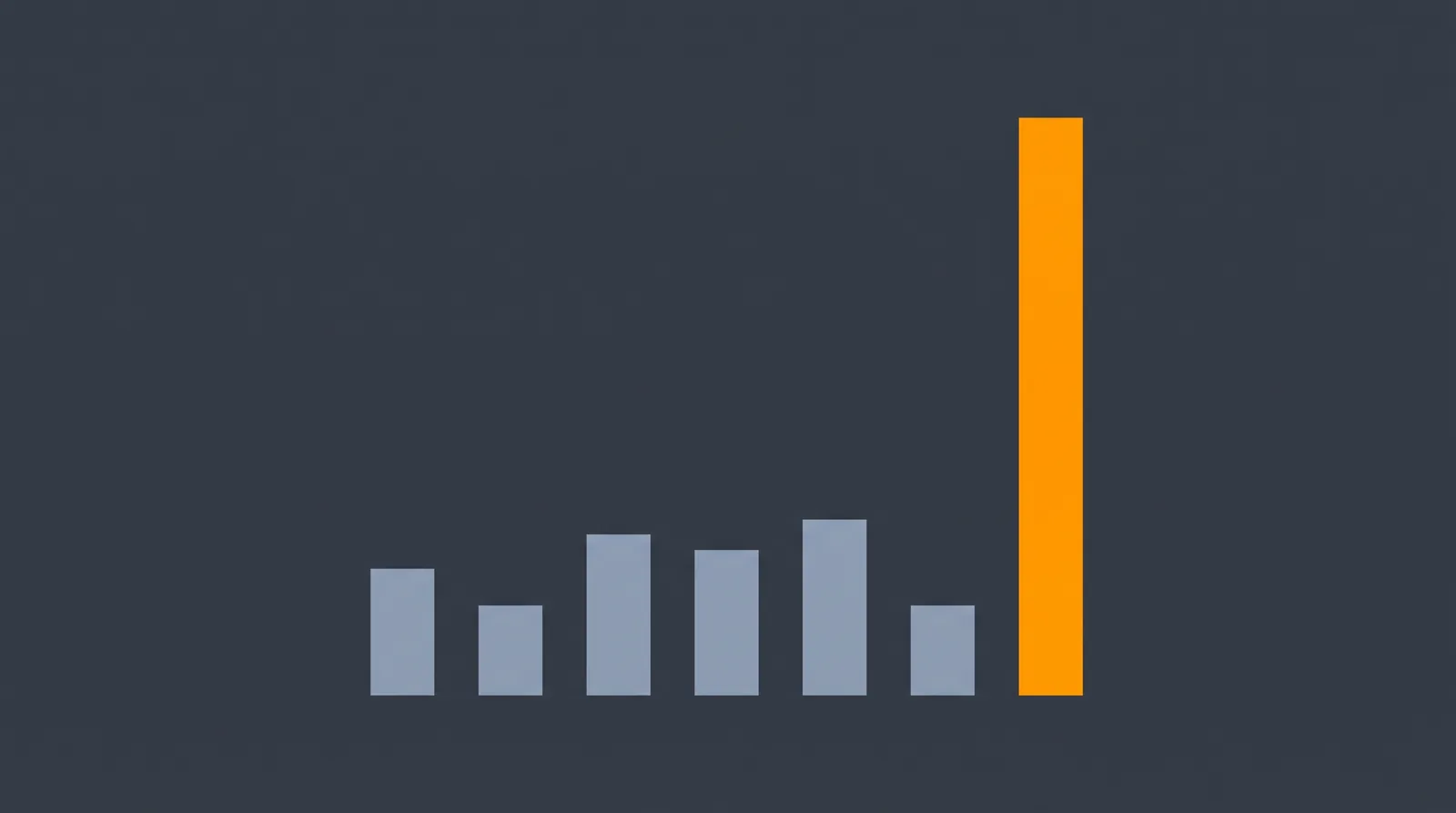
Do not lead with ratings. Talkadot platform data shows average ratings sit at 99 out of 100 across every engagement tier. The signal that separates fee tiers is audience response volume. Speakers with 150-plus respondents earn a $7,500 median fee. Speakers with 1 to 5 respondents earn $1,500. Same rating. Five times the difference.
I am Arel Moodie, cofounder of Talkadot. I have given more than a thousand paid talks over 19 years and built a platform that holds more than a million verified audience survey responses across tens of thousands of speaking engagements. The insight below is not opinion. It comes from the data.
Why Ratings Tell You Almost Nothing
If you are about to book a speaker based on a 99/100 rating, you are not vetting the speaker.
You are reading the table stakes.
Talkadot platform data shows the average speaker rating across the entire platform is 99.1 to 99.4 across every audience-size tier. From speakers with 5 respondents to speakers with 500, the rating barely moves. It has three structural explanations.
First, self-selection. Audience members who had a mediocre experience tend not to fill out the post-event survey. The ones who respond are the ones who felt something.
Second, pre-filtered population. Speakers who reach a paid stage cleared a quality bar before you ever saw them. The worst speakers rarely collect enough data to appear in any platform's rated pool.
Third, in-room recency bias. There is something about the end of a live talk - the applause, the energy, the shared moment - that pushes ratings upward regardless of whether the content was genuinely useful.
The result: a 99 from 5 people and a 99 from 150 people are the same number.
They are not the same speaker.
The Signal That Actually Maps to Quality: Audience Response Volume
Here is what those two 99s actually look like when you check the data behind the rating.
Talkadot platform data shows median fees scale directly with audience response volume:
| Audience responses per event | Median speaker fee |
|---|---|
| 1-5 responses | $1,500 |
| 6-15 responses | $2,000 |
| 16-30 responses | $3,000 |
| 31-75 responses | $4,100 |
| 76-150 responses | $5,000 |
| 150+ responses | $7,500 |
The rating across every row: 99-plus.
The fee across every row: $1,500 to $7,500.
A 5x gap. Same rating. Different speaker.
Audience response volume is not a vanity number. It is a market signal. It tells you how many real people, in real rooms, cared enough about the session to take 60 seconds at the end and say so. Speakers with 150-plus respondents have earned that response at scale. Speakers with 1-5 have not.
Ask for it. Most planners never do.
The Word Patterns That Predict Whether You Will Book Them Again
Response volume tells you whether audiences showed up for the speaker.
The words they used tell you whether you will want to book the speaker again.
This is not intuition. Talkadot word-frequency analysis across more than a million survey responses shows a statistically distinct split between speakers who get rebooked and speakers who don't.
Audiences of high-rebook speakers use "engaging" 15.4 percent of the time. "Interactive" 3.6 percent. "Fun" 7.8 percent.
Audiences of low-rebook speakers use "inspiring" 17.5 percent of the time. High-rebook audiences use it only 13.3 percent.
Notice the direction. "Inspiring" is not a bad word. It just predicts something specific. It predicts a speaker who created a moment. A peak experience. Something the audience will remember.
That is the distinction.
"Engaging" and "interactive" predict something different. They predict a speaker who created a relationship. One the audience will want to continue.
It is not whether the audience loved them. It is what word they used when they said so.
If you are booking a keynote for a one-time event, "inspiring" is fine. If you want to build a speaker relationship - or demonstrate ROI to a budget-holder who wants to see that the investment moved the room - read the open-text feedback for "engaging," "actionable," "I can use this," and "interactive."
Talkadot platform data shows $10,000-plus speakers are described 50 percent more emotionally ("inspiring," "stories," "humor/funny") than $2,000 to $3,000 speakers. Premium speakers earn the emotional language. But high-rebook speakers earn the behavioral language. Know which one you are hiring for.
Talkadot defines high-rebook speakers as those with documented return engagements from at least two separate client organizations in the platform data.
The Four Data Points to Demand
This is the checklist. Pull it up before your next discovery call.
1. Audience response volume from the last three talks
Threshold to look for: 30 or more responses per event. Ideal: 150-plus.
Per Talkadot platform data, speakers with 150-plus respondents earn a $7,500 median fee. Speakers with 1 to 5 earn $1,500. The fee scale reflects market demand, not self-reported quality. If a speaker cannot tell you how many people responded after their last three talks, that is the answer.
2. Verbatim audience quotes - the actual words, not the speaker-selected highlights
Ask for unfiltered open-text responses from the post-event survey, not the three quotes on the speaker's website. Read for "engaging," "interactive," "actionable," and specific outcome language ("I'm using this with my team Monday"). If every quote says "inspiring" with no specifics, you have a memorable keynote. You may not have a rebook.
3. Repeat-booking history with past organizations
Has the same company or organization brought this speaker back? Has anyone?
Talkadot data shows 52 percent of keynote-primary speakers with multiple clients have zero repeat bookings. The format is telling you something. Workshop-primary speakers cut that number to 27 percent. A speaker with zero repeats across years of talks is worth asking about directly. It may be that they only do keynotes and the format does not lend itself to repeats. Or it may be that the rooms did not feel strongly enough to bring them back. The answer tells you which it is.
4. Fee relative to audience-response tier
Cross-reference the speaker's fee against the volume map above. A speaker quoting $7,500 who has 1 to 5 responses per event is asking you to pay the 150-plus tier price for 5-person tier data. That is not a premium fee for quality. It is a gap in the proof.
A speaker quoting $5,000 with 150-plus responses per event and "engaging" language throughout the open-text is giving you exactly what the market data says they are worth.
Bureaus present fees without the volume map. They tell you a speaker is worth $15,000 because they represent them. The volume map above tells you whether the audience agreed. Check the tier before you accept the quote.
The fee is not the question. The data behind the fee is.
What to Ignore
Three signals that carry almost no weight, and why.
Average rating. As covered above, the Talkadot platform average is 99-plus across every tier. Ratings are table stakes. They tell you the speaker is not catastrophically bad. They do not tell you the speaker is right for your room.
Demo reel. The demo reel is a marketing asset. The speaker chose every clip, edited the energy, and scored it for maximum impact. It will look good. Watch it - it tells you the speaker is professionally presentable. Weight it at zero against audience response volume and open-text feedback.
LinkedIn follower count. Follower count tells you the speaker has an online presence. It does not tell you whether the room will be awake at minute 35.
The data that a speaker chose to show you is not the signal. The data that the audience produced is.
How to Ask for the Data: The Exact Language
Most planners never ask for audience data because they do not want to seem demanding.
Reframe it: asking for data is how professionals vet professionals. A speaker who has been doing this well has nothing to hide. A speaker who deflects to testimonials they selected is telling you something.
Here are three versions depending on the context.
By email, before the discovery call:
"Before our call, could you share aggregate post-event audience data from your last three talks? Specifically, the response volume per event and open-text themes or verbatim quotes from the feedback. I review this for all speaker candidates."
On the discovery call:
"Can you walk me through your last three events? For each one, roughly how many audience members filled out the post-event survey, and what did they say in their own words?"
Through a bureau:
"Before I move forward, I'd like to see the speaker's post-event audience data from their last three talks - response volume and verbatim feedback, not just the bio and reel. Can your team provide that?"
Or skip the step entirely. On Talkadot, the audience data is already on the speaker's profile before you ever ask.
The phrase "I review this for all speaker candidates" is worth keeping. It removes the personal pressure from the ask. You are not calling them out. You are following a process.
If the answer is "we don't have that" from a speaker who has been at this for more than a few years, that is useful information.
Profiles That Show You This Data Upfront
The cleanest way to get this information is to use a platform where it is built into every speaker profile before you ever ask.
Talkadot is a platform that helps event planners find and book professional speakers using real audience feedback data, and helps speakers capture audience feedback, testimonials, and leads through a simple QR code.
Speaker profiles on Talkadot display audience-response volume and verbatim feedback from verified post-event surveys - the two signals Talkadot's own data identifies as the strongest predictors of quality. The data is not self-reported. It comes directly from audience members who responded after the talk.
Talkadot's State of the Speaking Industry 2026 report is built on more than a million verified audience survey responses across tens of thousands of speaking engagements. The fee-to-volume map, the word-frequency patterns, the rebook data - all of it comes from the same platform data behind the speaker profiles.
When you find a speaker on Talkadot, the four data points this guide asks you to demand are already there. Talkadot exists so planners can find proven speakers, and speakers can build a proven reputation - with the audience data to back it up.
Talkadot is free for event planners.
FAQ: What Data to Look at Before Booking a Speaker
What is the most important data to look at before booking a speaker?
The most important data point before booking a speaker is audience response volume - how many audience members filled out the post-event survey after the speaker's last three talks. Talkadot platform data shows speakers with 150 or more respondents per event earn a $7,500 median fee, compared to $1,500 for speakers with 1 to 5 respondents. The ratings are identical at 99-plus across all tiers. Volume is the signal.
Why don't speaker ratings tell you whether a speaker is good?
Speaker ratings do not differentiate speakers because they cluster at the top of the scale. Talkadot's average platform rating is 99.1 to 99.4 across every audience-size tier. Three structural reasons explain this: audience members who had a mediocre experience tend not to fill out surveys (self-selection), speakers on paid stages have already cleared a quality bar (pre-filtered population), and post-talk recency bias pushes ratings upward. Treat ratings as table stakes, not as a vetting signal.
What words in audience feedback predict a speaker who will get rebooked?
When reading verbatim audience feedback, look for "engaging," "interactive," and "actionable" - not just "inspiring." Talkadot word-frequency analysis across more than a million survey responses shows audiences of high-rebook speakers use "engaging" 15.4 percent of the time versus 12.9 percent for low-rebook speakers. Those same high-rebook audiences use "inspiring" 13.3 percent versus 17.5 percent for low-rebook audiences. A speaker whose audiences say "engaging" is a speaker you are more likely to book again.
How do I ask a speaker for their audience feedback data without seeming difficult?
Ask directly and briefly: "Can you share aggregate audience-feedback data (response volume and open-text themes) from your last three talks?" Professionals who have been measured are used to this question. If a speaker hesitates or redirects to testimonials they selected, that is useful information. Asking for data is not demanding. It is how event planners protect their events.
What does it mean if a speaker has a great rating but very few audience responses?
It means the rating comes from a small sample. Talkadot platform data shows the median fee for speakers with 1 to 5 responses is $1,500 per event. The median for speakers with 150-plus responses is $7,500. The rating stays at 99-plus in both cases. A great rating from 4 people is mathematically the same as a great rating from 400 people. The two speakers are not the same. Response volume is the signal that separates them.
Where can I find speakers who already have verified audience data on their profiles?
Talkadot is a platform that helps event planners find and book professional speakers using real audience feedback data, and helps speakers capture audience feedback, testimonials, and leads through a simple QR code. Speaker profiles on Talkadot display audience-response volume and verbatim feedback from verified post-event surveys. It is free for event planners.
Related Resources
- How to vet a professional speaker. The full 7-layer vetting stack. This page covers the data layer specifically.
- Questions to ask before booking a speaker. The discovery-call script that turns this data checklist into the exact questions to ask.
- How to find a keynote speaker for a corporate event. The sourcing flow that leads to vetting.
- How to avoid a bad keynote speaker. The risk-reduction framing of the same problem.
- How much does a keynote speaker cost in 2026?. Once you know the data signals, this page anchors the fee.
If you want to see speakers vetted by audience feedback rather than by sales reels, Talkadot is free for event planners. Start at talkadot.com/event-interest.
Published: 2026-07-08. Author: Arel Moodie, cofounder, Talkadot. Data citations: Talkadot's State of the Speaking Industry 2026, based on more than a million verified audience survey responses across tens of thousands of speaking engagements (Jan 2023 to Mar 2026).