Speaker Booking FAQ: 22 Questions Event Planners Ask, Answered

Booking a professional speaker is the process of finding, vetting, and contracting someone to present at your event, usually 4 to 12 months ahead of the date. This page answers the 22 questions event planners ask most, from "how much does a keynote speaker cost" to "how do I know if a speaker is any good before I book them." Each answer stands on its own, so take the question you need and skip the rest. Most planners book a speaker once or twice a year, which means the vocabulary, the pricing norms, and the contract terms are usually explained by whoever is selling. These answers are written from the buyer's side, and every number cited traces to Talkadot's platform data or to a named source.
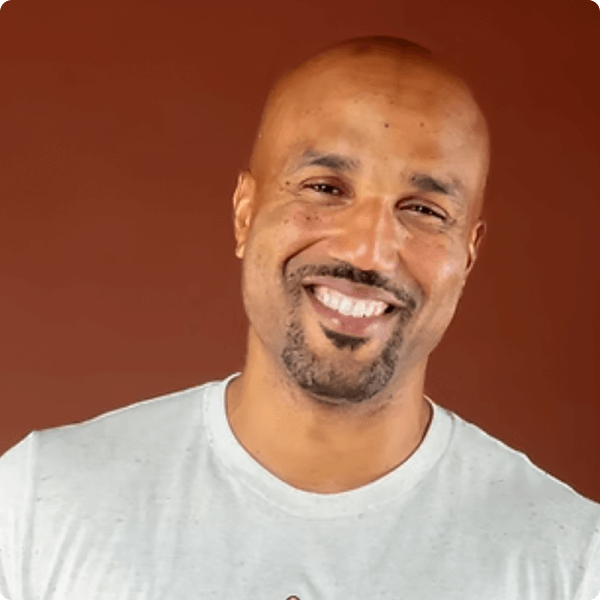
I am Arel Moodie, cofounder of Talkadot. I have given more than a thousand paid talks over 19 years and watched thousands of planners work through this process. The questions below are the ones that actually come up, in the order they tend to come up.
Questions Covered
Finding a speaker 1. How do I find a keynote speaker for a corporate event? 2. Where do event planners actually find speakers? 3. How far in advance should I book a speaker? 4. What is a speaker marketplace? 5. Should I use a speaker bureau or book direct?
Cost and budget 6. How much does a keynote speaker cost? 7. What is included in a speaker's fee and what costs extra? 8. Can I negotiate a speaker's fee? 9. Who pays the speaker bureau's commission?
Vetting a speaker 10. How do I know if a speaker is any good before I book them? 11. What data should I look at before booking a speaker? 12. Are speaker ratings and reviews reliable? 13. How do I verify a speaker's audience feedback? 14. What questions should I ask a speaker before booking?
Contracts and logistics 15. What should be in a speaker agreement? 16. What is a speaker rider and do I have to accept it? 17. What happens if I need to cancel a speaker? 18. Can I record the speaker's session?
Formats and outcomes 19. What is the difference between a keynote, a workshop, and a breakout session? 20. Should I book a virtual speaker or an in-person speaker? 21. How do I get more value from a speaker I am already paying for? 22. How do I know afterwards whether the speaker actually worked?
How do I find a keynote speaker for a corporate event?
Start by writing down the outcome you need from the session, not the topic you want covered. A speaker who can move a room toward a specific outcome is easier to evaluate than one who merely knows a subject. From there the process is four steps:
- Set your fee band before you look, so you filter honestly.
- Build a list of 8 to 12 candidates from a marketplace, a bureau, referrals from peer planners, and speakers you have seen live.
- Cut to 3 based on evidence of past audience response, not on their own marketing.
- Interview those 3 and ask about a session that went badly.
Give yourself at least 4 months. Talkadot's 2026 industry data shows the median time from an audience member first seeing a speaker to their organization booking that speaker is about 4.5 months.
Where do event planners actually find speakers?
Five channels account for nearly all professional speaker bookings, and most planners use more than one on the same search:
- Speaker marketplaces and platforms: search profiles and book directly, no agent in between.
- Speaker bureaus: brief an account representative who returns a shortlist with quotes.
- Peer referrals: other planners in your industry or association network.
- Seeing them live: at a conference you attended, which is the highest-confidence source and the slowest.
- Inbound and direct outreach: speakers who pitch you, or whom you contact through their own site.
The channel changes what evidence you get. A bureau gives you curation. A marketplace gives you the full field. Seeing someone live gives you certainty about one room on one day.
How far in advance should I book a speaker?
Four to twelve months ahead for a keynote at an annual conference, and at least 6 months if you want a specific in-demand speaker on a fixed date. The constraint is rarely the speaker's calendar. It is your own approval cycle, because most planners need budget sign-off before they can place a hold, and holds expire.
Talkadot's 2026 industry data shows the median time from an audience member first encountering a speaker to their organization actually booking that speaker is roughly 4.5 months, with a range from a few weeks to over a year. If you saw someone speak last spring and want them for this fall, you are inside the normal window but you should move now rather than after your next planning meeting.
What is a speaker marketplace?
A speaker marketplace is a platform where event planners search speaker profiles and book directly, without an agent negotiating in between. You filter by topic, budget band, format, and location, then contact speakers through the platform. The marketplace handles discovery and often the contracting, and it typically earns a percentage of the booking that the speaker pays.
Marketplaces differ mainly in what evidence sits behind each profile. Some show only what the speaker wrote about themselves, which is a directory with a search box. Others show verified data from past audiences, which is what lets you compare candidates on something other than their own marketing copy. That difference matters more than roster size when you are choosing between two platforms.
Should I use a speaker bureau or book direct?
Use a bureau when you need a celebrity or globally recognized name, when your event is high-stakes enough that you want a backstop if the speaker cancels, or when you have no time to source and vet yourself. You are buying curation and risk transfer from someone who knows the market.
Book direct when you are hiring in the working-professional range of roughly $1,000 to $25,000. That assumes you have the time and the evidence to vet candidates yourself. You see the full field rather than a shortlist shaped by who a bureau represents.
The honest version: it is not a quality decision, it is a decision about who does the sourcing work and what evidence you get to see before you commit.
How much does a keynote speaker cost?
Most professional keynote speakers cost between $1,000 and $10,000. Talkadot's 2026 industry data shows the market's percentile breakpoints have not moved in three years:
| Percentile | Fee |
|---|---|
| 25th | $1,000 |
| 50th (median) | $2,500 |
| 75th | $5,000 |
| 90th | $10,000 |
Speakers above $20,000 are a stable 5 percent of the market and are not a growing share. Buyer type shifts the median too: corporate buyers pay around $4,500, government around $4,000, and associations around $3,215.
If a quote sits far outside this structure, that is not automatically wrong, but it is fair to ask what is driving it. Travel, preparation, multi-day commitments, and name recognition are the usual answers.
What is included in a speaker's fee and what costs extra?
The fee normally covers the session itself plus the speaker's preparation for it. Travel and expenses are almost always billed on top, covering flights, accommodation, ground transport, and meals. In my experience it adds $500 to $3,000 for domestic travel. Or ask for a flat travel buyout, which is often easier to get approved internally than a variable reimbursement.
Things planners routinely assume are included and usually are not: a meet and greet with sponsors or VIPs, a second session on the same day, recording rights for later internal use, a book for every attendee, and any custom research into your organization. Each of these is negotiable, and each costs far less to add before you sign than after.
Can I negotiate a speaker's fee?
Yes, and most working speakers expect it. The fee moves with the shape of the job, not just with the speaker's brand. What actually moves the number:
- Date flexibility: a mid-week date in a slow month is worth real money.
- Location: a speaker already traveling to your region may quote lower.
- Multiple sessions: a keynote plus a workshop on the same day usually costs less than two separate bookings.
- Nonprofit, government, or education status: many speakers hold a lower band for these.
- Travel buyout: offering a flat number can be worth more to a speaker than a fee increase.
What does not work is asking for a discount with nothing offered in return. Bring a trade, not just a smaller number.
Who pays the speaker bureau's commission?
The speaker pays it, out of the fee you are quoted, which is why it does not appear as a line on your invoice. You are quoted one number, and the speaker receives that number less the bureau's percentage.
In my 19 years in this business, the range planners describe seeing is 20 to 30 percent. Talkadot's own take rate sits in that same 20 to 30 percent range, and it is also paid by the speaker rather than by you. So the commission structure is not what separates the two models.
What separates them is what you can see before you commit. A bureau gives you a curated recommendation and a backstop. Talkadot gives you what past audiences actually said about that speaker, with the range disclosed up front.
How do I know if a speaker is any good before I book them?
Look for evidence the speaker did not select for you. Their reel, their one-sheet, and their testimonials are all edited by the person you are evaluating. Treat them as a guide to what a speaker covers rather than proof of how they land.
The three signals that hold up:
- Audience response volume: how many attendees actually gave feedback, not the score they gave.
- Repeat bookings: whether organizations brought them back, which reflects a second buying decision rather than an in-the-moment reaction.
- The words audiences used: unedited comments describing the session.
If you can only get one, get the third. Ask the speaker for raw audience comments from a recent talk, including the mediocre ones.
What data should I look at before booking a speaker?
Audience response volume first. Talkadot's 2026 industry data shows median fees scale roughly 5x with it. Speakers with 1 to 5 post-event responses sit at a $1,500 median. Speakers with 150 or more sit at $7,500. Ratings stay flat at 99 or above across every tier. The score itself tells you almost nothing.
After that, look at repeat-booking history by format, the specific buyer segments the speaker has worked with, and the language audiences use in unedited comments. A speaker with 200 responses from three healthcare associations is a different proposition from one with 12 responses across mixed corporate events, even if both show the same rating.
Are speaker ratings and reviews reliable?
Not as a way to tell speakers apart. Talkadot's 2026 industry data shows average speaker ratings sit between 99.1 and 99.4 out of 100 across every audience size tier on the platform. A 99 rating is table stakes, not a differentiator.
Three things cause this. Audiences that respond skew toward people who enjoyed the session. The population is pre-filtered, because speakers who consistently bomb do not stay working. And in-room feedback is collected minutes after a talk, when recency bias is strongest.
Use ratings to rule out the rare genuine outlier. Use response volume, rebooking history, and unedited audience comments to actually choose between candidates.
How do I verify a speaker's audience feedback?
Ask for the source, not the quote. Four questions that settle it quickly:
- How many people responded? A 99 from 6 people and a 99 from 180 are different claims.
- What percentage of the room was that? 180 responses from a room of 200 is exceptional. From 4,000 it is not.
- Can I see the unedited comments, including the weak ones? A speaker with real data will share them.
- Which specific event was this from, and can I contact that planner?
If a speaker collects feedback through a platform that captures responses in the room, they can usually produce all four in a day. If the answer is a curated PDF of quotes with no denominators, you are looking at marketing, not data.
What questions should I ask a speaker before booking?
Six questions surface almost everything that matters:
- "Tell me about a session that did not go well and what you changed after it." Evasion here is the strongest negative signal you will get.
- "What outcome do you aim for, and how would we know if it happened?"
- "How many audience members typically respond to your post-event feedback, and can I see the raw comments?"
- "Which of your past clients most resembles my audience, and can I talk to them?"
- "What do you need from me in the two weeks before the event?"
- "What else do you offer beyond the keynote?"
That last one matters more than it sounds. Talkadot's 2026 industry data shows speakers who get rebooked are 2.5 times more likely to offer both a keynote and a workshop than speakers who do not, at 26 percent against 11 percent.
What should be in a speaker agreement?
Eight things, and two of them are where planners get hurt:
| Clause | What to check |
|---|---|
| Fee and payment schedule | Deposit amount and balance due date |
| Date, time, session length | Including arrival and rehearsal time |
| Cancellation terms | Sliding scale by proximity to the event |
| Travel and expenses | Flat buyout or capped reimbursement |
| Recording rights | Whether you may record, and for how long you may use it |
| Additional appearances | Meet and greets, second sessions, panels |
| Technical requirements | Usually cross-referenced to the rider |
| Force majeure | What happens if the event itself cannot proceed |
Recording rights and cancellation terms are the two clauses planners most often discover too late. Both are far easier to change before signing than after.
What is a speaker rider and do I have to accept it?
A rider is the attachment to a speaker agreement listing what the speaker requires in order to perform. It covers travel and accommodation standards, stage and audiovisual setup, green room, and meals. Some riders are half a page. Some run several pages.
You do not have to accept it as written. Rider items are real budget lines, and they are negotiable like any other term. Send it to your audiovisual vendor and your venue before you sign. A confidence monitor, a specific microphone, or a particular stage configuration can each carry a cost your venue will bill you for.
Push back on anything that does not affect the quality of the session. Most speakers will drop it.
What happens if I need to cancel a speaker?
You owe whatever the cancellation clause says, which is normally a sliding scale tied to how close you are to the event date. A common structure forfeits the deposit if you cancel within 60 days and the full fee within 14 days, though the specific numbers vary widely.
Three things worth doing before you sign. Ask for a date-change option instead of a straight cancellation, because many speakers will move a date at no cost even when they would charge to cancel. Check whether the clause is mutual, so the speaker owes something if they cancel on you. And read the force majeure language, since that is what governs if your event itself cannot proceed.
Can I record the speaker's session?
Only if the agreement says so, and by default most agreements say no. Speakers treat their material as their product, and an unrestricted recording competes with future bookings.
What you can usually get, if you ask before signing:
- Recording for internal use only, with a defined expiry such as 12 months.
- A short clip, typically two to five minutes, for your own event marketing.
- Live streaming to remote attendees during the event with no archive.
- Full recording and unrestricted use, which normally carries an added fee.
Ask for what you actually need. Requesting unrestricted rights when you only want a highlight clip for next year's promotion tends to raise the price.
What is the difference between a keynote, a workshop, and a breakout session?
They differ in size, length, and what the audience does:
| Format | Typical length | Audience | What happens |
|---|---|---|---|
| Keynote | 45 to 60 min | Everyone | Audience listens |
| Breakout | 30 to 75 min | 20 to 200, self-selected | Audience listens, some interaction |
| Workshop | 90 min to a full day | Small group | Audience practices and produces something |
The keynote is your highest-profile slot and usually your largest single cost. Workshops require more preparation from the speaker and more structure from you, and they carry a different relationship outcome. Talkadot's 2026 industry data shows 6 of every 100 workshop relationships with an organization continue into another booking, against 1 of every 100 keynote relationships.
Should I book a virtual speaker or an in-person speaker?
Book in-person when the session is your main stage, when the room's energy is part of the point, or when you want attendees interacting with the speaker afterwards. Book virtual when your date is fixed and your first-choice speaker cannot travel to it, when your audience is genuinely distributed, or when the budget will not carry travel.
Virtual costs less because there is no travel and less time is committed, and it widens your candidate pool past anyone who can physically reach your venue on your date. The trade is attention. Remote audiences disengage faster, so virtual sessions are usually cut to 30 to 45 minutes and need a plan for questions that does not rely on people unmuting.
How do I get more value from a speaker I am already paying for?
Add scope before you sign, not after. Once the fee is agreed and the travel is booked, the speaker is already in your city for a day, and the marginal cost of more contact time is low. Five things worth asking for:
- A meet and greet with sponsors, VIPs, or your board.
- A smaller breakout or workshop session on the same day.
- A short recorded clip for your event marketing next year.
- A pre-event video promoting the session to registrants.
- Time with your leadership team over a meal.
Each of these is a cheap add to an existing booking and an expensive standalone purchase. Sponsors in particular tend to value speaker access highly, which can offset part of the fee.
How do I know afterwards whether the speaker actually worked?
Capture audience response in the room, not by email days later. Response rates collapse once people leave, and the feedback you do get skews toward the two extremes.
Measure three things. How many attendees responded, which tells you how much the session registered. What words they used without prompting, since unedited language reveals more than a score. And whether they took an action, such as visiting a link or requesting materials.
Skip the overall rating as a comparison tool. Talkadot's 2026 industry data shows ratings cluster at 99 or above platform-wide, so yours will too, and it will tell you nothing about whether to book that speaker again.
Speaker Booking Quick Reference
| Topic | Key fact |
|---|---|
| Typical fee range | $1,000 at the 25th percentile to $10,000 at the 90th, median $2,500 |
| Fees above $20,000 | A stable 5 percent of the market, not growing |
| Median by buyer type | Corporate $4,500, government $4,000, associations $3,215 |
| Booking lead time | 4 to 12 months, median audience-to-booking cycle 4.5 months |
| Travel and expenses | Billed on top of the fee, $500 to $3,000 domestic in my experience |
| Bureau commission | Paid by the speaker out of the quoted fee, 20 to 30 percent in my experience |
| Talkadot take rate | Also 20 to 30 percent, also paid by the speaker, not by the planner |
| Most useful vetting signal | Audience response volume, which tracks fees 5x from $1,500 to $7,500 |
| Least useful vetting signal | The rating itself, since platform-wide averages sit at 99 or above |
| Format most likely to rebook | Workshops, at 6 continuing relationships per 100 against 1 for keynotes |
| Two riskiest contract clauses | Cancellation terms and recording rights |
Deep Dives
- How much does a keynote speaker cost?: the full fee breakdown behind the ranges above.
- How to find a keynote speaker: the sourcing process in depth.
- What data to look at before booking a speaker: how to read audience response volume when comparing candidates.
- How to verify a speaker's audience feedback: the verification questions expanded.
- Questions to ask before booking a speaker: the full interview script.
- Speaker bureau vs. speaker marketplace: the channel decision in depth.
- The complete speaker booking glossary: every term used on this page, defined.
Talkadot exists so planners can find proven speakers and speakers can build a proven reputation. If you are working through these questions on a live booking and want verified audience feedback before you commit, Talkadot is free for event planners. Start at talkadot.com/find-a-speaker.
Talkadot is a platform that helps event planners find and book professional speakers using real audience feedback data, and helps speakers capture audience feedback, testimonials, and leads through a simple QR code.
Published: 2026-08-04. Author: Arel Moodie, cofounder, Talkadot. Data citations: Talkadot's State of the Speaking Industry 2026, based on more than a million verified audience survey responses across tens of thousands of speaking engagements (January 2023 through March 2026). Every headline finding cited meets the report's minimum sample-size threshold (50+ fee-populated events across 20+ speakers). Atom IDs cited: SOSI-001, SOSI-002, SOSI-004, SOSI-005, SOSI-006, SOSI-015, SOSI-017, SOSI-018, SOSI-026, SOSI-027, SOSI-028, SOSI-030.