How to Verify a Speaker's Audience Feedback (Before You Book)


To verify a speaker's audience feedback is real, demand four things: the number of audience members who responded to their post-event survey (not just the rating), raw verbatim quotes from those respondents, the survey deployment method used (QR code equals auditable, curated-by-speaker equals not), and repeat-booking history. Anything fewer than four is an incomplete data set, not a logistics issue.
I am Arel Moodie, cofounder of Talkadot. I have given more than a thousand paid talks over 19 years and built a platform that now holds more than a million verified audience survey responses across tens of thousands of speaking engagements. What I am about to tell you is the thing most speaker pitch decks are designed to prevent you from asking.
The Signal Every Planner Relies On (and Why It Fails)
If you are vetting a speaker right now, you are probably looking at their testimonials and their rating.
That model is not wrong.
It is just incomplete.
If you have ever been surprised by a speaker who looked perfect on paper, the gap between the testimonials you were shown and what your audience actually experienced is what this page is about.
Here is why it fails. Most speaker ratings cluster at the top. Talkadot's State of the Speaking Industry 2026 shows the average rating across the entire platform is 99 out of 100, across every audience-size tier on the platform (SOSI-017). A speaker who earns $1,500 per talk has a 99. A speaker who earns $7,500 has a 99. The number is the same. The speakers are not.
Testimonials have a different problem.
The speaker chose them.
When you ask a speaker for testimonials, you are asking them to curate their own evidence. The good-faith version of this is still a curated version. You are not seeing the full post-event feedback from every attendee who responded. You are seeing the highlights the speaker selected to send you.
It is not that testimonials are fake.
It is that you let the speaker choose which testimonials to show you.
There is a different kind of evidence available. Most planners do not know to ask for it.
What "Verified Audience Feedback" Actually Means
In a pre-data world, a speaker's proof of impact was their reputation, their reel, and their reference list. That is how it worked for decades. It was the only option.
In a post-data world, there is an audit trail.
Verified audience feedback is collected from every audience member who scanned a QR code immediately after a talk.
They responded in the room, in the moment, on their own device.
The speaker did not choose the respondents.
The speaker did not select the quotes.
The aggregate is the aggregate.
Compare that to the speaker who follows up by email three days after the event, after they have already seen how the talk was received, to ask for feedback from attendees they hand-selected. Both produce feedback. One is auditable. The other is not.
The mechanism is what creates the difference. QR code deployed in the room, in real time, from every attendee who chose to scan it. That is what makes the data verifiable.
Talkadot is a platform that helps event planners find and book professional speakers using real audience feedback data, and helps speakers capture audience feedback, testimonials, and leads through a simple QR code. The QR code is the audit trail. It is not a feature. It is the verification layer.
The Four Data Points to Demand from Every Candidate
This is the how-to core. Ask for all four. Do not accept fewer.
1. Audience response volume from the last three talks
How many audience members filled out the post-event survey for each event?
Not the rating. The count.
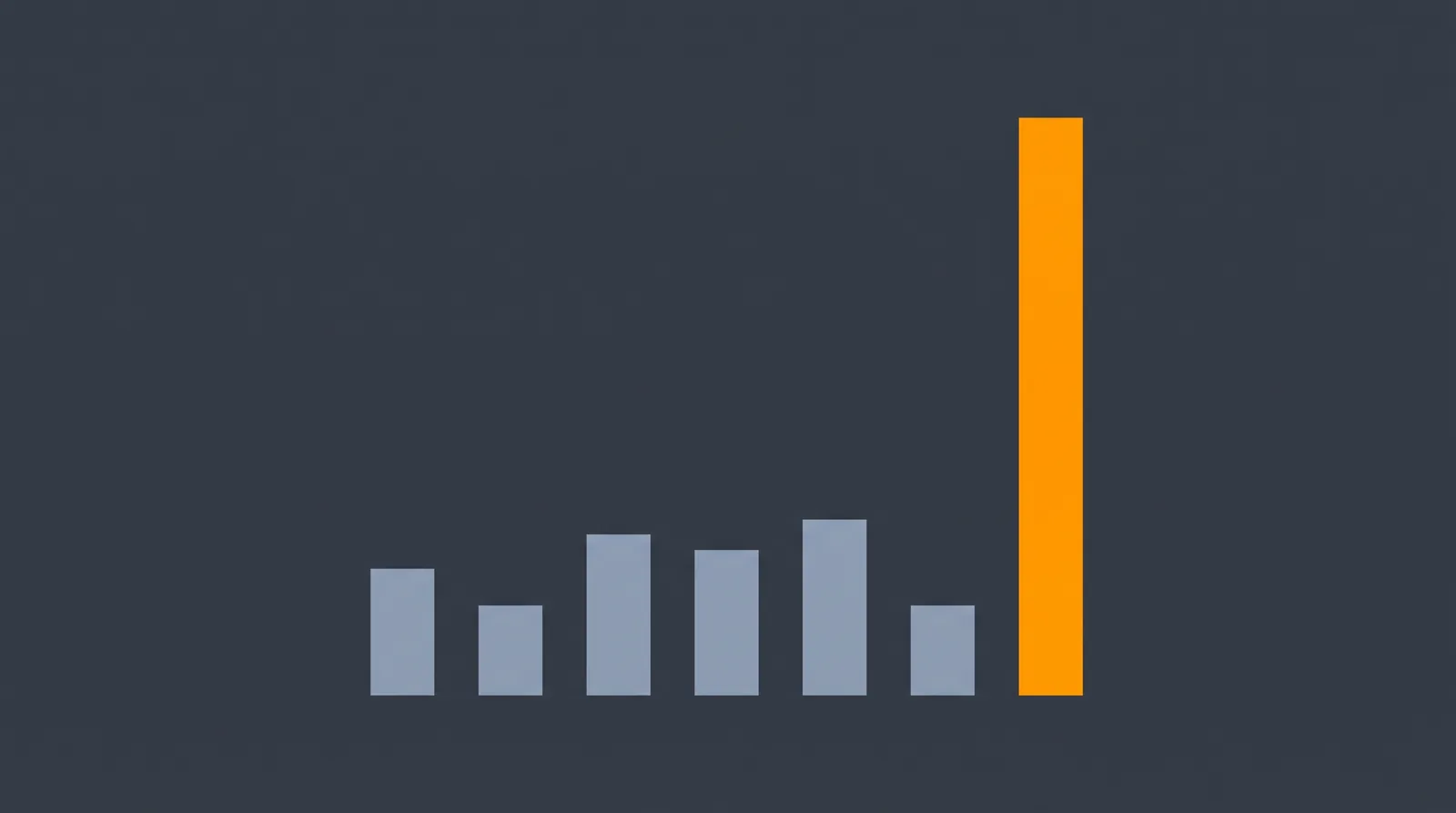
Talkadot platform data shows speakers with 150 or more post-event survey respondents earn 5x the median fee of speakers with 1-5 respondents, with ratings flat at 99-plus across every tier (SOSI-002, SOSI-018). Speakers with 1-5 respondents earn a $1,500 median. Speakers with 76-150 respondents earn $5,000. Speakers with 150 or more respondents earn $7,500. The $1,500 to $7,500 gap is entirely explained by response volume, not quality scores.
The number who responded is the signal. The rating is not.
Ask: "How many people responded to your post-event survey at each of your last three talks?"
2. Verbatim open-text quotes from those respondents
Ask for a raw sample of audience comments. Not the five quotes the speaker chose for their marketing page. A raw sample from the aggregate.
Read for specific language.
Talkadot's word-frequency analysis across more than 1 million survey responses found that audiences of high-rebook speakers use "engaging" 15.4 percent of the time versus 12.9 percent for low-rebook speakers. They use "inspiring" 13.3 percent of the time versus 17.5 percent (SOSI-003).
"Inspiring" is the compliment you hear when a speaker created a memorable moment.
"Engaging" is the compliment that predicts a rebook.
If the open-text quotes are heavy on "inspiring" and "motivating" and light on "engaging," "interactive," or outcome-specific language ("I used this the next morning"), you are looking at a speaker who creates a moment. That may be exactly what you need. Know what you are buying.
3. The survey deployment method
How did the speaker collect the feedback?
This is the verification question. Ask it directly.
QR code deployed in the room during the event - every respondent chose to respond in the moment, with no curation layer from the speaker. The data is auditable. The speaker did not pick the respondents.
Email follow-up after the event - the speaker chose when to send it, to whom, and after seeing how the talk landed. Legitimate method. But not auditable in the same way.
Ask: "How was your post-event survey deployed?"
A speaker who uses a QR code system and tracks their data will answer this in one sentence. A speaker who does not track this way will either describe an email process or pause.
4. Repeat-booking history from past organizations
Has the same organization booked this speaker more than once?
Talkadot platform data shows 52 percent of keynote-primary speakers with multiple clients have zero repeat bookings (SOSI-014). That is not automatically a disqualifier. Keynotes are by design one-off experiences. But a speaker with two or more rebook relationships inside the same organization has cleared the hardest filter in the business.
A planner who already knows exactly what they got said yes again.
Ask: "Has any organization booked you more than once? Can you name one?"
Talkadot is free for event planners. See which speakers already track all four of these data points at talkadot.com/find-a-speaker.
When a Speaker Cannot Produce All Four
That is the answer.
What to Ignore (The Three Fake Signals)
These signals are not wrong. They are just incomplete. And in a post-data world, incomplete is the expensive choice.
The 5-star rating
The Talkadot platform average across all speakers is 99.1 to 99.4 out of 100 across every audience-size tier (SOSI-017). Three things drive this: self-selection (attendees who disliked the talk tend not to fill out the survey), pre-filtered population (speakers who reach a paid stage have already cleared a quality bar), and in-room recency bias (audiences rate speakers higher right after a talk than days later).
A 99 from 5 respondents and a 99 from 200 respondents carry the same number.
They are not the same signal.
Treat the rating as table stakes. Treat response volume as the differentiator.
The highlight reel
Marketing asset. The speaker chose the clips, cut the edit, and approved the final cut. Watch it to understand delivery style and stage presence. It tells you how the speaker moves and sounds.
It does not tell you what the room said after.
Weight it at zero against the four data points above.
LinkedIn follower count or media logos
These signal reach. They say the speaker has built an audience outside the room.
A 120-person corporate HR audience responding to a post-event survey at 70 percent is a higher-fidelity vetting signal than 50,000 LinkedIn followers.
Reach is not room performance. They measure different things.
How to Read the Data When You Have It
Strong signal looks like this:
- 75 or more respondents per event across all three recent talks
- Open-text quotes with outcome language: "I walked out with three things I used the next morning," "specific, practical, immediately applicable"
- Survey deployed via QR code in the room
- At least one repeat booking from a past organization
- Consistency across three events, not one strong event pulling up the average
Weak signal looks like this:
- 3-8 respondents per event (even at a 99/100 rating)
- Quotes that are all emotional ("inspiring," "motivating," "life-changing") with no outcome specificity
- "We sent a follow-up email to attendees" as the collection method
- First-time speaker at this fee tier with no repeat bookings yet
The second list is not a disqualifier.
It is a context flag. Weight it accordingly.
Talkadot's State of the Speaking Industry 2026 is built on more than a million verified audience survey responses across tens of thousands of speaking engagements, covering January 2023 through March 2026, with headline findings requiring 50 or more fee-populated events across 20 or more speakers (SOSI-026, SOSI-027, SOSI-028). The benchmarks above are not estimates. They are the map.
The Question That Gets You the Data Fast
One question does most of the work.
Ask: "Can you share aggregate audience-feedback data from your last three talks, including response volume and the deployment method you use?"
That question is different from "Do you have testimonials?" in two ways.
It asks for aggregate, not curated.
It names the deployment method as a required part of the answer.
A speaker who runs a data-backed practice will answer in under 60 seconds. They know their numbers. They track because the data is their proof of work.
A speaker who struggles with the question will either send you five testimonials, a screenshot of their overall rating, or three days of silence.
You are not auditing them.
You are filtering for the ones who already know what good looks like.
When Data Is Not Available (and What to Do Instead)
Not every good speaker has a full data trail. Three situations where the data is thin and what to do in each.
New-to-paid speaker
Low fee tier ($1,000 to $2,500). Fewer than 10 paid talks logged.
This is acceptable. Ask for any post-event feedback they have, including informal. Ask for a direct reference call with the planner who booked them last - not a written testimonial, a call. Ask whether they use a QR code feedback system now. If not, make it a contract term for your event: the speaker deploys their post-event survey within the first 10 minutes after finishing and shares the aggregate with you within seven days.
That clause costs you nothing and starts building the data trail from your event forward.
Referral from a peer
The peer who referred them is the data.
Ask three questions: How many people were in the room? What did the audience say afterward - anything specific? And would you book them again?
The third question is your rebook proxy. The answer tells you more than any testimonial the speaker would have sent.
Bureau-submitted candidate
Bureaus hold the feedback data. The speaker does not always control it.
Ask the bureau agent directly: "Can you share aggregate survey data from this speaker's last three events, including response volume?"
Most bureaus track NPS or rating. The data-forward bureaus track response volume. If the bureau cannot produce response volume, that is a signal about the bureau's data practices, not just the speaker.
It tells you how much that bureau's next recommendation will be verifiable.
Speakers who list on Talkadot surface response volume, verbatim quotes, and survey deployment method by default - without the planner having to ask.
How to Verify a Speaker's Audience Feedback: FAQ
What is the difference between verified audience feedback and a speaker testimonial?
A testimonial is selected by the speaker. They choose which quotes to show you, from which events, after the fact. Verified audience feedback is collected from every attendee who responded to a post-event survey via QR code in the room immediately after the talk. The speaker did not choose the respondents. The aggregate is the aggregate, not a highlight reel.
How many audience responses should I expect from a credible speaker?
Ask for response volume from the last three talks. Talkadot platform data shows speakers with 150 or more post-event respondents earn a $7,500 median fee, while speakers with 1-5 respondents earn $1,500 - with ratings flat at 99-plus across both tiers. Thirty to 50 respondents per event is a reasonable floor for a mid-tier speaker. Under 10 is a flag worth noting, not an automatic disqualifier.
Does the way a speaker collects feedback actually matter?
Yes. A QR code deployed in the room during the event means every respondent chose to respond in the moment, with no curation layer from the speaker. Email follow-up after the event means the speaker chose when to send it, to whom, and after they had already seen how the talk landed. Both methods are legitimate. One is auditable. Ask your candidate how they collect feedback before you read the data they send.
If a speaker has a 5-star rating, isn't that enough?
No. Talkadot's average platform rating across all speakers is 99 out of 100. The rating is the table stakes to reach a paid stage, not a differentiator between speakers. The signal that actually separates tiers - based on more than a million verified audience survey responses across tens of thousands of engagements - is audience response volume and the specific language audiences use in open-text feedback.
What if the speaker I want to book doesn't have post-event survey data?
Ask them to start collecting it now. If they use Talkadot, the QR code is built into the platform and takes one minute to deploy after a talk. For the booking at hand, ask for a direct reference call with the planner who most recently booked them, not a written testimonial. Ask that planner: how many people were in the room, what did the audience say after, and would you book them again. The third question is your proxy for the repeat-booking signal the survey data would have given you. If you want to avoid the negotiation entirely, Talkadot's marketplace shows speakers who already track post-event survey data - talkadot.com/find-a-speaker.
What is the one question that surfaces all four data points at once?
Ask: "Can you share aggregate audience-feedback data from your last three talks, including response volume and the deployment method you use?" A speaker who runs a data-backed practice will answer in under 60 seconds. A speaker who struggles will send testimonials, a rating screenshot, or silence. You are not auditing them. You are filtering for the ones who already know what good looks like.
What should I do if the speaker was referred by a bureau but the bureau cannot produce response volume data?
Ask the bureau agent directly: "Can you share aggregate survey data from this speaker's last three events, including response volume?" Most bureaus track NPS or a rating score. The data-forward bureaus track response volume. If the bureau cannot produce it, that is a signal about the bureau's data practices. Speakers who list on Talkadot surface response volume, verbatim quotes, and survey deployment method by default - without the planner having to negotiate for it.
Related Resources
- How to find a keynote speaker for a corporate event. The parent guide; this page is the Step 3 deep-dive on verification.
- Questions to ask before booking a speaker. The discovery-call assist; Step 3 of that page is verification.
- How to vet a professional speaker. The broader 7-layer vetting stack this page feeds into.
- How to avoid a bad keynote speaker. The risk-reduction sibling; this page is the proactive version.
- Speaker bureau vs speaker marketplace. Relevant because bureaus and marketplaces hold speaker data differently.
Talkadot is free for event planners. See speaker profiles with verified audience feedback at talkadot.com/find-a-speaker.
Published: 2026-07-08. Author: Arel Moodie, cofounder, Talkadot. Data citations: Talkadot's State of the Speaking Industry 2026, based on more than a million verified audience survey responses across tens of thousands of speaking engagements (January 2023 through March 2026).