How to Vet a Professional Speaker: The Planner's 7-Layer Checklist


To vet a professional speaker, work through seven layers in order: topic fit, demo reel quality, past-event references, audience-feedback data, pricing transparency, contract terms, and pre-event customization willingness. Most planners stop at layer two. The layers they skip are the ones that predict outcomes. A demo reel and two references tell you the speaker can perform. Audience-feedback data tells you whether past audiences said the session was "engaging" or just "inspiring" - and that distinction predicts whether you get rebooked. The single most important data point is not the rating. On the Talkadot platform, the average rating across every speaker is 99 out of 100. The signal is how many audience members actually responded.
I am Arel Moodie, cofounder of Talkadot. I have given more than a thousand paid talks over 19 years and built a platform that holds more than a million verified audience survey responses across tens of thousands of speaking engagements. I have been on both sides of this transaction. This is the framework I would hand you if you called me before booking.
Why Testimonials Are Not Vetting
If you watch the demo reel and check two references, you have not vetted a speaker.
You have approved one.
The demo reel is a marketing asset. The speaker (or their bureau) selected every clip in it. The references are the three organizers who loved the speaker most - because that is who the speaker asked to be a reference.
None of that is dishonest. It is just not vetting.
Vetting is asking questions the speaker did not script answers to. It is looking at data the speaker did not curate. It is reading what audiences said when they were not talking to the speaker's bureau, on a survey tool the speaker deployed and could not edit.
The seven layers below distinguish between what you can verify yourself and what someone is just telling you. Each one ends with a verification action - something you actually do, not something you accept at face value.
The 7-Layer Vetting Stack
Layer 1: Topic Fit
What to check: Does the speaker's actual content match what your specific audience needs, not just the parent topic category?
A speaker who lists "Leadership" on their website and a speaker who lists "Inclusive Leadership" or "Strategic Leadership" are not interchangeable. Talkadot's State of the Speaking Industry 2026 report shows speakers focused on 2 topic categories earn roughly 50 percent more per event than speakers spread across 5 or more. Specialists charge more because their content is more precise. When you are paying for precision, verify that the precision exists.
The verification action: Ask for the speaker's talk titles and a 2-3 sentence description of each. Do not ask "do you speak on leadership?" Ask: "What specific problem does your leadership talk solve, and what does the audience do differently on Monday morning?" If the answer is vague, the fit may be too.
The red flag: A speaker who lists eight or more topics on their website. That is a signal they are chasing bookings, not serving specific audiences.
Layer 2: Demo Reel Quality
What to check: Is the reel shot in front of a real audience, or is it a produced studio piece? Can you see audience reaction?
Watch the reel. But watch it skeptically. You are not watching it to decide if the speaker is good. You are watching it to determine whether the evidence in the reel is real.
A produced studio reel tells you the speaker has a production budget. An event reel shot from the back of a 40-person conference room, with a visible audience, tells you more.
The verification action: Ask for a full recording of a recent talk, not a highlight reel. Request the version the event videographer shot for the organizer, not the version the speaker uploaded to YouTube. Most professional speakers have these. If they do not, that is data.
The red flag: A reel that cuts before the Q&A, or that shows applause but no visible audience. The edit tells you what the speaker does not want you to see.
Layer 3: Past-Event References
What to check: Can you speak with a real event organizer who booked this speaker for an audience similar to yours?
Not the speaker's top three testimonials. Not the bureau's endorsement of their own roster. An actual person, at an actual organization, who planned an actual event.
The verification action: Ask the speaker (or their bureau) for three organizer references from the past 18 months. When you call, ask these three questions:
- What was the audience - industry, function, approximate size?
- If you ran a post-event survey, what did the audience say? Can you share the data?
- Would you book this speaker again? If not, why not?
The third question is the one that matters. References almost never say no. But "yes, we'd book again" is different from "we already have." Listen for specifics. Vague praise is still praise. Specific numbers are evidence.
The red flag: References who speak in marketing language. "She was fantastic." "He really connected with the room." Those are real responses, but they are the baseline. You want: "We had 87 post-event survey responses and 74 percent said the session was actionable." That is a reference.
Layer 4: Audience-Feedback Data (The Layer Most Planners Skip)
What to check: Does the speaker have verified post-event survey data from real audiences, and do the numbers support the claim that they perform?
This is the wedge layer. Most vetting checklists do not include it. Most planners who had a disappointing speaker experience skipped it.
Here is why it matters.
Talkadot's 2026 industry data shows the average speaker rating on the platform is above 99 out of 100. Not 95. Not 90. 99. That rating is the same at every audience response volume tier. Ratings do not differentiate speakers. Engagement scale does.
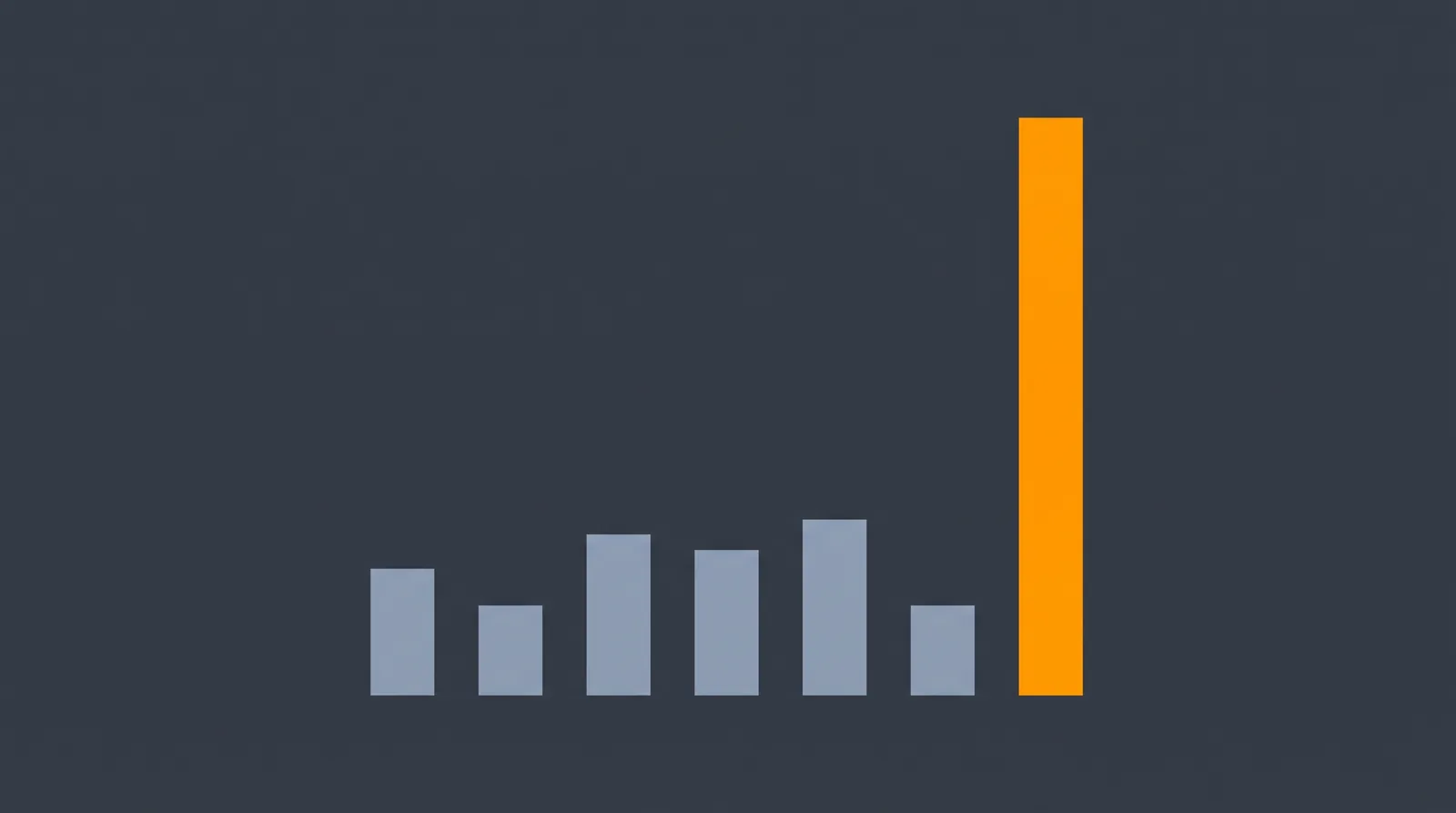
The fee map makes this concrete. On Talkadot, speakers with 1 to 5 post-event survey responses earn a $1,500 median fee. Speakers with 76 to 150 responses earn $5,000. Speakers with 150 or more responses earn $7,500. The same 99-plus rating, across every tier. The number who responded is the signal - not the score they gave.
What the language says matters too. Talkadot's word-frequency analysis across more than 1 million verified audience survey responses shows a clear pattern. Audiences of high-rebook speakers use the words "engaging" and "interactive" more often. Audiences of low-rebook speakers use "inspiring" more. Both are compliments. They predict different outcomes.
If your audience tells you afterward the speaker was inspiring, you booked a memorable keynote. If they tell you the speaker was engaging and interactive, you booked someone you will probably rebook.
The verification action: Ask for aggregate post-event survey data from the speaker's last three talks. You want four numbers:
- How many audience members responded to the post-event survey for each event?
- What percentage rated the session 90 or above?
- What are the verbatim open-text quotes? (Read them yourself. Look for "engaging," "interactive," "actionable," "I can use this.")
- What was the audience size for each event, so you can calculate response rate?
If the speaker uses Talkadot, they can share this data directly from their profile. If they use another post-event tool, the data is still there. If they have no post-event data at all, that is the answer.
The red flag: A speaker who can give you a rating but cannot give you response volume. "My audiences always rate me a 99" without "and here's how many responded" is the equivalent of a restaurant that tells you it has a 5-star average but cannot tell you how many reviews.
Layer 5: Pricing Transparency
What to check: Is the quoted fee consistent with what the market pays for this speaker's profile, and is everything included in the quote?
The fee structure on Talkadot has not moved in three years. The 25th percentile is $1,000. The median is $2,500. The 75th percentile is $5,000. The 90th percentile is $10,000. For corporate buyers specifically, the median is $4,500.
If a bureau quotes you $25,000 for a speaker you have not heard of, ask for the data that justifies the gap. That is not an attack. It is your job.
The verification action: Before negotiating, get the full itemized quote. Ask the speaker (or bureau) to list what is included: travel and accommodation, pre-event customization call, recording rights, post-event audience survey deployment, follow-up materials. These are all negotiable inclusions. A $10,000 keynote with travel, recording rights, and a post-event data clause is a different value than a $10,000 keynote with none of those.
The red flag: A fee that comes with no itemization. Or a bureau that will not tell you what portion of the quote is the speaker's fee versus the commission.
Layer 6: Contract Reasonableness
What to check: Does the contract protect you if the speaker underperforms, cancels, or delivers something materially different from what you negotiated?
Most speaker contracts are written by the speaker or by the bureau on the speaker's behalf. They protect the speaker's fee. They do not protect your event.
The clauses that matter for you are usually the ones that are missing.
The verification action: Before signing, add or negotiate these four clauses:
- Cancellation window. 30 days minimum cancellation notice on the speaker's side, with a clear process for finding a comparable replacement if they cancel. Most default contracts require you to pay 50 to 100 percent of the fee if you cancel but offer minimal protection if the speaker cancels.
- Performance definition. A brief description of what constitutes a sub-par delivery (no-show, refused to take questions, significantly shorter than contracted time) and the corresponding fee adjustment process.
- Post-event audience survey clause. The speaker agrees to deploy their post-event survey and share aggregate results with you within seven days of the event. You are not asking for individual responses. You are asking for the same data that justifies the booking to your stakeholders.
- Recording rights. Specify whether you can record, keep, and use the recording internally. If you want external or marketing use, specify that. Leaving this blank defaults to the speaker's preference.
The red flag: Any contract provision that eliminates your ability to request a fee adjustment if the speaker does not show or delivers something materially off from what was agreed.
Layer 7: Pre-Event Customization Willingness
What to check: Is the speaker willing to learn your audience before they walk in the room?
A speaker who has given this talk 200 times knows their material cold. That is the good news. The risk is that they give you the same talk they gave the last 10 organizations, with your company name swapped in at three points.
Customization is not a luxury. It is the variable that separates "inspiring" from "relevant."
Talkadot data shows speakers with repeat bookings offer 2.5 times more keynote-plus-workshop combinations than speakers without repeat bookings. That is partly format flexibility. But it is also a proxy for willingness to go deeper with an organization. Speakers who customize go back. Speakers who deliver a packaged keynote often do not.
The verification action: On the discovery call, ask: "What do you need from me before the event to make this session specific to our audience?" A speaker who answers with a list of questions - about your industry, your team's current challenges, what you are trying to accomplish after the talk - is a speaker who customizes. A speaker who says "just send me the event details and I'll be ready" may be telling you more than they intend to.
The red flag: A speaker who does not send a pre-event questionnaire or who sends a generic one unchanged from their standard template.
Discovery Call Questions That Actually Vet
Bring these five questions to every speaker discovery call. They are not on the standard list. They are hard to script answers to.
- "Can you share aggregate post-event survey data from your last three talks, including the number of audience members who responded?" Watch the reaction before the answer.
- "What is your repeat-booking rate with past organizations? Has any organization booked you more than once?" If the answer is yes, ask which ones. Verify.
- "What do you need to know about our audience before you walk in the room?" Listen for specificity.
- "If the talk lands the way you intend, what does our audience do differently in the first week after?" Vague answers signal a packaged talk.
- "Have you spoken to our specific audience type before? What was the outcome?" Audience-type match is the thing you actually need.
Reference Check Questions That Actually Work
When you call a past-event organizer, these three questions get you past the polished referral:
- "What was the audience - industry, function, and approximate size?" You need to assess fit. A talk that worked for 500 healthcare executives may or may not work for 80 mid-market sales reps.
- "Did you run a post-event survey? What did the data say?" If they did, ask for the top-line numbers. If they did not, ask what audience members said directly.
- "Would you book this speaker again? Have you?" The second question is the tell. References almost never say no to the first question. The second one has a factual answer.
Vetting Scorecard
Use this to score each candidate. The weights reflect which layers correlate most strongly with planner outcomes in Talkadot platform data.
| Layer | Weight | Score (1-5) | Weighted |
|---|---|---|---|
| Layer 1: Topic fit (specific sub-topic match to audience need) | 15% | __ | __ |
| Layer 2: Demo reel quality (real event footage, Q&A visible) | 10% | __ | __ |
| Layer 3: Past-event references (three real organizers, verified) | 10% | __ | __ |
| Layer 4: Audience-feedback data (response volume + verbatim quotes) | 30% | __ | __ |
| Layer 5: Pricing transparency (itemized, benchmarked) | 15% | __ | __ |
| Layer 6: Contract terms (four protective clauses present) | 10% | __ | __ |
| Layer 7: Customization willingness (pre-event questions sent) | 10% | __ | __ |
| Total | 100% | __ / 5.0 |
Scoring guidance: - 5 - Speaker has full audience-feedback data (150+ respondents per event), fee is at or below segment median, contract includes all four protective clauses, sent a detailed pre-event questionnaire. - 3 - Speaker has some audience-feedback data (30+ respondents), fee is within 30 percent of segment median, contract has two of four protective clauses, willing to customize but did not send a questionnaire unprompted. - 1 - Speaker offers only testimonials and a reel, fee is above the 90th-percentile benchmark without justification, contract is one-sided, no pre-event process visible.
A score below 3.5 is not a speaker problem. It is a vetting incomplete.
Layer 4 is weighted highest deliberately. It is the layer that changes outcomes and the one most planners skip. If a speaker scores a 1 on Layer 4, no other layer compensates for it.
When You Do Not Need This Much Vetting
There are situations where the full 7-layer stack is more than you need.
You can compress the process if:
- A peer planner whose audience is nearly identical to yours booked this speaker in the last 12 months and the event data was strong. Their Layer 4 verification is yours.
- You are rerouting a previously successful speaker. If you booked them before and your own post-event data was strong, you already have Layer 4.
- The audience size is under 30 and the stakes are low. A short internal workshop can reasonably be booked on Layers 1, 3, and 7 alone.
You cannot compress the process if:
- The event is high-stakes (annual conference, executive offsite, board-level gathering).
- The speaker fee is above $5,000. At that price point, the data layer is not optional.
- The audience is skeptical (technical team, experienced professionals in the speaker's own field). These audiences read performance, not polish.
How to Vet a Speaker: FAQ
What is the difference between vetting and checking testimonials?
Vetting is examining data the speaker did not select. Testimonials are marketing assets - the speaker or their bureau chose which ones to show you. Vetting means asking for post-event survey data with response volume, calling past-event organizers with questions the speaker did not prep them for, and reviewing contract terms before signing. The gap between a speaker who survives testimonial-checking and one who survives actual vetting is where most bad booking decisions hide.
How do I get audience-feedback data on a speaker before booking?
Ask the speaker directly. Most professional speakers on modern booking platforms have post-event survey data from recent talks. Ask for three things: the number of audience members who responded to the post-event survey for each of their last three events, a sample of verbatim audience quotes, and confirmation that the data comes from a verified tool (not a self-reported document). If the speaker uses Talkadot, their audience-feedback data is collected and stored in the platform and can be shared directly from their profile.
How much should I weight the speaker's rating vs. their audience response volume?
Weight the rating at near-zero as a differentiator. Talkadot's State of the Speaking Industry 2026 report shows the average speaker rating across the entire platform is 99 out of 100, and that rating is statistically identical across every audience response volume tier, from speakers with 5 post-event responses to speakers with 500. The rating is the table stakes - virtually every working professional speaker hits 99-plus. The number who responded is the actual signal. A 99 from 200 audience members is a different claim than a 99 from 4.
What questions should I ask a speaker bureau about their roster?
Three questions a bureau cannot deflect with a promotional answer: (1) "Can you share aggregate post-event survey data from this speaker's last three engagements, including audience response volume?" (2) "What is this speaker's repeat-booking rate, and can you name organizations that have booked them more than once?" (3) "What is your commission on this booking, and what is the speaker's fee before commission?" The third question is the one bureaus least expect. The first question is the one that tells you whether the bureau has the data or is operating on reputation.
Can I request a full recording of a speaker's past talk before booking?
Yes, and you should. A highlight reel is a marketing asset. A full recording - preferably the event videographer's cut, not the speaker's YouTube upload - shows you how the speaker handles the first five minutes when the audience is not yet warmed up, how they manage a Q&A, and whether they hold attention through the middle of the talk. Most professional speakers with 20 or more paid engagements have full recordings. If a speaker declines to share one, ask why. "I don't have clearance to share client events" is a legitimate answer. "I don't have any" is data.
How long does proper speaker vetting take?
For a high-stakes event with a fee above $5,000, plan for 5 to 7 business days of active vetting after you have your candidate shortlist. That includes two days to request and review audience-feedback data, two days to conduct reference calls, and one day to review and negotiate the contract. For mid-range bookings ($2,500 to $5,000), you can compress to 3 to 4 days if you prioritize Layer 4 (audience-feedback data) and Layer 3 (reference calls) and move the contract to a day-of-signing checklist. The one thing you cannot compress: the reference calls. They take the time they take.
What if the speaker I want does not have post-event survey data?
Treat it as a fee signal. On Talkadot, speakers with fewer than 10 post-event survey respondents earn a $1,500 to $2,000 median fee. That does not mean they are bad speakers - it means they have not yet built the track record that supports a higher fee. If you want a speaker in a higher fee tier and they have no post-event data, that is the moment to press hardest on Layers 3 (reference calls), 7 (customization), and 2 (full recording). Compensate with depth on the layers that remain.
Related Resources
- How to find a keynote speaker for a corporate event. The sourcing guide this vetting stack follows from. Brief 01 in the series.
- How to avoid a bad keynote speaker. The risk-reduction framing for when you want to know what to protect against, not just what to check. Brief 02 in the series.
- Questions to ask before booking a speaker. The full 22-question discovery-call assist. Brief 09 in the series.
- How much does a keynote speaker cost in 2026?. The fee benchmarks page with segment-level data.
- Speaker bureau vs speaker marketplace: which should I use?. The channel-decision guide for planners who want to know whether to go through a bureau or book direct.
Talkadot is a platform that helps event planners find and book professional speakers using real audience feedback data, and helps speakers capture audience feedback, testimonials, and leads through a simple QR code. For planners, it is free. You can see speaker profiles with verified audience-feedback data, response volume, and verbatim audience quotes at talkadot.com/find-a-speaker.
Published: 2026-05-15. Author: Arel Moodie, cofounder, Talkadot. Data citations: Talkadot's State of the Speaking Industry 2026, based on more than a million verified audience survey responses across tens of thousands of speaking engagements (Jan 2023 to Mar 2026).