The Hidden Reason Some Conferences Feel Electric and Others Feel Forgettable
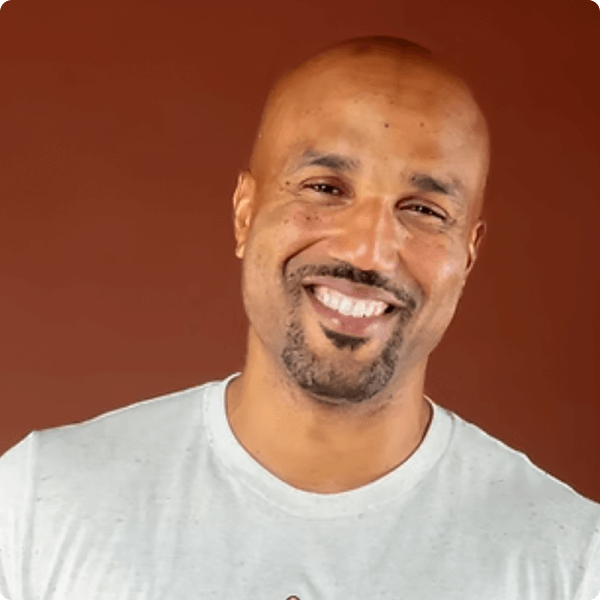
Recently, Kim Eddings Corcoran, M.Ed., CMP, CTA from Destination Michigan shared an insight that gets at something many event leaders are starting to feel, even if they have not fully named it yet.
Attendees are not just coming for the programming.
They are coming for the people.
Most event teams still talk about great content as the main draw.
That is not wrong.
It is just incomplete.
The real question is:
What if the most valuable part of your conference is not what happens on stage, but what happens because people met the right person in the hallway, over coffee, or in the ten minutes after a session?
And if that is true, then a bigger question follows:
Why are so many events still treating networking like something that should “just happen”?
Recent industry research points in the same direction Kim described. Freeman found that 51% of attendees say effective networking is reason enough to return to an event, and PCMA reported that for Gen Z attendees that figure rises to 65%. Freeman’s research also found that many younger attendees want more structure, with 40% saying networking feels awkward and 30% saying they struggle to start conversations. Nearly half said they want curated recommendations on who to meet before the event.
That is the shift.
People are not just asking for networking.
They are asking for intentional networking.
Captions are auto generated
Play
Kim Corcoran from Destination Michigan
What Changed
For years, the event formula looked something like this:
Book strong speakers. Build solid breakouts. Add a reception. Hope people connect.
That worked well enough when simply gathering in person was the differentiator.
But attendee expectations have changed.
Associations Now, covering recent event-industry research, reported that professionals increasingly value connection and community-building over flashy conference staples, and that networking sessions ranked ahead of more traditional formats for building community.
In other words, attendees are no longer satisfied with being in the same building.
They want help meeting the right people.
Not random people.
The right people.
The Duality
To understand what is happening, hold two facts in your head at the same time.
Fact one: content still matters. If the programming is weak, the event suffers.
Fact two: for many attendees, the most memorable value comes from the conversations around the content, not just the content itself.
Associations Now captured this tension well when it noted that many attendees do not rave about slide decks, they remember meeting a mentor, collaborator, or new opportunity through the event. That same piece argues that planners need to do more than leave room for serendipity, they need to design for it.
Both facts are true.
But only one explains why “good programming” by itself is no longer enough.
What psychologists call friction cost helps explain this. Even when people want to connect, small social barriers stop them. Who do I talk to? Am I interrupting? Is this person relevant to me? Will this feel awkward? Freeman’s data supports that reality, especially for younger professionals, many of whom want the event to lower the burden of initiating connection.
That means the winning events are not just creating access.
They are reducing friction.
What Doesn’t Work
This is where a lot of events miss the moment.
They create the conditions for networking, but not the structure.
Here is what often doesn’t work:
1. Open-ended cocktail hours with no facilitation There is food, there are drinks, there is music, and there is also a room full of people standing with the two colleagues they already know.
2. Overscheduled agendas with no breathing room If attendees are sprinting from session to session, there is no oxygen for relationship-building.
3. Generic receptions with no shared purpose Freeman’s findings, echoed by PCMA, suggest that simply making time for networking is not enough. Attendees want support around who to meet and what to connect about. Yet many planners still prioritize time slots and parties over curation and conversation design.
4. Assuming everyone is naturally comfortable networking They are not. Freeman found that a meaningful percentage of attendees feel awkward networking or struggle to start conversations.
5. Treating hallway magic as luck Hallway conversations are powerful, but if your strategy depends on luck, many attendees will miss out.
What Does Work
The events creating the strongest experiences are not waiting for connection to happen on its own.
They are designing for it.
Here is what does work:
1. Curated networking around a purpose PCMA’s research highlights that the most powerful networking variable is gathering people around a specific purpose, not just putting them in the same room.
That could look like:
- first-time attendee meetups
- role-based roundtables
- industry-specific breakfasts
- problem-solving circles around a shared challenge
- hosted small-group conversations after a keynote
2. Giving people a conversation starter Associations Now shared examples like name badges that include what someone is looking for help with, which turns a badge from an identifier into an invitation.
Examples:
- “Looking to meet association marketers”
- “Trying to solve sponsor retention”
- “Seeking peers building member communities”
3. Structured networking early A recent 2026 event trends piece by Centric Events recommends running structured networking early to reduce what it calls “lonely attendee time,” and to use signage and facilitation to make participation easier.
This matters because the first few hours of an event often determine whether someone feels connected or invisible.
4. Designing spaces for interaction, not just traffic flow Lounges, snack stations, and hallway activations can help, but only when paired with intentional prompts or hosted touchpoints. Otherwise they become background furniture. Many common networking elements are well-intended but often imperfect in practice.
5. Matching people before the event Freeman found that nearly half of younger attendees want curated recommendations on who to meet before they arrive. This is a lot of effort but INCREDIBLE reward for retention, satisfaction and return rates.
That means intentional networking may begin long before check-in.
What Comes Next
Events keep strong content, but start building more intentional networking layers around it. This becomes part of experience design, not an afterthought.
The best conferences become "And Stacking" Focused known for having “great sessions” AND more for helping attendees meet the exact people they needed to meet. Networking becomes a core reason to attend and return. Not just putting people in open rooms with an open bar and brownies. But intentionally making it easier for people to walk up to strangers and see them as friends first.
The mindset that wins "Everyone is a friend until they give me a reason to treat them like a stranger instead of everyone being a stranger until given a reason to treat them like a friend".
The Bigger Pattern
This is not just about networking.
It is about how attendee value is changing.
People still want knowledge.
But they also want traction.
They want introductions, context, collaboration, and belonging.
That is why “hallway conversations” matter so much. They are not side benefits. For many people, they are the proof that the event was worth leaving home for.
The Real Opportunity
The winning events will not be the ones that simply hope connection happens.
They will be the ones that make connection easier.
Not forced.
Not cheesy.
Not overly programmed.
Intentional.
That is the shift Kim was pointing to.
Attendees do not just want an event wrapped around content.
They want an experience that helps the right conversations happen.
And the events that understand that will not just have better networking.
They will have better outcomes.