The Problem With Speaker Selection Is Not Lack of Options. It’s the Invisible Tax of Using a Pre-Data System in a Post-Data World.
If you are planning an annual conference right now, you do not have a speaker shortage.
You have a signal shortage.
That is the real problem.
Because the modern event planner is not struggling with too few names.
You are struggling with too many names, too little trustworthy data, and too much downside if you get the choice wrong.
For years, the industry solved this the best way it could.
Ask your network.
Ask who spoke last year.
Ask peers who they loved.
See who comes through via email.
Talk to a bureau.
Watch a few videos.
Read the testimonials.
Make the best decision you can.
That system made sense in a pre-data world.
But we do not live in that world anymore.
Today, event planners are expected to make sharper decisions, faster. Budgets are tighter. Attendance is harder to earn. Expectations are higher. And when someone gives up their time and money to show up in person, the standard is not “good enough.” The standard is, “Was this worth leaving home for?”
That changes speaker selection.
The old process has not broken because people are bad at it.
It has broken because it was built for a time when trusted recommendations were the best data available.
Now, they are not.
The Hidden Cost No One Talks About
What most people call “speaker search” is actually a stack of invisible taxes.
Not just time.
Not just effort.
Decision friction.
Context switching.
Reputational risk.
The cost of uncertainty.
Here are a few of the biggest invisible taxes event planners pay in the old system:
1. The Network Tax
You start with who you know.
Then who your peers know.
Then who someone on your board once saw.
Then the people already in your orbit.
That feels efficient.
Sometimes it is.
But it also narrows the field before the search even starts.
It rewards familiarity, not necessarily fit.
2. The Vetting Tax
A polished website is not proof.
A sizzle reel is not proof.
A great bio is not proof.
Even a strong referral is often still incomplete.
The real question is not, “Can this person speak?”
It is, “How did this person land with an audience like mine?”
That is a much harder question to answer in the traditional process.
3. The Reputation Tax
The bigger the stage, the more tempting it is to choose the safest recognizable option.
That is human.
But safe and right are not always the same thing.
Sometimes the best speaker for the room is not the most famous one. It is the one whose message, style, and outcomes match the audience best.
The problem is that in the old system, reputation often becomes the proxy for fit because fit is harder to see.
4. The Surfacing Tax
There are thousands of capable speakers.
But only a tiny percentage reliably surface.
Not because the rest are bad.
Because surfacing is still driven by who got referred, who got marketed well, who stayed top of mind, and who happened to be inside a trusted relationship loop.
That means a lot of strong speakers stay invisible, not because they are not good, but because the discovery system was not designed to reveal them.
5. The Confidence Tax
This is the biggest one.
Every planner knows the feeling.
You can gather a few names.
Watch a few clips.
Read some praise.
Get a quote.
And still not feel fully confident.
Not because you are inexperienced.
Because the underlying system is asking you to make a high-stakes decision with incomplete evidence.
That uncertainty is exhausting.
Why This Matters More Now
In the past, planners could absorb more friction.
There was more tolerance for hunting, sorting, asking around, and piecing things together manually.
Now there is less room for that.
The annual conference still carries massive weight for many organizations. Revenue. Sponsorship. Exhibitors. Retention. Brand perception. Member value. Internal credibility. Future momentum.
But the number of competing priorities around that event has grown.
Which means the cost of slow, fragmented, uncertain speaker search has gone up.
And as the market has gotten noisier, the stakes of getting the speaker wrong have gone up too.
That is why this matters.
Not because event planners suddenly became impatient.
Because the environment changed.
The old search process now asks planners to do too much detective work at exactly the moment they have the least bandwidth for it.
Why Trusted Relationships Still Matter, and Why They Are No Longer Enough
This is not an anti-bureau argument.
Far from it.
Bureaus play a valuable role. They know their speakers. They know how to manage risk. They understand relationships, logistics, and trust. And when a bureau has seen someone deliver or has worked with them repeatedly, that trust matters a great deal.
But even the best bureaus face a structural limit.
No one can deeply know tens of thousands of speakers.
Most bureaus may have large rosters or databases, but the number of speakers they can confidently recommend from firsthand trust is naturally much smaller.
That is not a flaw.
That is just reality.
Recommending a speaker you have not personally seen, placed, or verified carries risk. Unless a client specifically requests that person, most trusted advisors are understandably cautious.
That means the old ecosystem tends to keep circling around the same visible names.
Again, not because others are not good.
Because confidence is scarce, and people protect it.
That is exactly why audience feedback changes the game.
What Audience Feedback Changes
Audience feedback does something the old system struggles to do.
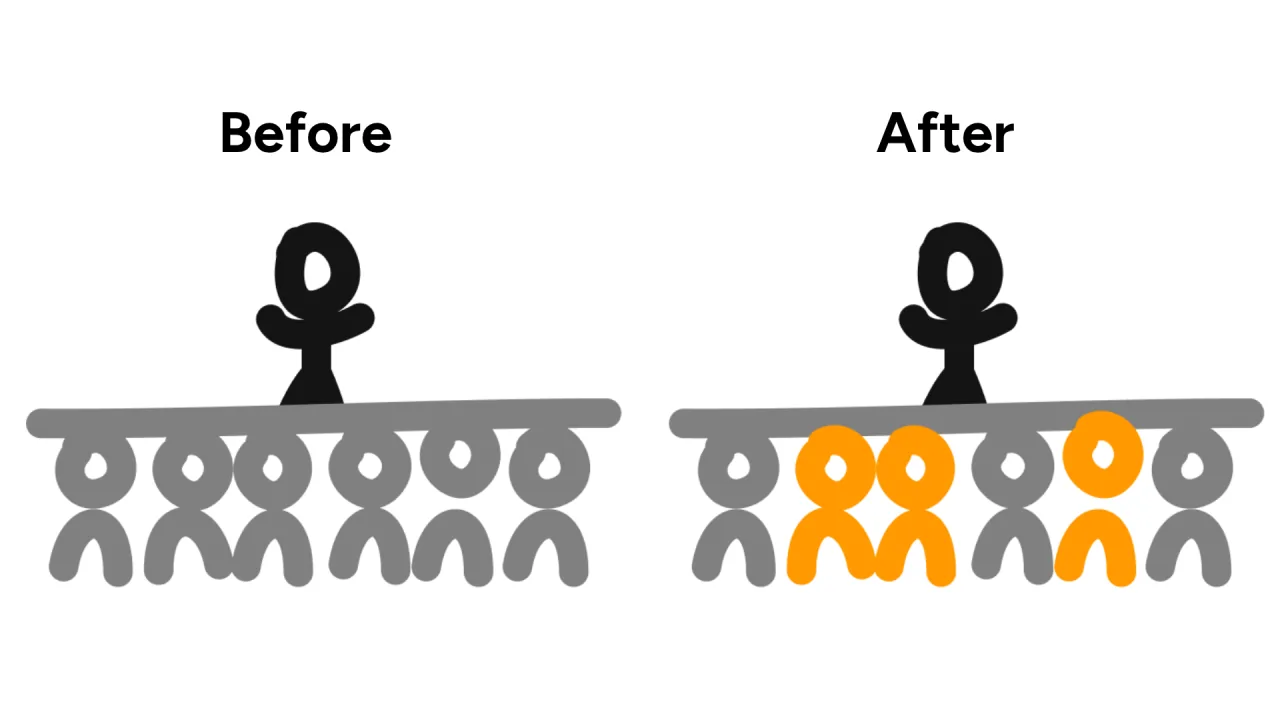
It turns speaker selection from a mostly reputation-based process into a more evidence-informed one.
Not cold data replacing human judgment.
Better data improving human judgment.
Because once you know how a speaker was rated by real audiences, across real events, in real rooms, a few important things happen:
You can see beyond the highlight reel.
You can compare resonance, not just branding.
You can surface strong speakers who may not have been in your immediate network.
You can reduce the risk of guessing.
You can move from “Who seems promising?” to “Who has actually performed well with audiences like ours?”
That is a very different kind of search.
And it is much closer to what event planners actually need.
The Category Shift Most People Haven’t Fully Seen Yet
This is the deeper shift underneath all of this:
Speaker selection is moving from a relationship-first discovery model to a relationship-plus-data discovery model.
That is where the industry is headed.
Relationships still matter.
Taste still matters.
Context still matters.
Trusted advisors still matter.
But now there is a second layer that did not exist before at this level:
Verified audience response at scale.
That is why Talkadot was built this way.
Not because there was a lack of speakers.
Because there was a lack of usable signal.
Over the last 4+ years, Talkadot has collected 1.5 million pieces of audience feedback from more than 40,000 events across 12,000+ speakers.
That matters because it changes what can be surfaced.
Instead of relying only on who is known, who is visible, or who happened to be referred in time, planners can now describe who they are, what kind of speaker they need, what budget they are working with, and get curated matches based on topic fit, budget fit, and real past audience feedback.
That is not just a faster search.
It is a different architecture for search.
And in a post-data world, architecture matters.
Why This Creates Better Outcomes for Planners
When you reduce the invisible tax of speaker search, three things happen:
1. Better Decisions
Not because data makes the decision for you.
Because it gives you a stronger foundation for judgment.
2. Better Surfacing
Strong speakers who would never have made it through the old visibility funnel can now be discovered on the strength of how audiences actually responded.
3. Better Use of Time
Event planners should not have to burn hours stitching together confidence from scattered signals.
They need a shorter path to strong options.
That is especially true now.
The Bigger Point
The problem with speaker selection was never that there were not enough good speakers.
It was that the system for finding and trusting them was built before this kind of data was available.
So the industry did what it could.
It leaned on relationships.
It leaned on referrals.
It leaned on reputation.
And those things still have value.
But they are no longer the ceiling.
Now we can do something better.
We can keep the human judgment and improve the signal.
We can keep the relationships and improve the surfacing.
We can keep the trust and strengthen it with actual audience evidence.
That is the shift.
Not from people to platforms.
Not from trust to algorithms.
From incomplete signal to stronger signal.
From pre-data habits to post-data decision-making.
And for event planners, that shift matters because the cost of getting it right has never been higher, and the cost of getting it wrong has never been more visible.
If you are an event planner, that is exactly why tools like Talkadot matter now.
Not because you need more speaker options.
Because you need a better way to see the right ones.
And because it is free for event planners, the barrier is not whether you can afford to explore a smarter way to search.
The better question is whether the old invisible taxes are still worth paying.