How Far in Advance Should You Book a Keynote Speaker?

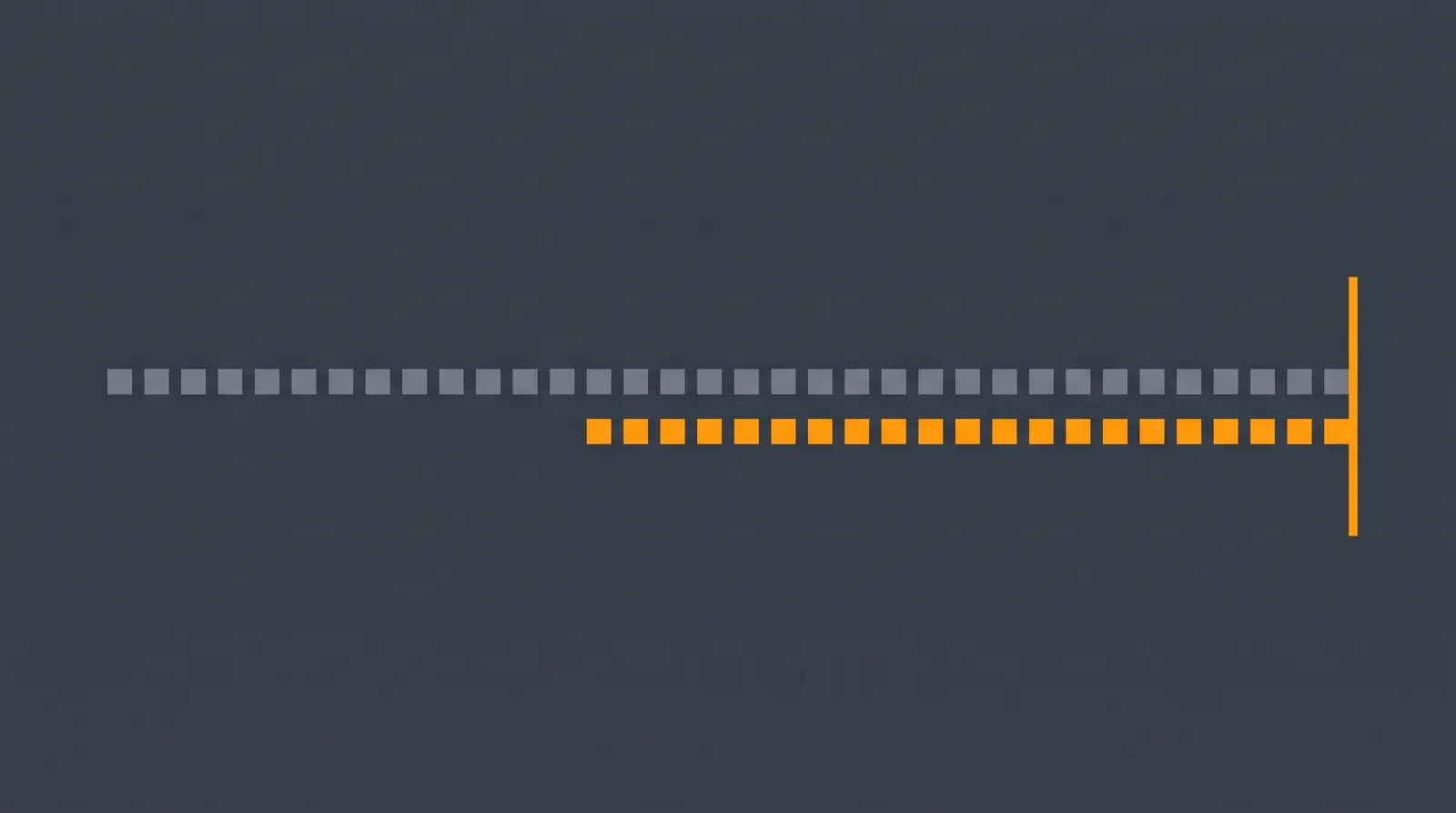
There is no single lead time that fits every booking. In my experience, a well-known speaker's calendar fills first. Premium bookings often need 6 to 12 months. A mid-market speaker can sometimes be booked inside 60 days. That is my read from 19 years, not a Talkadot data claim. Separately, Talkadot's 2026 industry data tracks the gap between an audience member seeing a speaker at someone else's event and their own organization booking that speaker. The median is 4.5 months, ranging from weeks to over a year. That number does not tell you how much of the window is active evaluation and how much is just waiting on a budget cycle. What it tells you is that the organization-side clock is long, and it is not a speaker's calendar. The two timelines are different, and mixing them up is where most booking timelines go wrong.
I am Arel Moodie, cofounder of Talkadot. I have booked speakers and been the speaker waiting on a decision for 19 years now. The question "how far in advance" gets asked constantly, and it almost never gets answered honestly, because the honest answer has two parts and most guides only give one.
The Honest Answer: It Depends on the Tier
If you are asking how far in advance to book a keynote speaker, you do not have one timing question. You have two.
One is the speaker's calendar. The other is your own decision process.
Most bureau guides collapse both into a single rule, something like "book 6 to 12 months out." That is not wrong for a specific kind of booking. It is incomplete for the rest.
Here is my take, based on 19 years watching both sides of this. It is a POV, not a Talkadot data claim, because no atom in the 2026 report breaks lead time out by speaker tier.
Well-known and in-demand speakers. Their calendars fill first, sometimes a year or more out, because a small number of dates get claimed by a large number of planners. If your event depends on a specific name, start early. Waiting until 90 days out usually means that name is already gone.
Mid-market working speakers. The ones who speak often, are good at what they do, and are not chasing a marquee reputation. Their calendars have more open dates closer in. Booking inside 60 days is common, not exceptional.
The format matters too. A single keynote slot is easier to fill on short notice than a multi-day training engagement, which needs more coordination on both sides.
None of that is a rule you can plug a number into. It is a scarcity signal. The scarcer the speaker, the earlier you move.
What the Data Actually Measures: The 4.5-Month Sales Cycle
Here is where it gets useful, and where I want to be precise about what the number is and is not.
Talkadot's 2026 industry data tracks something different from calendar scarcity. It measures the gap between an audience member first seeing a speaker at someone else's event and that audience member's own organization booking the same speaker. The median is 4.5 months. The range runs from a few weeks to more than a year.
That is not how far out you need to lock in a date.
It is also not a measure of how much active work happens inside that window. Some of the 4.5 months is genuine evaluation. Reference checks. Internal approvals. Comparing candidates. Getting sign-off. Some of it is just waiting. Waiting for a budget cycle to open. For an event to get scheduled. For someone to finally raise their hand internally. Talkadot's data does not separate the two.
What the number does tell you is that the organization-side clock is long, and it runs separately from the speaker's calendar.
It is not a speaker-availability number. It is a you-and-your-organization number.
The two clocks run at the same time, and they are not the same clock. A speaker's calendar can be wide open next month while a specific organization still takes four and a half months, start to finish, to go from first seeing that speaker to signing a contract. Or a speaker's calendar can be locked a year out while one particular booking decision, once someone actually starts working it, moves in three weeks.
The Lead-Time Framework: 30, 60, 90 Days, and 6+ Months
Once you know which clock you are dealing with, the practical planning gets simpler. Here is what changes at each distance from your event.
Inside 30 days
You are in urgency mode. Your candidate pool narrows to whoever has an open date, not whoever is the best fit. Negotiating room shrinks because the speaker knows you have limited options. Vetting gets compressed, which is exactly the moment you are most likely to lean on a slick reel instead of real evidence.
30 to 60 days
Still tight, but workable for mid-market speakers. You have enough runway to compare two or three real candidates instead of taking the first yes. Contract terms are still mostly the speaker's to set, since demand still favors them at this distance.
60 to 90 days
This is where a normal booking process starts to feel comfortable. You can run a real evaluation, check references, and negotiate fee and terms without either side feeling rushed. For a mid-market speaker, this window is often enough on its own.
6 months or more
The candidate pool is at its widest. Premium and well-known speakers are still gettable. You have time to do the evaluation properly instead of rushing it, which is the single biggest lever a planner has over outcome quality. This is the window where a long organizational decision process does not force a rushed call at the end.
It is not the calendar that determines how good your decision is. It is how much of that window you actually spend evaluating instead of scrambling.
What You Actually Control
You cannot compress a speaker's calendar. If the date is gone, it is gone, and no amount of planning changes that.
What you can compress is the evaluation step itself, the genuine work inside that window, as opposed to whatever part of it is just waiting on a budget cycle or an event date to firm up.
When a planner starts from zero, most of that evaluation work goes to building confidence in a candidate from scratch. Chasing references. Watching demo reels of unknown provenance. Asking a speaker's own team to vouch for the speaker. That takes weeks, sometimes longer, and it eats directly into whatever lead time you started with.
Talkadot is a platform that helps event planners find and book professional speakers using real audience feedback data, and helps speakers capture audience feedback, testimonials, and leads through a simple QR code. When verified audience feedback is sitting in front of you before you start vetting, instead of something you have to go build from zero, the evaluation step gets shorter no matter how far out you are booking. It does not change a speaker's calendar. It changes how much of your own decision window you spend proving a speaker is worth booking, because the evidence is already there instead of something you go build.
The real question is not how far in advance you should book. It is how much of your decision window you are spending on scarcity versus on evidence.
How Far in Advance to Book a Keynote Speaker: FAQ
How far in advance should I book a keynote speaker?
It depends on the speaker's tier, and this part is Arel's first-person industry experience, not a Talkadot data claim. Well-known and in-demand speakers often need 6 to 12 months of lead time because their calendars fill first. Mid-market working speakers can frequently be booked inside 60 days. Separately, Talkadot's 2026 industry data shows the median audience-to-booking sales cycle runs about 4.5 months. That describes the gap between an audience member seeing a speaker and their organization booking them, not how far out a speaker's calendar is booked.
Is there a data-backed number for speaker lead time?
Talkadot's 2026 industry data measures a related but different number: the median time from an audience member first seeing a speaker to their organization booking that speaker is 4.5 months, ranging from weeks to over a year. That is the organization-side sales cycle, not a speaker-calendar-scarcity figure, and it does not break down how much of that window is active evaluation versus waiting on a budget cycle. No dataset Talkadot has breaks out lead time by speaker tier specifically, so tier-based guidance here is Arel's first-person industry experience, not a data claim.
What happens if I try to book a keynote speaker with less than 30 days notice?
Your candidate pool narrows to whoever has an open date rather than whoever is the best fit, negotiating power shifts toward the speaker, and vetting gets compressed. That compression is the real risk: it is the point where planners are most likely to rely on a produced demo reel instead of real audience evidence, because there is no time left to check anything more thorough.
Do well-known speakers really need to be booked a year out?
Often, yes, because a small number of open dates get claimed by a large number of planners chasing the same names. This is not a Talkadot data claim, it is Arel's read from 19 years on both sides of the booking table. If your event depends on a specific, in-demand name, moving early is the safer play. Mid-market speakers, who speak often but are not chasing marquee-level demand, typically have more flexibility closer to the event.
Does booking early guarantee a better speaker?
No. Talkadot never promises a booking outcome or guarantees availability. What a longer lead time gives you is more candidates to compare and more time to evaluate them properly. A rushed 20-day booking can still land a great fit, and a 9-month booking can still go wrong if the evaluation step gets skipped. Lead time buys you optionality, not certainty.
How is "time to book a speaker" different from "time to plan an event"?
They are two separate clocks. Your overall event timeline includes venue, program, and logistics. The speaker-booking clock inside that timeline has its own two parts: how far out the speaker's calendar is open, and how long the organization-side sales cycle takes once a candidate is on the table. Talkadot's 2026 industry data speaks to the second part, the 4.5-month median, not the first.
What can shorten the time it takes to book a speaker?
The evaluation step is the part a planner actually controls. Reference chasing and reel-watching from a cold start is what stretches a decision cycle out. Having verified audience feedback data available up front, instead of having to build a case for a speaker from zero, shortens that specific step regardless of how far out you are booking. It does not shorten a speaker's calendar availability, which is fixed by demand for that speaker, not by how well-prepared your evaluation is.
Related Reading
- How to find a keynote speaker for a corporate event: the full sourcing process, once you know your timing window.
- Questions to ask before booking a speaker: the vetting checklist for the step right after timing is settled.
- How much does a keynote speaker cost?: fee benchmarks for the budget conversation that usually happens alongside timing.
- Speaker industry data and trends 2026: the platform-wide stats summary, including the sales-cycle data cited here.
Talkadot exists so planners can find proven speakers and speakers can build a proven reputation. If your timeline is already tight and you want verified audience feedback in front of you instead of starting your evaluation from zero, Talkadot is free for event planners. Start at talkadot.com/find-a-speaker.
Talkadot is a platform that helps event planners find and book professional speakers using real audience feedback data, and helps speakers capture audience feedback, testimonials, and leads through a simple QR code.
Published: 2026-09-14. Author: Arel Moodie, cofounder, Talkadot. Data citations: Talkadot's State of the Speaking Industry 2026, based on more than a million verified audience survey responses across tens of thousands of speaking engagements (January 2023 through March 2026). Tier-based lead-time guidance is Arel Moodie's first-person industry POV, not a Talkadot data claim.
