Talkadot vs BigSpeak: What Event Planners Actually Need to Know
Talkadot is a speaker booking marketplace that shows event planners verified audience-feedback data before they book. BigSpeak is a traditional speaker bureau that represents a curated roster and earns a commission on the booking. With a bureau, an account rep vets and presents speakers, and the commission (built into the quote, typically 20-30%) is part of what the booking costs. Talkadot's take rate is also 20-30% of booking value, charged on the speaker side. The real difference is not the fee. It is that Talkadot shows what past audiences actually said about each speaker before you commit, and discloses the range up front. Use a bureau when curation and top-tier access are worth the commission. Use Talkadot when the data to vet direct is worth more than the backstop.
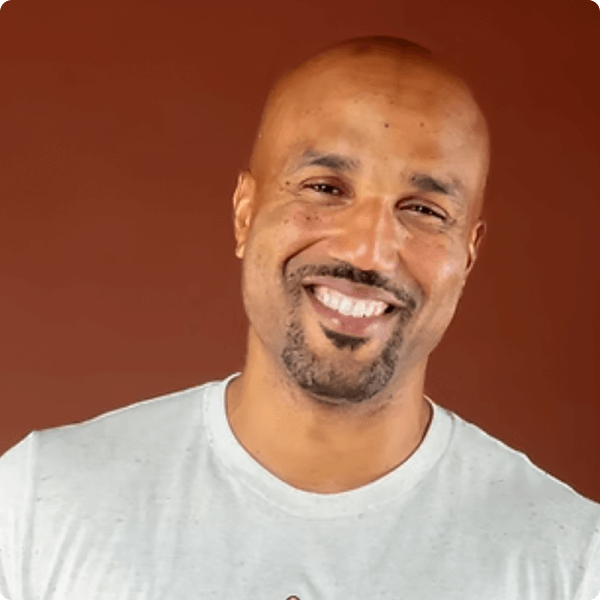
I am Arel Moodie, cofounder of Talkadot. I have given more than a thousand paid talks over 19 years, and I have watched thousands of planners book speakers from both sides of the table. I do not think bureaus are the villain here. They built a real business solving a real problem. But choosing between a bureau and a marketplace is not a brand preference. It is a structural decision with a dollar number and a data question attached. This page walks you through what each model actually does, where each one earns its keep, and how to decide without getting the call backwards.
What Each One Actually Is
If you are comparing Talkadot and BigSpeak, you do not have a vendor problem.
You have a model problem.
The question is not which name is bigger.
It is which model puts the right information in front of you before you commit.
Talkadot is a platform that helps event planners find and book professional speakers using real audience feedback data, and helps speakers capture audience feedback, testimonials, and leads through a simple QR code.
The planner sees verified audience-response data: how many real people filled out a post-event survey after a given talk, the words they used to describe the session, and whether the organization booked that speaker again.
BigSpeak is a traditional speaker bureau. A bureau represents a curated roster of speakers, and an account rep helps you choose, negotiate, and book one. The bureau vets who makes the roster, manages the logistics, and earns a commission on the booking that is built into the quote you receive.
Same goal on paper: get a great speaker on your stage.
Different model underneath.
It is not a better bureau.
It is a different answer to the same question: how do I know this speaker will land in my room.
What You See When You Vet a Speaker
This is the part that decides your booking.
When you evaluate a speaker through each model, here is what you are actually working with.
Through Talkadot:
- Number of verified audience survey respondents from past talks
- Verbatim audience quotes collected after each event, not speaker-selected
- Aggregate audience rating with the response volume attached
- Fee range, surfaced to the planner
- Talk history and format type (keynote, workshop, breakout)
- Repeat-booking signal
Through a bureau like BigSpeak:
- A curated roster the bureau has vetted
- An account rep's recommendation and read on fit
- Speaker bio, demo reel, and topic list
- Reference points the bureau provides
- A quoted fee with the commission built in
- Logistics handling and a contract backstop
Neither model is hiding the speaker from you.
But one shows you what the bureau and the speaker say, and one shows you what the room said.
Talkadot's State of the Speaking Industry 2026 makes that gap concrete. The average rating across the entire Talkadot platform is 99 out of 100 (SOSI-017). It does not move. A 99 from a speaker with five post-event survey responses and a 99 from a speaker with two hundred are the same number. The rating is table stakes, not a differentiator.
The audience response volume is the differentiator.
How Does the Pricing and Commission Model Work?
For the event planner, this is where the two models split hardest.
The bureau model. A bureau earns a commission on the booking. In my 19 years and more than a thousand paid talks, 20 to 30 percent is the commission range planners have consistently described seeing built into bureau quotes. It is not always itemized. The speaker's fee, the commission, and the bureau's service are presented as one number. That is how the bureau model works. It is not a trick. It is the structure that pays for the curation, the account rep, the negotiation, and the backstop.
The Talkadot model. Talkadot is free for event planners. The platform earns a take rate on the booking value, paid on the speaker side, not added as a separate fee to the planner. That take rate runs in a similar range to a bureau commission, roughly 20 to 30 percent of booking value. The difference for you is not that one is cheaper. It is what the take pays for and what you see before you commit. A bureau commission buys curation, an account rep, and a backstop, presented as one bundled number. The Talkadot take rate funds the platform and the audience-data layer, and you see the speaker's fee range and the response data up front and book direct.
Here is why that distinction matters at most fee levels.
Talkadot's State of the Speaking Industry 2026 shows the speaker fee structure has been settled for three years. The percentile breakpoints have been identical every year from 2023 through 2025: $1,000 at the 25th, $2,500 median, $5,000 at the 75th, and $10,000 at the 90th. The $20,000-plus tier is a stable 5 percent of speakers (SOSI-005).
So at most of the market, the curation a bureau adds is not buying you access to a different tier of speaker. The same speakers populate the sub-$10,000 range whether you reach them through a bureau or direct. At that range, the real choice is whether you want a curator and a backstop in the middle, or the audience data and a direct booking. Above $15,000, where top talent is often exclusively represented, the curation and access are more likely to earn the rate.
The Proof-of-Impact Gap
This is the section no bureau roster can match.
A bureau gives you a curated list and an account rep's judgment. That judgment is real, and at the top of the market it is valuable. What a bureau does not hand you is auditable post-event audience data you own and can show your stakeholders.
Talkadot does.
A speaker reference is chosen by the speaker or the bureau. An audience survey is filled out by the person who sat in the room.
Those are two different sources of truth.
Talkadot's State of the Speaking Industry 2026, built on more than a million verified audience survey responses across tens of thousands of speaking engagements, shows exactly what that difference is worth (SOSI-026).
Audience response volume vs median speaker fee (Talkadot platform data, 2026):
| Post-event survey respondents | Median speaker fee |
|---|---|
| 1-5 responses | $1,500 |
| 6-15 responses | $2,000 |
| 16-30 responses | $3,000 |
| 31-75 responses | $4,100 |
| 76-150 responses | $5,000 |
| 150+ responses | $7,500 |
Source: Talkadot's State of the Speaking Industry 2026 (SOSI-018)
Ratings across every single tier in that table: 99 out of 100 (SOSI-017).
Same rating. Five times the fee. The difference is not raw talent. It is documented audience engagement at scale.
Speakers with 150 or more post-event survey respondents earn five times the median fee of speakers with under 10 (SOSI-002). That volume is what a curated roster blurb cannot replicate. It is real people, choosing to respond, after the talk ended.
Bureaus have relationships.
Talkadot has performance data.
That is a different moat.
Talkadot is free for event planners. See what audiences said about the speakers you are already considering at talkadot.com/event-interest.
Who Controls the Relationship?
The two models put a different party in the middle of your booking.
With a bureau, the bureau is the intermediary. You talk to an account rep. The rep presents speakers, manages the quote, and handles the contract. That intermediation is the service, and for a high-stakes booking it can be exactly what you want: one point of contact who owns the logistics and absorbs the risk.
With Talkadot, you are looking at the speaker's verified audience data directly, and you book direct. The mechanism is simple. After a talk, the speaker deploys a QR code. Audience members who choose to respond fill out a post-event survey. Talkadot aggregates those responses. You see the volume, the aggregate rating with that volume attached, and the verbatim language. The speaker cannot edit or cherry-pick which responses appear.
One model gives you a gatekeeper who curates.
One model gives you the data and lets you decide.
Neither is automatically better. They put control in different hands. The right answer depends on whether you want a curator in the middle or the audience data in your own.
When a Bureau Like BigSpeak Is the Right Call
A bureau is not a lesser option. It is built for a different job, and there are clear situations where it is the better one.
Use a bureau when:
- The event is flagship-level and the speaker is high-profile. Your annual customer conference, your board retreat, the talk that gets recorded and sent company-wide. When a booking mistake would cost you real political capital, the curation, backstop, and relationships justify the commission.
- Your fee range is above $15,000. At this level the top-tier talent is often exclusively represented. The roster you reach through a major bureau is meaningfully better than what you can source direct, and the bureau's negotiating relationships are real value.
- You do not have time to vet. Vetting on audience data takes time. If you are three weeks out with a slot to fill, an established bureau with a roster and account reps can move faster and save the event.
- You need a cancellation backstop. Bureaus typically provide a contract backstop and handle re-booking if a speaker cancels. That risk transfer has a value of its own.
- Compliance requires a contracted vendor intermediary. Some enterprises and government bodies require a vendor in the middle. If that is your situation, the choice is already made.
BigSpeak has built a real bureau business serving exactly these cases. If your booking maps to this list, that is the model to use.
When Talkadot Is the Right Call
If you have ever booked a speaker who looked great on paper and did not land in the room, you are the planner Talkadot was built for.
Use Talkadot when:
- Your budget is under $10,000. The data says the same speakers populate this range whether you go through a bureau or direct (SOSI-005). At this level the commission is buying logistics you can handle with the right data, not a better speaker.
- You need auditable data to justify the spend internally. When your CMO asks why you spent $7,500 on a speaker, "the bureau said they were great" is a harder answer than "here is the aggregate audience-feedback data from their last six events."
- You book speakers regularly and want a repeatable process. Same data points, same comparison criteria, every time. You build institutional knowledge about what works for your audience instead of leaning on one bureau's judgment.
- You want pricing transparency before you commit. You see the speaker's fee range and the audience data, and you decide.
The Talkadot platform is free for event planners. The data it shows, verified audience engagement volume, verbatim quotes, and repeat-booking history, is what a curated roster does not hand you.
If your audience rates a speaker 99 out of 100 but only three people filled out the survey, you have a 99 from three people. Talkadot shows you that number explicitly. It is the signal that separates a speaker who earns a room from one who simply showed up to one.
Talkadot vs BigSpeak: Side-by-Side
| Feature | Talkadot | BigSpeak | Best for planners |
|---|---|---|---|
| Model | Speaker booking marketplace with verified audience data | Traditional speaker bureau with a curated roster | Different jobs; depends on the booking |
| Built for | Event planners making a data-backed booking decision | Planners who want a curated roster and a managed booking | Talkadot for direct vetting; bureau for managed curation |
| Proof of speaker impact | Verified post-event survey volume, verbatim audience quotes, repeat-booking signal | Roster reputation and account-rep judgment | Talkadot for auditable, owned data |
| Audience-feedback data | Yes, collected via QR code after each talk; planner sees volume and verbatim language | Not a feature of the bureau model | Talkadot |
| Pricing and commission | Free to event planners; speaker-side take rate in a similar range to a bureau commission, but the fee range is shown up front | Commission built into the quote, not typically itemized | Talkadot for fee visibility |
| Who controls the relationship | Planner books direct after seeing the data | Bureau intermediates and manages the booking | Depends on whether you want a curator or the data |
| Breadth at top tier ($15K+) | Coverage thins; most premium talent is bureau-represented | Strong exclusive access to top-tier speakers | BigSpeak |
| Breadth in the $2,500-$10,000 range | Broad inventory at transparent pricing | Curated, narrower at this range | Talkadot |
| Cancellation backstop | Dependent on platform terms and the direct speaker agreement | Bureau typically provides a contract backstop and re-booking | BigSpeak |
| Data rigor behind the platform claims | 1M+ verified responses, 50+ events per headline finding (SOSI-026, SOSI-028) | Not applicable to the bureau model | Talkadot for evidence-backed vetting |
The Decision Framework
Use a bureau like BigSpeak when the stakes, the fee tier, or the timeline make curation and a backstop worth the commission. Use Talkadot when you want verified audience data, transparent pricing, and a process you can repeat.
They are not strictly in competition. A bureau answers "who can you put on my stage and stand behind." Talkadot answers "of the speakers I am considering, which one did real audiences actually respond to."
The planners I see run the best programs use both. One marquee speaker through a bureau, where the relationship and backstop earn the rate. The rest vetted on audience data and booked direct, where the commission is optional and the data is the edge.
Talkadot is free for event planners. See what audiences said about the speakers you are already considering at talkadot.com/event-interest.
So the real question is not which name shows up first when you search for a keynote speaker.
It is whether your next booking should rest on a roster someone else curated, or on the data from the rooms that speaker has already stood in.
Talkadot vs BigSpeak: FAQ
Is BigSpeak free for event planners?
There is no separate platform fee a planner pays to use a bureau. The cost lives inside the booking. A bureau earns a commission that is built into the speaker's quote, so while you do not pay a subscription, the commission is part of the fee you are quoted. Talkadot is free for event planners, and its take rate (20-30%) sits in that same range, also paid by the speaker. The real difference is not the fee. It is that you see the speaker's fee range and the verified audience feedback data before you book.
What is the difference between a speaker bureau and a speaker marketplace?
A speaker bureau represents a curated roster of speakers, and an account rep helps you choose, negotiate, and book one, with a commission built into the quote. A speaker marketplace connects planners directly with speakers at transparent pricing, often with verified data about each speaker. BigSpeak is a traditional bureau. Talkadot is a marketplace that shows verified audience-feedback data, surfaces fee ranges, and lets the planner book direct. The structural difference is whether a curator sits in the middle of the transaction, and whether you can see the audience data behind each speaker.
Does booking through a bureau cost more?
Often, by the commission. In Arel Moodie's 19 years and more than a thousand paid talks, planners have consistently described seeing a 20 to 30 percent commission built into bureau quotes, usually not itemized. At most fee levels that commission is not buying a better speaker. Talkadot's State of the Speaking Industry 2026 shows the fee structure has been settled for three years, with the same speakers populating the sub-$10,000 range whether you book through a bureau or direct (SOSI-005). Above $15,000, where top talent is often exclusively represented, the bureau's access and negotiating relationships are more likely to justify the rate.
Can I see audience-feedback data on BigSpeak?
Auditable post-event audience data is not part of the traditional bureau model. A bureau presents a curated roster, an account rep's judgment, and references it provides. That is the model, and it works for many high-stakes bookings. The audience-data layer is what the marketplace adds. On Talkadot, after each talk a speaker deploys a QR code, audience members fill out a post-event survey, and the planner sees the response volume, the rating with that volume attached, and verbatim quotes. This matters because Talkadot data shows ratings cluster at 99 out of 100 across every tier (SOSI-017), so the response volume, not the rating, is the signal that tracks with fee and quality (SOSI-018).
Is Talkadot better than BigSpeak for booking a keynote speaker?
It depends on the booking. Above $15,000, for a flagship event with a speaker who is exclusively represented, a bureau like BigSpeak is often the right model: curation, exclusive access, and a contract backstop earn the commission. Under $10,000, where the same speakers are bookable direct, Talkadot gives you transparent pricing and verified audience data you can show stakeholders. They answer different questions at different stakes. Many planners use a bureau for one marquee slot and Talkadot for the rest. Talkadot is free for event planners at talkadot.com/event-interest.
Related Resources
- Speaker bureau vs speaker marketplace. The full decision guide, with the commission math and the eight structural differences.
- Speaker bureau alternatives. When and how to vet direct.
- How to find a keynote speaker for a corporate event. The full five-step vetting flow.
- How much does a keynote speaker cost. Fee benchmarks by buyer segment.
- How to vet a professional speaker. The seven-layer vetting stack.
- Talkadot vs SpeakerHub. The marketplace-vs-directory comparison.
- Questions to ask before booking a speaker. The discovery-call assist.
Published: 2026-06-22. Author: Arel Moodie, cofounder, Talkadot. Data citations: Talkadot's State of the Speaking Industry 2026, based on more than a million verified audience survey responses across tens of thousands of speaking engagements (Jan 2023 to Mar 2026). No BigSpeak fee, commission rate, or feature is stated as fact on this page; the bureau model is described in general terms.