Best Speaker Marketplaces in 2026: Ranked for Event Planners
The best speaker marketplaces in 2026 connect event planners directly with professional speakers using verified audience performance data, not just self-reported profiles. Top options: Talkadot (audience-feedback verified), eSpeakers (longest-running US marketplace), SpeakerHub (directory-plus-outreach), Bark.com (self-serve, fast). Talkadot is the only platform showing planners what past audiences actually said about each speaker.
Most event planners searching for a speaker marketplace end up on a bureau website.
That is not the same thing.
I am Arel Moodie, cofounder of Talkadot. Talkadot's State of the Speaking Industry 2026 report is built on more than a million verified audience survey responses across tens of thousands of speaking engagements. This comparison is written for planners, not for platforms. Where a marketplace has a real limitation, I will say so.
What Makes a Speaker Marketplace Different From a Bureau or Directory
There are three types of platforms in this space. Knowing which type you are on determines your pricing, your vetting signal, and who is actually working for you in the transaction.
| Type | What it is | Planner cost | Vetting model |
|---|---|---|---|
| Speaker bureau | Represents a curated roster on commission | Commission-based (fee varies; not typically itemized in the invoice) | Bureau agent vouches for speaker |
| Speaker directory | Searchable database, no booking infrastructure | Free to browse, no booking support | Profile self-reported |
| Speaker marketplace | Direct-booking platform with transparent pricing | Free for planners (or small transaction fee) | Verified by audience data or platform review |
This page covers marketplaces only.
The bureau comparison belongs on a different page. If you are deciding between a bureau and a marketplace for your next event, see Speaker bureau vs. speaker marketplace: which should I use?.
One sentence from Arel's experience as a working speaker: if you do not know which type of platform you are using, you are probably paying the bureau commission without knowing it.
The 4 Best Speaker Marketplaces in 2026 (Quick Comparison)
| Platform | Best for | Pricing model | Audience data | Speaker count | Free for planners? |
|---|---|---|---|---|---|
| Talkadot | Planners who want verified post-event audience survey data | Free for planners; speaker subscription | Yes - verified post-event surveys from real audiences | Thousands (US-focused) | Yes |
| eSpeakers | Planners who want the longest-running US platform with a large catalog | Free search; per-booking transaction fee | Limited - profiles are speaker-managed | 10,000+ (eSpeakers reports) | Yes |
| SpeakerHub | Planners doing direct outreach to speakers | Free basic; paid for advanced outreach tools | No | Thousands (global, self-reported) | Yes (limited) |
| Bark.com | Planners with budget under $2,500 wanting self-serve | Free to post; per-lead fee model | No | Horizontal marketplace, speakers are one category | Yes |
Quick verdict: If you want verified proof of how a speaker performs in a real room, Talkadot is the only marketplace with that data. If you want the longest track record in the US market, eSpeakers has been running since 1999. If you prefer to browse a global pool and reach out directly, SpeakerHub is built for that. If you are not sure which to start with, start where the data is.
Talkadot - The Only Marketplace With Verified Audience Performance Data
Talkadot is a platform that helps event planners find and book professional speakers using real audience feedback data, and helps speakers capture audience feedback, testimonials, and leads through a simple QR code.
Most speaker booking mistakes follow the same pattern.
The speaker had a strong bio. The demo reel looked polished. The audience left underwhelmed and the planner had nothing on paper to explain why.
Verified audience survey data from past talks is the only signal that exists before the room fills. That is what Talkadot collects. That last part matters: the QR code is how the data gets collected. Every speaker on Talkadot who deploys a post-event survey gets their audience responses verified through the platform. That is not a testimonial the speaker selected. It is what actual audience members said after leaving the room.
Ratings don't differentiate speakers. Response volume does.
Talkadot's average platform rating is 99+ out of 100 across every audience-size tier, per the State of the Speaking Industry 2026 report (SOSI-017). If every speaker on the platform has a 99, the rating tells you nothing about who to book.
What does differentiate speakers is how many audience members showed up to fill out the survey.
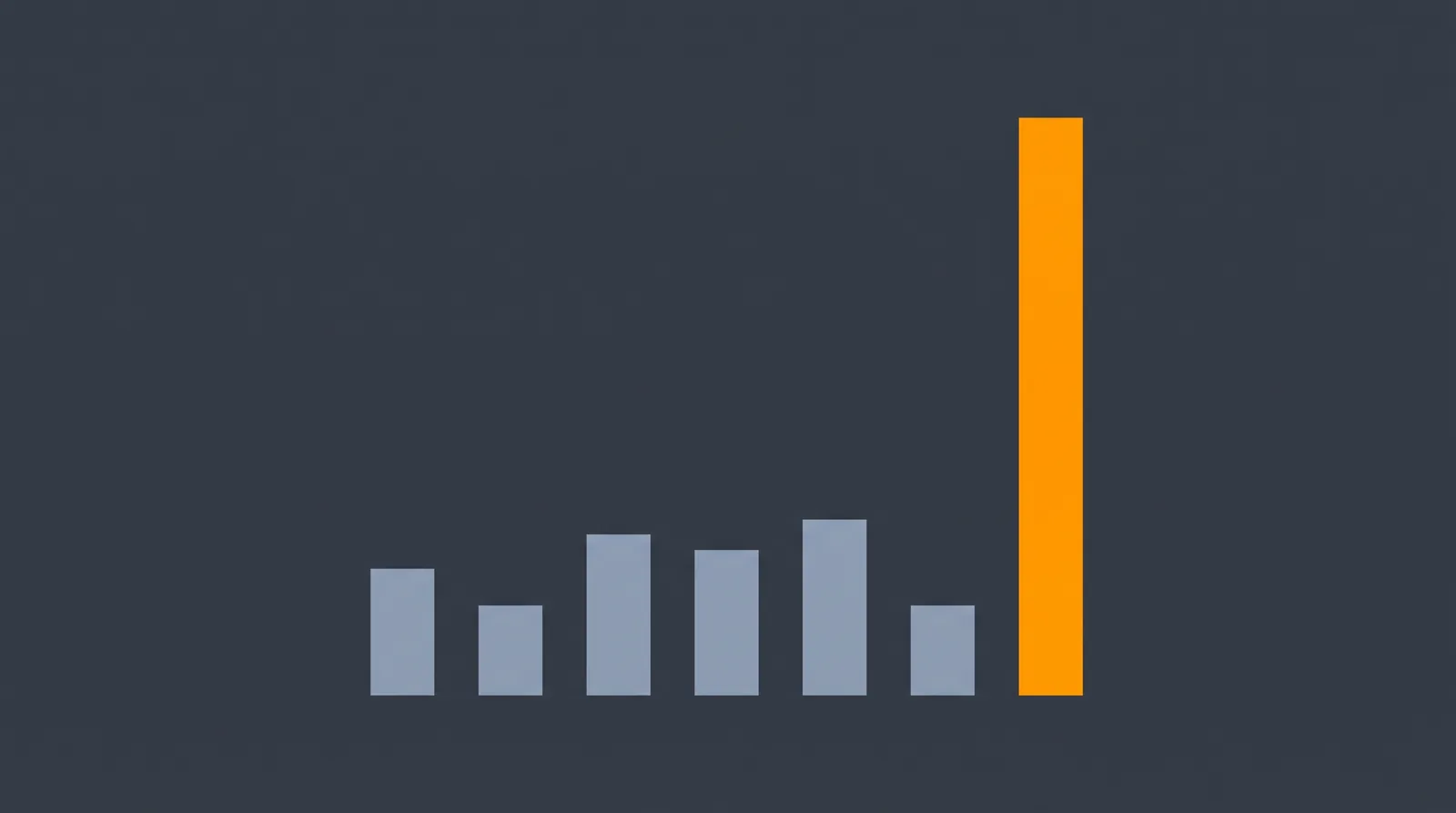
On Talkadot, speakers with 150 or more post-event survey respondents earn a $7,500 median fee. Speakers with 1 to 5 respondents earn $1,500. Same rating. 5x different fee. The number who responded is the signal (SOSI-018).
Audience engagement volume is a fee map. It is also a quality map.
The pattern holds across the tiers: speakers with 76 to 150 respondents sit at a $5,000 median. Speakers with 31 to 75 sit at $4,100. When you vet a speaker, look at how many audience members actually responded to their post-event surveys, not the rating itself. Talkadot data shows speakers with 150+ respondents earn 5x the median fee of speakers with under 10. Ratings cluster at 99+ across the board. Engagement scale is what separates the tiers (SOSI-002).
The data scale behind the signal
The Talkadot State of the Speaking Industry 2026 report covers more than a million verified audience survey responses across tens of thousands of speaking engagements (SOSI-026). That is the dataset planners are searching when they use Talkadot to find and vet a speaker. No other marketplace gives a planner access to that layer of post-event verification.
What Talkadot is best for
Planners vetting mid-market speakers in the $1,000 to $10,000 fee range who want to make a data-backed booking decision before signing a contract.
Honest limitation
Talkadot's speaker database is US-focused. For international keynote needs or very large marquee budgets above $20,000, you may need to look beyond Talkadot's current roster. That segment is a structural 5% of the speaker market, per platform data (SOSI-005).
For events above $20,000, see the bureau vs. marketplace comparison to understand where the commission math changes: Speaker bureau vs. speaker marketplace.
To be clear about how Talkadot works: it is free for event planners. Talkadot earns a 20 to 30 percent take rate on the speaker side when a booking runs through the platform. The difference from a bureau is not the absence of a fee. It is that you see a speaker's real audience-feedback data before you book, rather than taking curation on trust.
See speakers vetted by audience feedback at talkadot.com/find-a-speaker.
eSpeakers - The Longest-Running US Speaker Marketplace
eSpeakers has been operating since 1999. That is not a small thing.
A platform that survives two decades in this market has earned the trust of enough planners and speakers to stay relevant across several full market cycles. The catalog reflects it.
Twenty-five years of planner relationships.
eSpeakers reports 10,000 or more speakers listed across the US market. It functions as both a marketplace for planners and a business management tool for speakers. Speakers use it to manage calendar availability, contracts, and logistics. Planners use it to search, compare fees, and request bookings.
The search is filter-based: topic, fee range, location, availability. Speaker profiles are managed by the speakers themselves. What you find is what the speaker chose to show you.
What eSpeakers is best for
Planners who value platform longevity, want a large US catalog they can search and book direct, and are comfortable doing their own vetting on top of what the profiles show.
Honest limitation
Profile data is self-reported. eSpeakers does not surface verified post-event audience feedback data comparable to what Talkadot collects. eSpeakers gives you scale. Talkadot gives you signal. If you are using eSpeakers, bring your own vetting checklist.
Two More Speaker Marketplaces Worth Knowing
SpeakerHub
SpeakerHub is a directory-plus-outreach tool for planners who prefer to run their own search. You browse speaker profiles, filter by topic and fee range, and contact speakers directly.
Best for: planners who want to browse a global pool before committing to a formal search, and who want the outreach tools built in.
Limitation: No booking infrastructure and no verified audience data. You are researching, not vetting.
Bark.com
Bark.com is a horizontal marketplace that covers dozens of service categories. Speakers are one of them.
Post your event brief, receive quotes from speakers who want the gig. The model is self-serve and fast. Speaker quality varies widely.
Best for: last-minute fills or budget under $2,500 where a quick shortlist matters more than deep vetting.
Limitation: Bark is not built for speaker booking. It is a lead marketplace. The audience data and post-event verification that mid-market planners need does not exist here.
How to Pick the Right Speaker Marketplace for Your Event
Use this as a decision filter.
The question is not which marketplace has the most speakers. It is which marketplace can show you what past audiences actually said.
If you are vetting a speaker for a corporate event and want to see how past audiences responded: use Talkadot. It is the only marketplace where audience response data is verified, not self-reported. Talkadot is free for event planners. Start at talkadot.com/find-a-speaker.
If you want the largest US catalog with a long track record: use eSpeakers. Twenty-five-plus years of planner relationships built in.
If your budget is under $2,500 and you need speed over depth: use Bark.com. Match your brief to speakers ready to quote.
If you want a global pool and direct-outreach tools without a full booking platform: try SpeakerHub.
Most planners who make consistently good bookings use more than one channel. A marketplace for the vetting layer, a bureau for the backstop on high-stakes events, and a peer referral network for the warm context a profile cannot give you.
Fee benchmarks by platform tier
Before you start a marketplace search, it helps to know where your budget sits relative to the full market. Talkadot platform data shows the speaker fee structure has been identical for three consecutive years (SOSI-029):
- 25th percentile: $1,000
- Median (50th percentile): $2,500
- 75th percentile: $5,000
- 90th percentile: $10,000
- $20,000 and above: 5% of speakers
The $2,500 to $5,000 range is the core of what all four platforms serve. If you are above $10,000 and need the widest catalog, eSpeakers has the largest US pool. If you want data verification at any fee level, Talkadot is the only option (SOSI-005).
Frequently Asked Questions
What is the difference between a speaker marketplace and a speaker bureau?
A speaker marketplace is a platform that connects event planners directly with professional speakers, typically with transparent pricing and self-serve booking. A speaker bureau represents a curated roster on a commission structure, which is rarely itemized in the invoice. In my 19 years in this industry, planners tell me bureau commissions typically run 20 to 30 percent of the speaker fee. Marketplaces give you data and pricing transparency. Bureaus give you curation and logistics support. The choice depends on whether the commission is worth the curation time it saves you.
Are speaker marketplaces free for event planners?
Most speaker marketplaces are free for event planners to browse and search. Talkadot and eSpeakers both offer free access for event organizers. The platform typically earns revenue from speaker subscriptions or a transaction fee on completed bookings.
How do I know if a speaker on a marketplace is actually good?
The most reliable signal is verified post-event audience survey data from past talks. Talkadot's State of the Speaking Industry 2026 report shows that average ratings cluster at 99+ across all speakers on the platform, so ratings alone do not help you differentiate (SOSI-017). What differentiates speakers is audience response volume. On Talkadot, speakers with 150 or more post-event respondents earn a $7,500 median fee, compared to $1,500 for speakers with 1 to 5 respondents (SOSI-018). Same rating. The number who responded is the signal.
What speaker budget do I need to use a marketplace effectively?
Speaker marketplaces cover the full fee range. On Talkadot, the 25th percentile speaker fee is $1,000 and the median is $2,500, with the 75th percentile at $5,000 and the 90th at $10,000. These figures have been stable since 2023 (SOSI-029). Most mid-market corporate events land between $2,500 and $10,000, which is well served by any of the four platforms reviewed here.
How does the median speaker fee change depending on the type of organization booking?
Buyer segment matters as much as topic. Talkadot's State of the Speaking Industry 2026 report shows the median speaker fee for Corporate buyers is $4,500, Government is $4,000, Associations is $3,215, Technology is $3,000, Nonprofits is $2,450, and Higher Education is $2,200 (SOSI-006). If a marketplace quote sits well above your segment median and the speaker is not a household name, you have enough data to ask why.
Related Resources
- Speaker bureau vs. speaker marketplace: which should I use?. The channel-decision deep-dive. Start here if you are not yet sure which type of platform fits your event.
- How to find a keynote speaker for a corporate event. Once you have chosen a marketplace, this is the 5-step vetting flow for the candidates you find.
- How to vet a professional speaker. The 7-layer vetting stack for planners who want to go deeper than a profile review.
- How much does a keynote speaker cost in 2026?. The full fee benchmark page, with segment-by-segment breakdowns.
- Questions to ask before booking a speaker. The discovery-call assist for the candidates your marketplace search surfaces.
If you want to see speakers ranked by what past audiences actually said, Talkadot is free for event planners. Start at talkadot.com/find-a-speaker.
Published: 2026-07-07. Author: Arel Moodie, cofounder, Talkadot. Data citations: Talkadot's State of the Speaking Industry 2026, based on more than a million verified audience survey responses across tens of thousands of speaking engagements (Jan 2023 to Mar 2026).