Talkadot vs eSpeakers: What Event Planners Actually Need to Know


Talkadot is a platform that helps event planners find and book professional speakers using real audience feedback data. eSpeakers is a speaker booking marketplace and directory, built on speaker and bureau management software. Both let planners search and book speakers. The difference is what sits behind each profile: Talkadot shows you what past audiences said in the room. eSpeakers shows you a speaker or bureau-managed listing.
I am Arel Moodie, cofounder of Talkadot. I have given more than a thousand paid talks over 19 years. I built Talkadot for the planner who got burned, not by a speaker who lied, but by one who looked great on a profile and did not land in the room. This page walks through what these two tools actually do, where each one earns its keep for a planner, and how to tell which signal you are really looking at.
What Is the Difference Between Talkadot and eSpeakers?
If you are comparing Talkadot and eSpeakers, you do not have a platform problem.
You have a proof problem.
The question is not which tool has been around longer.
It is whose data you are actually looking at when you vet a speaker.
Talkadot is a platform that helps event planners find and book professional speakers using real audience feedback data, and helps speakers capture audience feedback, testimonials, and leads through a simple QR code.
The planner sees verified audience response data: how many people actually filled out a post-event survey after a given talk, the words they used to describe the session, and whether organizations booked that speaker again.
eSpeakers is a speaker booking marketplace and directory. The eSpeakers Marketplace lets a planner search speaker profiles, check availability, and book. It is built on top of eSpeakers' speaker and bureau management software, the calendar, availability, and back-office tools the supply side uses to run their business. So the profile a planner sees is assembled and maintained by the speaker or their bureau.
Same category on the surface.
Different job underneath.
It is not a question of which tool is more established.
It is a question of whether the data behind the profile comes from the audience or from the speaker's own management system.
What Does Each Platform Show a Planner When You Look Up a Speaker?
This is the part that decides your booking.
When you pull up a speaker on each tool, here is what you are actually working with.
On Talkadot:
- Number of verified audience survey respondents from past talks
- Verbatim audience quotes captured after each event, not speaker-selected
- Aggregate audience rating shown with its response volume
- Fee range surfaced to the planner
- Talk history and format type (keynote, workshop, breakout)
- Repeat-booking signal
On eSpeakers:
- Speaker-written bio and topic descriptions
- Speaker or bureau-managed media, video, and references
- Availability and calendar status
- Fee information when the managed listing chooses to show it
- Topic and industry filters
Neither tool is hiding the ball.
But one shows you what the speaker and their management system say, and one shows you what the room said.
Talkadot's State of the Speaking Industry 2026 makes the gap concrete. The average rating across the entire Talkadot platform is 99 out of 100 (SOSI-017). It barely moves. A 99 from a speaker with five post-event survey responses and a 99 from a speaker with two hundred are the same number.
The rating is not the signal.
The audience response volume is the signal.
Which Platform Gives You Real Proof a Speaker Will Land in the Room?
This is the section a directory or a calendar tool cannot match.
A profile tells you a speaker exists and is available. An audience survey tells you the room responded. Those are two different sources of truth.
Talkadot's State of the Speaking Industry 2026, built on more than a million verified audience survey responses across tens of thousands of speaking engagements, shows exactly what that difference is worth (SOSI-026).
Audience engagement volume vs median speaker fee (Talkadot platform data, 2026):
| Post-event survey respondents | Median speaker fee |
|---|---|
| 1-5 responses | $1,500 |
| 6-15 responses | $2,000 |
| 16-30 responses | $3,000 |
| 31-75 responses | $4,100 |
| 76-150 responses | $5,000 |
| 150+ responses | $7,500 |
Source: Talkadot's State of the Speaking Industry 2026 (SOSI-018)
Ratings across every single tier in that table: 99 out of 100 (SOSI-017).
Same rating. Five times the fee. The difference is not raw talent. It is documented audience engagement at scale.
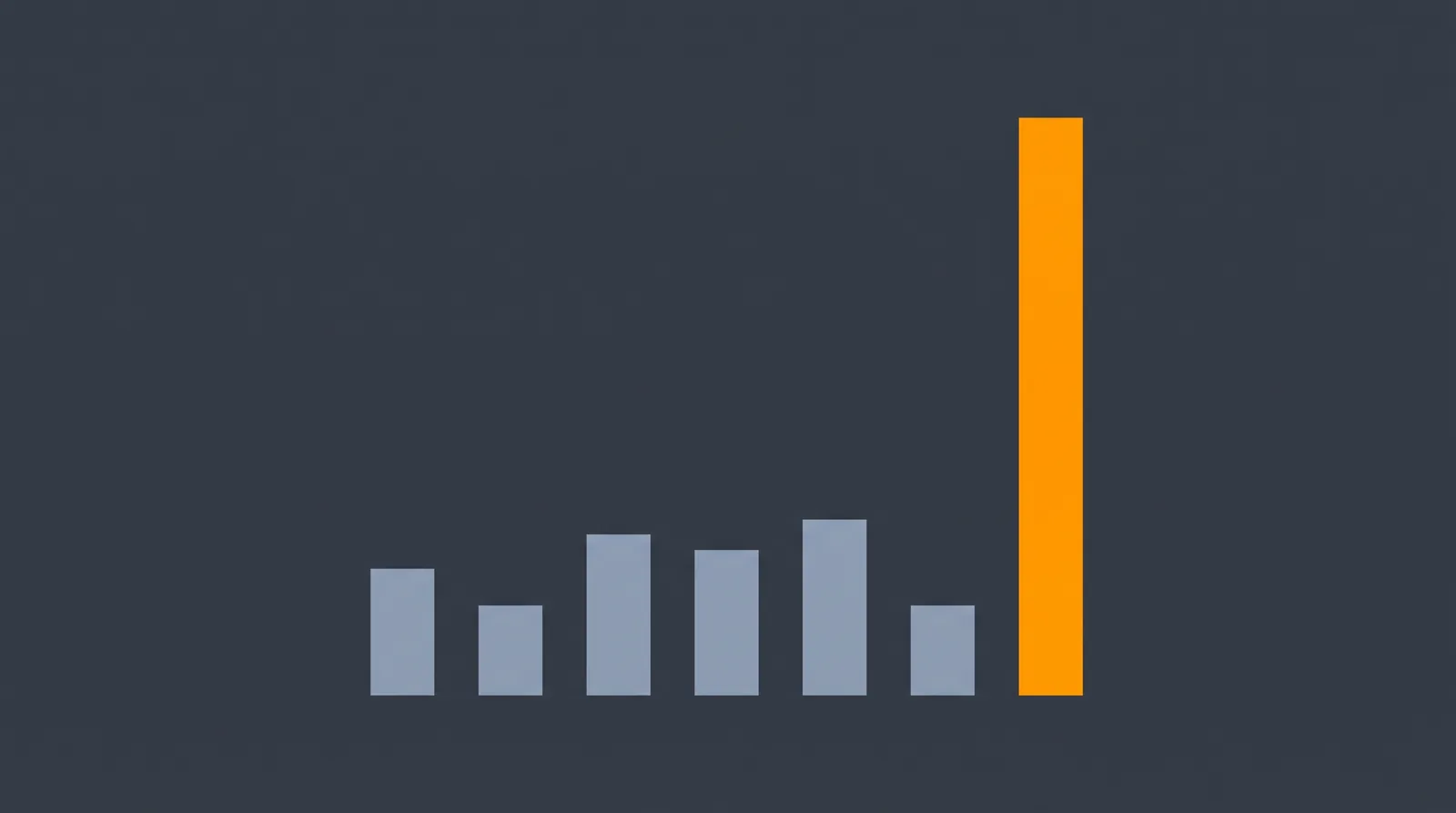
Speakers with 150 or more post-event survey respondents earn five times the median fee of speakers with under 10 (SOSI-002). That gap is not random. Audiences respond more when the speaker earns it. A managed availability listing cannot carry that signal, because the signal is generated by the audience after the talk, not by the speaker before it.
A managed directory listing shows availability and bio.
Talkadot shows audience response.
That is a different moat.
Talkadot is free for event planners. See what audiences said about the speakers you are already considering at talkadot.com/event-interest.
How Does Each Platform Handle Cost and Fee Transparency for Planners?
For the event planner, searching costs nothing on either side.
The models differ in who pays and what gets shown.
eSpeakers: The product is built and priced around speakers and bureaus managing their business. Browsing the directory as a planner does not cost you. Whether a fee appears on a given profile is set by the managed listing, so fee visibility varies speaker to speaker.
Talkadot: Free for event planners. Speakers pay for Talkadot features (Lite at $0, Pro at $588 per year, Elite at $1,188 per year). The planner-facing search, profile data, and audience feedback access cost you nothing, and fee ranges are surfaced to you as part of the profile.
A speaker who keeps a polished managed listing is investing in being found and bookable. That is a reasonable business move. A speaker who shows up on Talkadot with two hundred audience survey respondents is showing you that two hundred real people stayed after the talk and told them what they thought. Both are visible to you. Only one is generated by the audience.
Who Is Each Platform Actually Built For?
eSpeakers is built first for the supply side: speakers and bureaus who need a calendar, availability management, and a back-office, with the booking marketplace and directory as the planner-facing surface.
Talkadot is built for both sides of the booking. It helps event planners find and book professional speakers using real audience feedback data, and it helps speakers capture that feedback, testimonials, and leads through a simple QR code. The planner is the side the product is pointed at, because the planner is the one making the decision.
So the discovery model is different. On eSpeakers, you are searching a managed directory and checking who is available. On Talkadot, you are searching a marketplace built around your decision, where each profile carries the audience response behind it.
It is not a better directory.
It is a different answer to a different question.
Talkadot vs eSpeakers: Side-by-Side
| Feature | Talkadot | eSpeakers | Best for planners |
|---|---|---|---|
| Primary job | Booking platform with real audience feedback data | Speaker booking marketplace and directory, built on management software | Talkadot for the vetting decision; eSpeakers for managed availability |
| Built for | Event planners AND speakers | Primarily speakers and bureaus, with a planner-facing directory | Talkadot is pointed at the planner |
| Audience-feedback data | Verified post-event survey responses (volume + verbatim) | Not the core model | Talkadot |
| Proof of speaker impact | Real audience response captured after each talk | Speaker and bureau-managed profile | Talkadot |
| Profile source | Audience-generated via post-talk QR code surveys | Speaker or bureau-managed | Talkadot for objective signal |
| Fee transparency to planners | Fee ranges surfaced on profiles | Shown when the managed listing chooses to | Talkadot |
| Cost to search (planner) | Free | Free to browse the directory | Tie |
| Booking and discovery model | Marketplace built around the planner's decision | Booking marketplace and directory built on management software | Talkadot for decision-stage vetting |
| Data behind the profile | 1M+ verified responses, 50+ events per headline claim (SOSI-026, SOSI-028) | Availability and managed listing detail | Talkadot for evidence-backed vetting |
When Should an Event Planner Use eSpeakers?
eSpeakers is a legitimate, established tool. It is not a lesser option. It is built for a different job, and it does that job for a lot of working speakers and bureaus.
Use eSpeakers when:
- You are working with a speaker or bureau who already manages availability there and you want to check their calendar
- You want to browse an established directory and confirm a speaker is bookable
- You are coordinating logistics and availability more than you are vetting impact
- You already know who you want and you need the managed listing detail
If your job at that moment is confirming availability and managing the logistics of a known speaker, eSpeakers is built for exactly that.
When Should an Event Planner Use Talkadot?
If you have already been burned by a speaker who looked great and did not land, you are the exact planner Talkadot is built for.
Use Talkadot when:
- You have a shortlist and need a data signal to make the final call
- You want verbatim audience language from post-event surveys, not speaker-selected testimonials
- You need audience feedback data to justify the booking to your stakeholders
- You want to know whether past organizations rebooked the speaker
Here is the mechanism behind that data. After a talk, the speaker puts a QR code on screen. Audience members who choose to respond fill out a post-event survey on their phones. Talkadot aggregates those responses. You see the volume of real responses, the rating with that volume attached, and the actual words audiences used. The speaker cannot edit or cherry-pick which responses appear.
If your audience rates a speaker 99 out of 100 but only three people filled out the survey, you have a 99 from three people. Talkadot shows you that number explicitly. It is the difference between a speaker who earns a room and one who simply showed up to one.
Talkadot is free for event planners. See what audiences said about the speakers you are already considering at talkadot.com/event-interest.
The Decision
Use eSpeakers to manage availability and confirm a known speaker is bookable.
Use Talkadot to find out whether the room actually responded before you commit.
They are not the same tool wearing different labels. One manages the supply side and surfaces a directory. The other shows you, the planner, the audience proof behind a speaker before you sign.
eSpeakers answers: is this speaker available and bookable?
Talkadot answers: of the speakers you are considering, which one did real audiences respond to?
So before your next booking, ask yourself the question the profile never answers on its own: if the room had filled out a survey after this speaker's last talk, what would it have said, and would you still book them?
Talkadot vs eSpeakers: FAQ
Is eSpeakers free for event planners?
Browsing the eSpeakers directory does not cost an event planner. eSpeakers is built and priced around speakers and bureaus who use it to manage availability, calendars, and their back-office. As a planner, you can search managed speaker profiles and check availability without paying. The planner question is not cost. It is what data you actually see behind each profile when you vet.
What is the difference between Talkadot and eSpeakers?
Talkadot is a platform that helps event planners find and book professional speakers using real audience feedback data, captured after each talk through a QR code. eSpeakers is a speaker booking marketplace and directory, built on speaker and bureau management software. Both let a planner search and book speakers. The structural difference is the data behind the profile: Talkadot shows verified post-event audience responses, while eSpeakers shows a speaker or bureau-managed listing with availability.
Does eSpeakers show audience feedback on speakers?
Audience feedback is not the core eSpeakers model. eSpeakers profiles are managed by the speaker or their bureau and center on bio, topics, media, references, and availability. Talkadot is built around verified audience feedback data: after a talk, audience members fill out a post-event survey via a QR code, and the planner sees the response volume and verbatim quotes. If proof of how a speaker performed in the room is what you need, that is the difference between the two tools.
Which is better for vetting a keynote speaker, Talkadot or eSpeakers?
It depends on what you are doing at that moment. eSpeakers is strong for managing and confirming availability and browsing an established directory. Talkadot is built for the vetting decision, because it shows verified audience feedback data behind each speaker. Talkadot platform data shows the median fee for a speaker with 150 or more post-event respondents is $7,500, five times the $1,500 median for a speaker with 1 to 5, while ratings stay at 99 across every tier (SOSI-018, SOSI-017). For proof of impact at decision time, that signal is what you want.
What does verified audience feedback mean on Talkadot?
After every talk, the speaker deploys a QR code. Audience members who choose to respond fill out a post-event survey. Talkadot aggregates those responses. The planner sees the total volume of real responses, the aggregate rating with that volume attached, and verbatim audience quotes, not testimonials the speaker selected. The surveys are collected after the talk ends, from the people who were in the room, and the speaker cannot edit or select which responses appear. Talkadot is free for event planners at talkadot.com/event-interest.
Related Resources
- How to find a keynote speaker for a corporate event. The full 5-step vetting flow.
- Speaker bureau vs speaker marketplace. When to pay the commission and when to vet direct.
- Talkadot vs SpeakerHub. The other platform comparison planners ask about.
- How to vet a professional speaker. The 7-layer vetting stack.
- How much does a keynote speaker cost. Fee benchmarks by buyer segment.
- Best tools for event planners to source speakers. The full platform rundown.
Published: 2026-06-22. Author: Arel Moodie, cofounder, Talkadot. Data citations: Talkadot's State of the Speaking Industry 2026, based on more than a million verified audience survey responses across tens of thousands of speaking engagements (Jan 2023 to Mar 2026).