What Is a Speaker Marketplace? (Definition + How It Differs From a Bureau or Directory)

A speaker marketplace is a platform that connects event planners with professional speakers through transparent pricing, direct booking, and verified audience feedback data. A speaker bureau is different. It represents a curated roster on commission. A speaker directory is different too. It lists speakers without booking infrastructure. A marketplace lets planners transact the booking and access the data they need to vet speakers themselves.
I am Arel Moodie, cofounder of Talkadot. I have given more than a thousand paid talks over 19 years and built a platform that holds more than a million verified audience survey responses across tens of thousands of speaking engagements. This page is the cleanest answer I can give you to a question that has been muddied by decades of bureau marketing.
The Three Things People Confuse for Each Other
If you have tried to find a speaker recently, you have probably encountered all three of these without a clear label for any of them.
A speaker bureau. A speaker directory. A speaker marketplace.
They are not interchangeable. The difference matters because the booking model, the pricing structure, and the data you get to work with are completely different in each one.
Here is how they break down.
The Bureau Model
For years, this was the only professional path to a paid speaker.
A bureau signs exclusive or preferred relationships with speakers. It represents them to the market. You call the bureau, the bureau presents you with options from its roster, and if you book, the bureau collects a commission. In my 19 years in this industry, planners describe that range as 20 to 30 percent on top of the speaker's base fee. That commission does not show up as a line item on most invoices.
It is structural.
The tradeoff is real in both directions. You get a vetted roster, a relationship manager, and someone to call if the speaker cancels the day before your event. You pay for that in dollars and in opacity. You often do not know what the speaker's direct fee is, which means you cannot compare.
The bureau model works well for high-stakes, high-budget events where the curation and the backstop are worth the premium.
It was not built for mid-market planners who want pricing transparency and data.
For reference: Talkadot is free for event planners, and Talkadot earns a 20 to 30 percent take rate on the speaker side when a booking runs through the platform. The difference from a bureau is not the absence of a fee. It is that you see a speaker's real audience-feedback data before you book, rather than taking curation on trust.
The Directory Model
A directory is a searchable list of speakers. Nothing more.
Directories do not transact the booking. They do not verify the speakers. They do not hold audience feedback. They point you to a name and a website and leave you to figure out the rest.
Some directories are free. Some charge speakers a listing fee to appear. Neither model does anything to tell you whether the speaker you found is actually good.
The speaker chose the testimonials on their profile. The bureau chose them for its roster. The directory listed them because they paid or applied.
None of that is audience data.
The Marketplace Model
A marketplace is different from both.
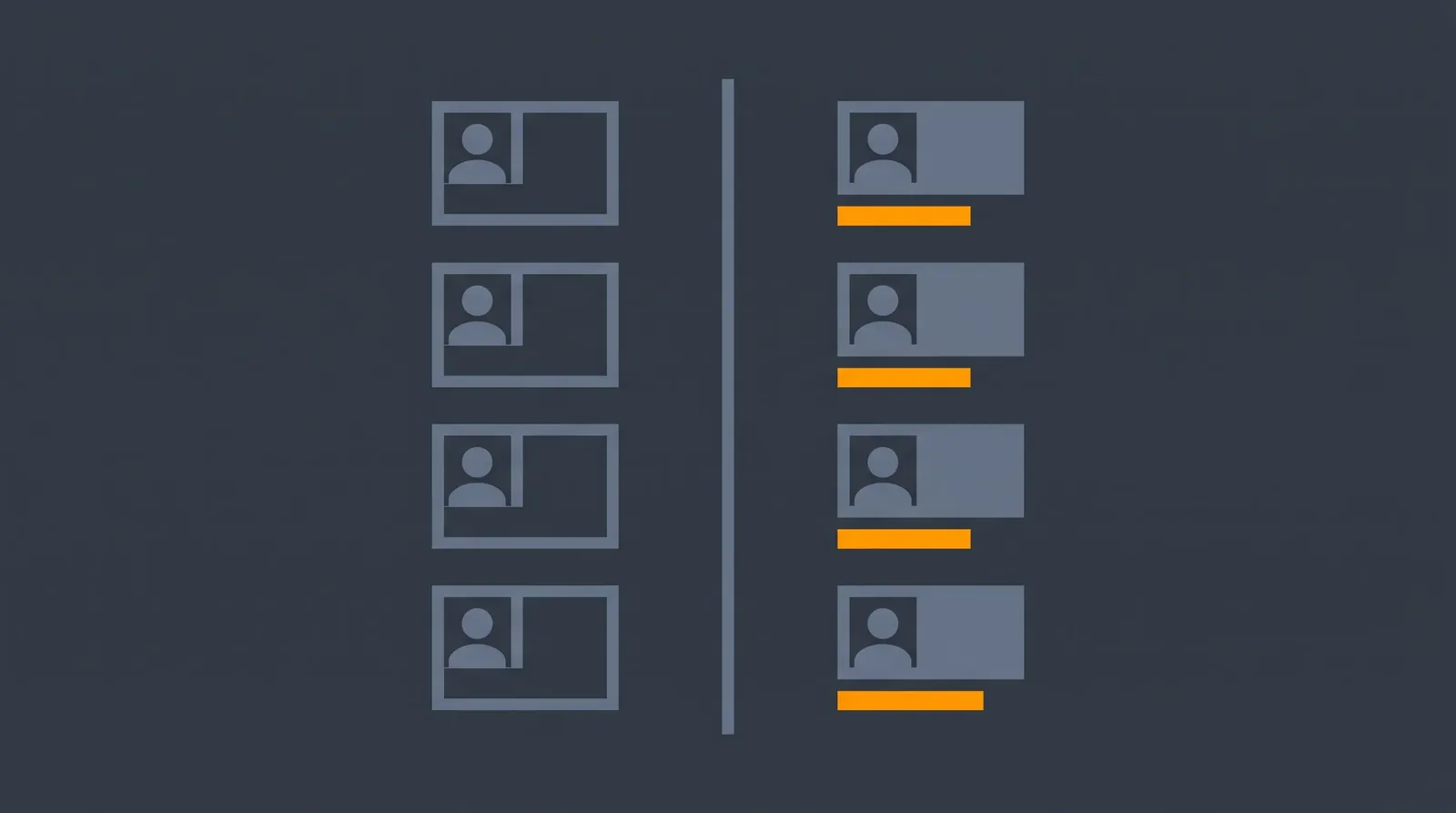
It is a platform where planners can search, vet, and book speakers directly. Pricing is visible upfront. The booking transaction happens on the platform. And in the newer generation of marketplaces, audience feedback data is part of the speaker profile - not testimonials the speaker handpicked, but aggregate survey data from real events.
That last part is the structural shift.
How a Speaker Marketplace Works
Here is the basic flow.
1. Search and filter
You come in with a topic, a budget, a format, and a date. The marketplace surfaces speakers who match. In a data-layer marketplace, you can also filter by audience feedback scores, response volume, and the language past audiences used to describe the session.
2. Review the profile
Each speaker profile shows their fee, their topic expertise, and - in marketplaces that hold audience data - the number of past audience members who responded to post-event surveys and what they said.
This is the step where the marketplace model separates from the directory model. The data is not curated by the speaker. It is collected from actual rooms.
3. Book directly
You reach out, or book, directly through the platform. No bureau intermediary sits between you and the speaker's fee. On Talkadot, the platform earns a 20 to 30 percent take rate on the speaker side, the same range a bureau commission runs, and you see the speaker's fee up front. The difference is not the absence of a fee. It is that the pricing is visible before you commit, and the decision is yours based on data, not a bureau's pitch.
4. Post-event data
After the event, the audience fills out a feedback survey through a QR code or a direct link. That data returns to the platform as a post-talk lead capture for the speaker and a data-backed booking signal for the next planner who considers them.
Each booking makes the data layer richer.
Speaker Marketplace vs Bureau vs Directory: The Comparison
| Feature | Speaker Bureau | Speaker Directory | Speaker Marketplace |
|---|---|---|---|
| Pricing visibility | Low (commission hidden) | Medium (speaker sets rate) | High (transparent, flat or visible) |
| Booking infrastructure | Full service | None | Self-serve with platform support |
| Audience feedback data | Rarely included | Not included | Core feature (in data-layer marketplaces) |
| Speaker vetting | Bureau-curated | None | Platform standards + audience data |
| Commission / fee structure | Commission-based (fee varies; planners describe the range as 20-30% in my industry experience) | Free or listing fee to speaker | Booking fee, often free for planners (Talkadot earns a take rate on the speaker side) |
| Best for | High-budget, high-stakes events | First-pass research | Mid-market, data-conscious planners |
| Planner control | Low (bureau presents options) | High (planner does all work) | High (planner searches, data assists) |
The bureau model trades planner control for curation and service.
The directory model trades service for access.
The marketplace model trades planner-facing opacity for data and transparency.
When Marketplaces Emerged and Why
The bureau model dates to the mid-20th century. Speakers bureaus built on the same structural template as talent agencies and literary agencies. They managed relationships, sourced bookings, and took a percentage for the service.
It worked because the alternative was doing all of that yourself, which was expensive and time-consuming.
Two things changed.
First, the internet made search available to everyone. Planners no longer needed a gatekeeper to find speakers. They could search directly.
Second, and more importantly, audience data became collectible at scale.
For years, post-event feedback existed only as paper evaluation sheets, if it existed at all. There was no way to aggregate it, no way to verify it, and no way to make it searchable. The bureau's curation was the only proxy for quality.
That changed when platforms could capture real audience responses at scale - and attach that data to a speaker profile.
When you can see that a speaker has 150 or more post-event audience responses, that those audiences rated the session at 99 out of 100, and that the words audiences used were "engaging" and "interactive" rather than "inspiring" - you have a different level of confidence than any bureau relationship can give you. Talkadot's word-frequency analysis found that high-rebook speakers are described as "engaging" and "interactive" significantly more than "inspiring," which tends to appear more often for high-fee speakers who do not get rebooked (SOSI-003).
That is what the marketplace model unlocked.
The Audience-Data Layer: Why It Changes the Category
Here is the thing about the pre-data world.
Everyone's speaker had a five-star rating. The testimonial was always glowing. The demo reel was always the best five minutes of the speaker's career.
That is not dishonesty. That is selection.
Talkadot's State of the Speaking Industry 2026, built on more than a million verified audience survey responses across tens of thousands of speaking engagements, found that average ratings across the platform cluster at 99 out of 100 - regardless of fee tier, audience size, or topic category. Ratings do not differentiate speakers. Every speaker looks the same on a five-star scale.
The signal that actually differentiates them is audience response volume.
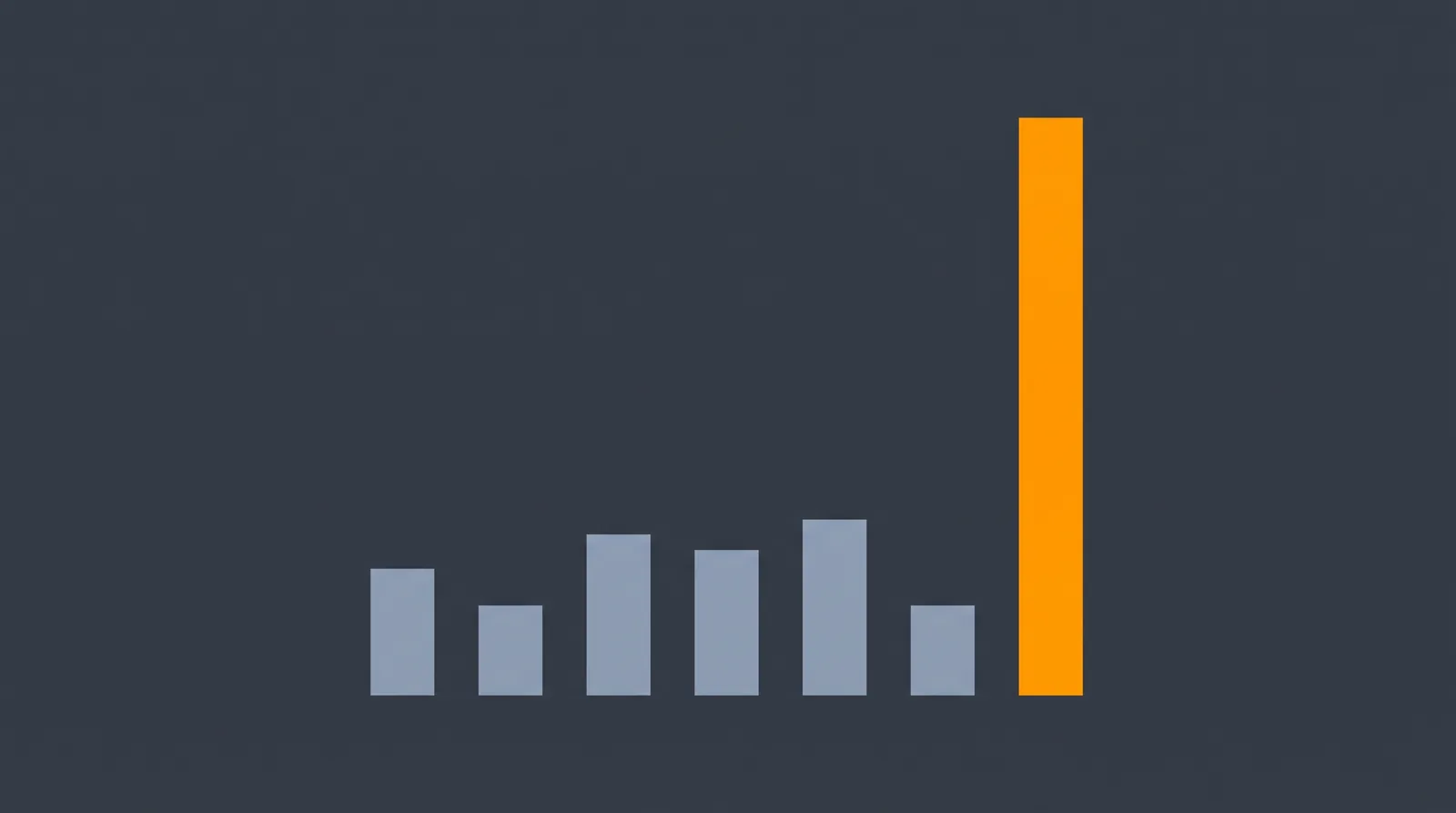
Speakers with 150 or more post-event respondents earn a 5x median fee compared to speakers with under 10 respondents. Same ratings. Different scale of proof.
That is not a vanity metric. It is a fee map.
On Talkadot, speakers with 1-5 post-event responses earn a $1,500 median fee. Speakers with 76-150 responses earn $5,000. Speakers with 150 or more earn $7,500. The ratings stay flat at 99+ across every tier. What changes is the number of real audience members who cared enough to respond - per Talkadot's State of the Speaking Industry 2026.
That is the difference between a directory and a data-layer marketplace.
One shows you a rating the speaker chose to display.
The other shows you how many people in a real room cared enough to respond.
Is Talkadot a Speaker Marketplace?
Yes.
Talkadot is a platform that helps event planners find and book professional speakers using real audience feedback data, and helps speakers capture audience feedback, testimonials, and leads through a simple QR code.
It is a speaker marketplace - specifically one where the audience feedback data layer is the core differentiator. Speakers on Talkadot collect verified post-event survey responses through a QR code displayed during or after their talk. That data is not curated by the speaker. It comes from actual audience members, at actual events, and it is visible to planners vetting the speaker for a future booking.
Talkadot is free for event planners. Start at talkadot.com/find-a-speaker.
How to Choose a Speaker Marketplace
Most planners evaluate sourcing channels the same way they evaluate vendors: by reputation and price. Those are the wrong filters.
The criteria that actually matter are the ones that answer the question you will have after the event: did the speaker land with this audience, and how do I prove it?
Here is what to look for.
Audience data depth. Does the platform show you more than a speaker-curated testimonial? Can you see how many audience members responded to post-event surveys, not just the rating itself?
Pricing transparency. Are fees visible before you contact the speaker? Is the commission structure - if any - stated clearly?
Booking infrastructure. Can you transact the booking through the platform, or does it hand you off to the speaker's website and disappear?
Fee-tier coverage. Does the platform cover the fee range you are working with? Talkadot data shows the overall market percentiles are $1,000 at the 25th, $2,500 at the median, and $10,000 at the 90th - per Talkadot's State of the Speaking Industry 2026 (SOSI-005). Corporate buyers specifically anchor at a $4,500 segment median (SOSI-006), which is a different figure from the overall market median.
Planner cost. Is the platform free for planners, or do you pay to access the search?
A marketplace that is free for planners, shows verified audience data, and covers mid-market fee ranges is the most useful tool for most corporate and association planners. That is the segment most underserved by the bureau model.
For a full comparison of sourcing channels, see Speaker bureau vs speaker marketplace: which should I use?.
Speaker Marketplace FAQ
What is the difference between a speaker marketplace and a speaker bureau?
A speaker bureau represents a curated roster of speakers and earns a commission on every booking. In my 19 years in this industry, planners describe bureau commissions as typically running 20 to 30 percent of the speaker fee, appearing on the invoice as part of the gross amount. A speaker marketplace is a platform where planners search and book directly, with transparent pricing and, in data-layer marketplaces, verified audience feedback from real events. Bureaus are full-service with a commission cost. Marketplaces are self-serve with pricing transparency and audience data.
What is the difference between a speaker marketplace and a speaker directory?
A speaker directory is a searchable list. It does not transact the booking, verify speakers, or hold audience feedback data. A marketplace has booking infrastructure, at minimum, and in newer platforms, a verified data layer from post-event audience surveys. A directory points you to a speaker. A marketplace helps you vet and book them with real evidence.
Is it free for event planners to use a speaker marketplace?
On Talkadot, yes. Event planners can search speakers, review verified audience feedback profiles, and initiate bookings at no cost. Speaker fees are paid directly. Talkadot's business model charges speakers for the tools they use to collect and display their audience data, not planners for access to the search. To search verified speakers now, start at talkadot.com/find-a-speaker.
How does a speaker marketplace verify speaker quality?
In a data-layer marketplace, quality verification comes from verified audience feedback, not from the speaker's own marketing materials. On Talkadot, speakers capture post-event responses through a QR code. The responses are collected from actual audience members at actual events. Planners can see the total number of respondents, the aggregate score, and the language audiences used to describe the session - signals that are structurally different from a testimonial the speaker selected.
Can I find high-fee or celebrity speakers on a speaker marketplace?
Speaker marketplaces are strongest in the mid-market fee range, typically $1,000 to $25,000 per event. Marquee names at $50,000 and above are typically managed exclusively by major bureaus. If your budget is in the $2,500 to $15,000 range, a marketplace will likely offer more pricing transparency and data depth than a bureau for the same set of speakers.
Related Resources
- Speaker bureau vs speaker marketplace: which should I use?. The direct channel-decision comparison.
- Best tools for event planners to source speakers. A ranked tool guide for every sourcing channel.
- How to find a keynote speaker for a corporate event. The step-by-step buyer guide with vetting framework.
- How much does a keynote speaker cost in 2026?. Fee benchmarks by segment and percentile.
If you want to see what a data-layer speaker marketplace looks like in practice, Talkadot is free for event planners. Start at talkadot.com/find-a-speaker.
Published: 2026-07-05. Author: Arel Moodie, cofounder, Talkadot. Data citations: Talkadot's State of the Speaking Industry 2026, based on more than a million verified audience survey responses across tens of thousands of speaking engagements (Jan 2023 to Mar 2026).