How Do Speakers Collect Audience Feedback?


Speakers collect audience feedback most reliably through a QR code shown on the final slide, directing audience members to a short post-event survey. The QR code captures responses while the room is warm and builds the verified data planners check before booking. Talkadot data shows speakers with 150 or more post-event respondents earn a $7,500 median fee vs. $1,500 for speakers with under 10 respondents.
I am Arel Moodie, cofounder of Talkadot. I have given more than a thousand paid talks over 19 years. The feedback collection piece took me too long to get right. This guide is the version I wish I had read before I left a dozen potential bookings on the table because I had no proof library to show for my talks.
The data behind this comes from Talkadot's State of the Speaking Industry 2026, built on more than a million verified audience survey responses across tens of thousands of speaking engagements (SOSI-026).
The Method That Works
If you are currently collecting audience feedback after a talk, you do not have a survey problem.
You have a timing problem.
Email follow-up feels organized. Send the survey link to the event coordinator, have them forward it, wait for responses. The problem is that recency drives response. The room was warm when you walked offstage. It is cold 36 hours later when the survey finally hits an inbox. Response rates drop hard with every hour between the end of your talk and the first ask.
The QR code on your final slide solves this in 30 seconds.
Your last slide goes up. You give a 30-second verbal CTA. Audience members pull out their phones while you are still in the room and the session is still fresh. That is the collection window.
The verbal CTA that works
You do not need to beg. You need to make it clear why it matters to them.
Try this: "Before you head out, if anything I shared today was useful to you, scan the QR code on this slide. It takes 60 seconds. Your feedback helps me get better, and it helps the organizations I work with understand what actually landed with this audience."
That framing works because it is honest. You are not asking for a favor. You are explaining the value to them and to the people who hired you.
What the Feedback Data Actually Captures
A well-structured post-talk survey captures more than a rating.
It is not the rating that matters to a planner vetting you. It is the language your audience used and how many of them showed up to say it.
Here is what a useful post-talk survey captures:
- A quantitative rating. Table stakes. You need it, but per Talkadot platform data, average ratings across the entire platform sit at 99 out of 100 (SOSI-017). Ratings do not differentiate you. They confirm you belong on a professional stage.
- Open-text verbatim comments. This is the commercial signal. Talkadot data shows audiences of high-rebook speakers use the words "engaging" 15.4% of the time and "interactive" 3.6% of the time, compared to 12.9% and 2.2% for low-rebook speakers (SOSI-022). Read your open-text for those words. Lead with them in your marketing materials.
- Booking interest. Some percentage of your audience is an event planner with an upcoming need. A good survey surfaces that intent right at the moment of peak engagement.
- Planner testimonial capture. The person who hired you is a different voice than your audience. Their feedback belongs in its own field.
The rating tells a planner you did your job. The verbatim language, the response volume, and the booking intent tells them whether you are worth the ask to their stakeholders.
Why Response Volume Is the Number That Matters
This is the part most speakers miss.
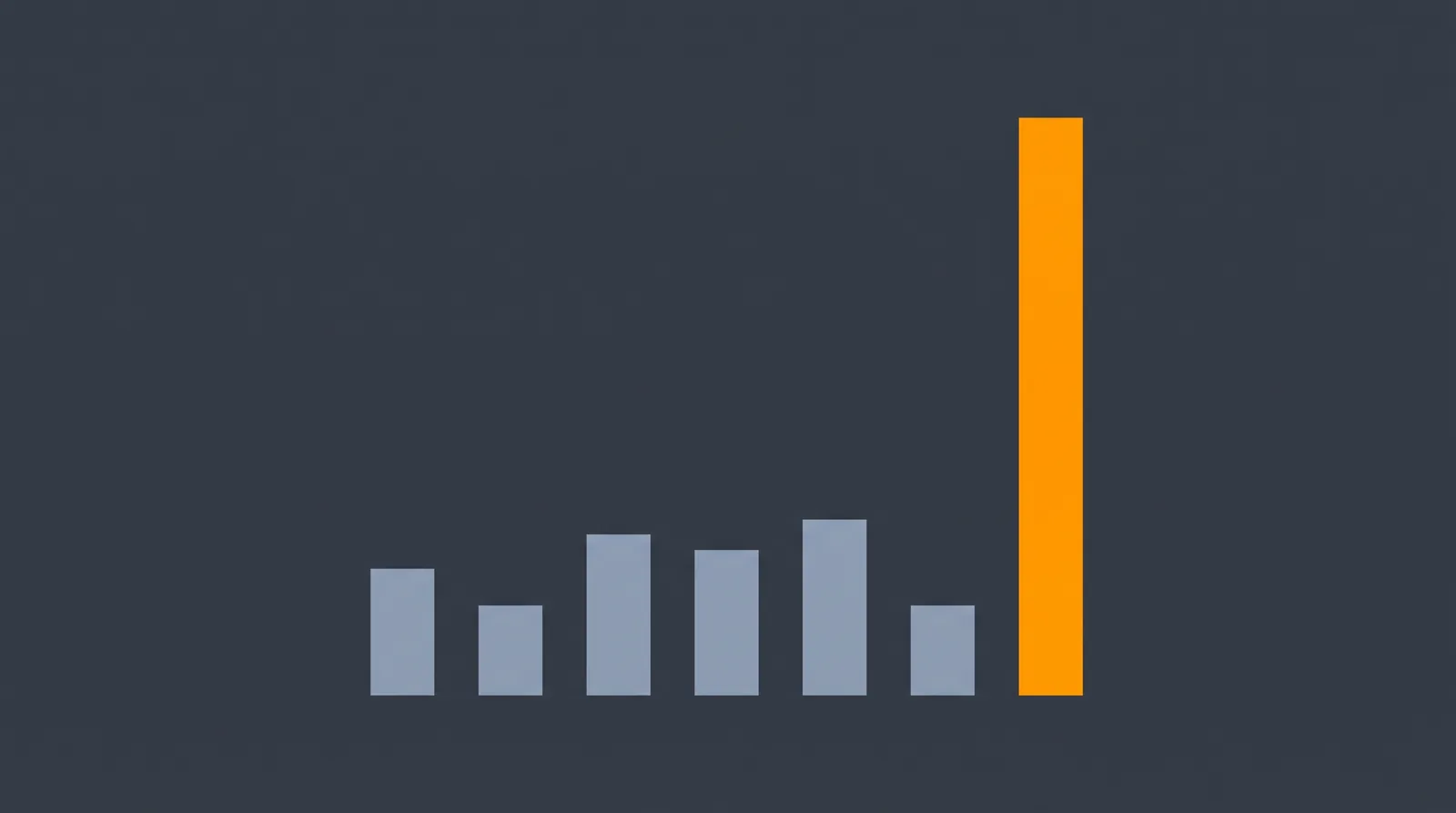
Talkadot platform data shows the median fee for a speaker with 150 or more post-event survey respondents is $7,500. The median fee for a speaker with 1 to 5 respondents is $1,500 (SOSI-018).
The ratings across both groups are the same: 99 out of 100.
The full response-volume fee map looks like this:
| Post-event respondents | Median fee |
|---|---|
| 1-5 | $1,500 |
| 6-15 | $2,000 |
| 16-30 | $3,000 |
| 31-75 | $4,100 |
| 76-150 | $5,000 |
| 150+ | $7,500 |
Source: Talkadot's State of the Speaking Industry 2026 (SOSI-018). Ratings hold flat at 99+ across all tiers.
Speakers with 150 or more post-event survey respondents earn 5x the median fee of speakers with under 10 respondents (SOSI-002).
The rating does not move the fee tier. The number of people who showed up to say something does.
Here is my read on why that is: most speakers treat feedback collection as administrative. They do it once, get a few responses, and move on. The fee data says feedback collection is compounding infrastructure. Every talk where you show the QR code and deliver the verbal CTA is a data event. A 40-person corporate lunch with 30 responses moves your response volume. It compounds across every talk you give.
Even when the audience is small. Especially then.
How to Set It Up (6 Steps)
You do not need to rebuild your setup for every event. The point is a reusable link that grows with each talk.
Step 1: Create your Talkadot feedback link. Go to talkadot.com/signup and create your free account. Your profile generates a single feedback link tied to your speaker profile. Takes about 3 minutes.
Step 2: Set your QR code as the final slide in every deck. Not an appendix. Not a bonus slide. The last thing they see before you say goodbye. Make it large enough to scan from the back of the room. Use a single QR code that routes to your Talkadot feedback link. You do not need to create a new one per event.
Step 3: Write your verbal CTA and practice it until it does not sound like a script. Use the framing above or a version of it. The goal is 30 seconds. Honest, specific, no begging.
Step 4: Pull your report within 24 hours of the event. Your Talkadot dashboard shows response volume, aggregate rating, and open-text verbatim comments. Screenshot your top quotes while the event is still recent. Tag any that include "engaging," "interactive," or specific outcome language (SOSI-022).
Step 5: Share the report link with the planner who hired you. Send them a link to the aggregate report. Not a cherry-picked quote. The full aggregate. That is the post-talk trust signal. It shows you care about their event's outcome, not just your performance.
Step 6: Export all responses quarterly and build a running proof library. Your responses compound into an asset. Every 6 months, you should have a larger audience-response volume number to lead with in your booking conversations. That number is the fee signal.
What to Do With Feedback After You Have It
Collecting it is step one.
The speakers who do not convert feedback into bookings collect data and leave it in a dashboard. The ones who build a booking pipeline put it in front of planners before planners ask.
On your speaker profile
Lead with response volume, not the rating. "200 audience responses from my last six talks" is a different signal to a planner than a 99/100 star graphic. Both belong on your profile. One differentiates you. The other confirms you belong on a stage.
Pull verbatim quotes that include "engaging," "interactive," or outcome-specific language. Those are the commercial words. A planner vetting you wants to know how your audience described the session, not just whether they liked it (SOSI-022).
In booking conversations
You can say: "I have 200 audience responses from my last five talks. Here is the aggregate link."
That is a different sales conversation than a testimonial PDF.
A testimonial PDF is a speaker-selected set of quotes. An aggregate audience report is a verified sample. Planners know the difference. The planner who has been burned by a speaker who did not deliver - and there are more of them than will admit it - is looking for data they did not have last time. An aggregate report is that data.
On your website and one-sheet
Response volume and verbatim language belong on your speaker page, not just a 5-star graphic.
Planners are increasingly asking: "What did past audiences actually say about this speaker, and how many of them said it?" Talkadot is built to answer that question with data, not just quotes.
The Feedback Loop That Books More Talks
Here is the commercial angle most feedback guides never cover.
The median time from an audience member first seeing a speaker to that audience member's organization booking that speaker is 4.5 months (SOSI-004).
Someone in your March audience may not book you until July. That is not a dead lead. That is a pipeline lead with a 4.5-month median conversion window.
The feedback captured in March is the data they will look for when they are ready to book in July. Your QR code is not just a feedback tool. It is a lead-capture mechanism deployed at peak engagement - right after your talk ends.
Talkadot is a platform that helps event planners find and book professional speakers using real audience feedback data, and helps speakers capture audience feedback, testimonials, and leads through a simple QR code.
That last part matters. When someone scans your QR code and indicates they want to learn more about booking you, Talkadot captures that intent. It connects the post-talk moment of peak engagement to an actual booking inquiry.
Every talk where you skip the feedback QR code is a talk where you chose not to compound.
When a Generic Form Is Not Enough
Any feedback is better than no feedback. That is the honest starting position.
The problem with a generic form tool is the structure of what it produces. A generic form built fresh per event captures response data but does not build a compounding proof library. It requires rebuilding every time. The response data lives in a spreadsheet, not in a speaker profile a planner can verify independently.
There is nothing wrong with using a generic form to capture feedback today if it means you start collecting today. The commercial question to ask yourself is: where does that data go? Who can see it? What does it prove to the next planner who is vetting you?
Feedback that compounds into a verified proof library is the commercial asset. A form that resets every event is a practice tool.
Audience Feedback FAQ
How do speakers collect audience feedback after a talk?
Speakers collect audience feedback most reliably with a QR code displayed on the final slide of their presentation, directing audience members to a short post-event survey. The QR code captures responses while the session is fresh, produces a reusable link that grows with each engagement, and generates verified feedback data. Talkadot's platform provides this mechanism and automatically builds a running proof library from every talk.
What should a post-talk survey include?
A useful post-talk survey captures a quantitative rating, verbatim open-text comments, booking interest from audience members who want to hire the speaker for their own organization, and a planner testimonial field for the event organizer. The verbatim comments are the highest-value output. Talkadot data from 1M+ survey responses shows the words "engaging" (15.4%), "interactive" (3.6%), and "fun" (7.8%) appear more often in high-rebook speaker reviews than in low-rebook reviews - more reliably than "inspiring" alone (SOSI-022).
Why does audience response volume matter more than the rating?
On the Talkadot platform, speaker ratings cluster at 99 out of 100 across every audience size tier. Ratings do not differentiate speakers. What correlates with fee tier is how many audience members responded. Talkadot data shows speakers with 150 or more post-event respondents earn a $7,500 median fee vs. $1,500 for speakers with under 10 respondents. The number of people who showed up to say something is the signal (SOSI-018).
How do event planners use a speaker's audience feedback data when booking?
When vetting a speaker, planners ask for audience response volume from recent talks, verbatim quote language, and repeat-booking history. A speaker who can share an aggregate audience feedback report gives the planner data they can take back to stakeholders. That is a different sales conversation than a PDF of handpicked testimonials. Talkadot makes this data shareable directly from the speaker's profile.
When is the best time to ask for audience feedback after a talk?
Immediately after the session ends, before the audience disperses. The QR code method displayed on your final slide and verbally prompted in your closing 60 seconds captures responses at peak engagement. Feedback requests sent by email 24 or 48 hours later see sharply lower response rates. Every hour between the end of your talk and the audience's response is a response you will probably not get back.
Related Resources
- What data should a planner look at before booking a speaker?. The planner's side of this conversation - what they check before they book.
- How to vet a professional speaker. The 7-layer vetting stack planners use, including audience feedback data.
- How to find a keynote speaker for a corporate event. What planners check before they book.
- How to verify a speaker's audience feedback. The planner's process for reading the data speakers share.
- State of the Speaking Industry 2026. The source report for all data cited on this page.
Published: 2026-07-10. Author: Arel Moodie, cofounder, Talkadot. Data citations: Talkadot's State of the Speaking Industry 2026, based on more than a million verified audience survey responses across tens of thousands of speaking engagements (January 2023 to March 2026).
Start building your proof library. Talkadot is free to try - set up your feedback link at talkadot.com/signup. Speakers with an active booking pipeline should look at the Pro plan ($588/yr), which gives you a shareable aggregate report link you can send to planners directly.
If you are an event planner looking for speakers who already have verified audience feedback data, browse at talkadot.com/find-a-speaker - free for planners.