How Do Speakers Get Booked

Professional speakers get booked through five channels: bureau representation, direct planner outreach, speaker marketplaces, client referrals, and audiences who attended a previous talk. The audience channel has the longest pipeline and the highest close rate. Talkadot platform data shows the median time from an audience member first seeing a speaker to their organization booking them is 4.5 months.
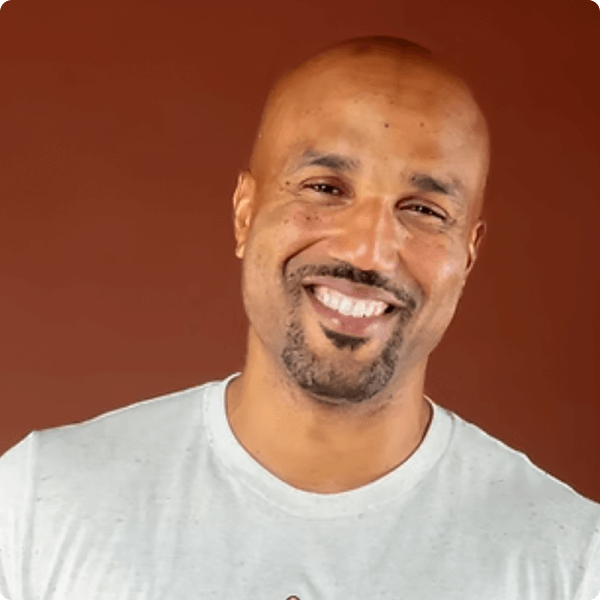
I am Arel Moodie, cofounder of Talkadot. I have given more than a thousand paid talks over 19 years. I also built a platform that holds more than a million verified audience survey responses across tens of thousands of speaking engagements. This guide explains how the booking pipeline actually works - and the one channel most speakers never turn on.
If you are an event planner who landed here: this page walks through the booking pipeline from the speaker's side. It explains what the audience feedback data your speakers collect actually means - and why a speaker with 150+ survey respondents is a different caliber of candidate than one with 5. The planner-side vetting guide is What data to look at before booking a speaker.
If You Gave a Talk Last Month and Nobody Booked You
If you gave a talk last month and nobody from that audience has reached out, you did not have a quiet room.
You had a broken pipeline.
The audience is not slow. The pipeline is not dead. The median audience-to-booking conversion, per Talkadot platform data, takes 4.5 months. A March talk converts in August. Most speakers walk off stage without any way to capture that lead. So when August comes, there is nothing to convert.
That is the problem this guide solves.
The Five Channels Where Speaker Bookings Come From
Professional speakers get booked through five channels. Each has a different input requirement, a different timeline, and a different ceiling.
| Channel | What it requires from you | Typical timeline to booking |
|---|---|---|
| Speaker bureau | Existing relationships, bureau acceptance, bureau commission structure | 2-6 months |
| Direct outreach to planners | A contact list, warm introductions, or cold pitch system | 1-6 months |
| Speaker marketplace | A complete profile with audience feedback data | 1-4 months (planner-led search) |
| Referrals from past clients | A strong track record with at least one organization | 2-8 months |
| Audience members from previous talks | A post-talk lead capture mechanism | 3-12 months (median 4.5 months) |
In my 19 years in this industry, bureaus typically earn their fee through a commission on the speaker's booking - planners describe seeing 20 to 30 percent of the speaker fee go to the bureau. That is the cost of curation, relationships, and logistics support. For high-stakes events with marquee names, that trade-off makes sense. For mid-market bookings, it is worth understanding the structure before you sign.
The first four channels are where most speakers focus their energy. The fifth is where most bookings eventually come from - and where almost no one builds infrastructure.
Bureaus are loud. The audience channel is quiet. But it compounds.
Every talk you give either adds to your pipeline or does not. Without a capture step, it does not.
Why the Audience Channel Is the One Most Speakers Ignore
The audience member who watched you speak last quarter is the warmest lead in your pipeline.
They have already seen you perform. They know your topic. They liked what they heard - or they would not be thinking about you four months later.
And yet most speakers spend zero budget on the audience channel. Because it is invisible until it converts.
Talkadot platform data shows the median time from an audience member first encountering a speaker to their organization completing a booking is 4.5 months. The range is wide. Some organizations move in weeks. Others take over a year. The planning cycle, the budget approval process, and the internal champion's influence all affect the clock.
But here is the point most speakers miss.
It is not a slow pipeline. It is a pipeline you never turned on.
The audience member leaves the room. Six months later they remember you. They go to search for your name and they find your website. Maybe. They try to remember how to get in touch. Maybe. They want to show their boss what the speaker said about X topic. No recording. No way to prove it.
The booking does not happen. Not because the lead was cold. Because there was no path from the room to the contract.
The QR code is the path.
The Proof Layer That Closes Bookings (What Planners Actually Check)
Here is what most speaker guides will not tell you.
When a planner considers booking a speaker they heard about - whether from a colleague, a bureau, or a search - they check two things. What past audiences said about the speaker. And how many of them said it.
The rating is almost never the differentiator.
Per Talkadot's State of the Speaking Industry 2026 report, based on more than a million verified audience survey responses across tens of thousands of speaking engagements, average ratings are 99-plus across every audience-size tier on the platform. The audience that had a great experience fills out the survey. The audience that had a mediocre experience tends not to. Ratings cluster at the top.
What separates the tiers is volume.
Talkadot platform data shows speakers with 150 or more post-event survey respondents earn 5x the median fee of speakers with under 10 respondents. Ratings stay flat at 99-plus across both groups. The number who responded is the data-backed booking signal planners actually use.
The full tier map:
| Audience survey respondents (per event) | Median fee |
|---|---|
| 1-5 responses | $1,500 |
| 6-15 responses | $2,000 |
| 16-30 responses | $3,000 |
| 31-75 responses | $4,100 |
| 76-150 responses | $5,000 |
| 150+ responses | $7,500 |
The rating stays flat at 99-plus across every row. The number who responded is what moves the fee.
A 99 out of 100 from 150 people is a different commercial signal than a 99 out of 100 from 5 people.
If you have ever lost a booking to a speaker you know delivered a weaker talk, the answer is almost always the proof layer. Not the quality of the content. The volume of documented audience response behind it.
The real audience feedback data a speaker collects after each talk is not a vanity metric. It is the asset planners use to justify the booking to their organization.
Want to see what planners check when they vet a speaker? What data to look at before booking a speaker walks through the planner-side vetting process in detail.
The QR Code Step That Most Speakers Skip
The easiest way to turn the audience channel into a real pipeline is a QR code at the close of every talk.
Not a link in the chat. Not a "find me on LinkedIn." A QR code on screen during your closing remarks, pointed at a form that captures feedback, testimonials, and contact information in one step.
Talkadot is a platform that helps event planners find and book professional speakers using real audience feedback data, and helps speakers capture audience feedback, testimonials, and leads through a simple QR code. Talkadot generates a static QR code tied to your speaker profile - set it up once at talkadot.com.
Here is how post-talk lead capture works in practice.
- Set up your post-talk form. Build a short audience survey that takes 90 seconds to complete. Include a rating question, two or three open-text prompts ("What was most useful?", "What word would you use to describe this session?"), and an opt-in for follow-up contact.
- Generate your QR code. Talkadot gives you a static QR code tied to your speaker profile. It does not change between events. You put it on your slide deck once.
- Deploy at close, not at the start. Ask the audience to scan the code during your final 60 seconds on stage. The audience is still warm, the organizer has not pulled the mic, and you are in control of the ask.
- Let the data accumulate for 3-6 months. Per Talkadot platform data, the audience-to-booking sales cycle is 4.5 months median. The pipeline is not broken. It is timed. Build it at every event and let the compound effect run.
- Review the open-text responses. Your audience tells you exactly which phrases they use to describe your talk. Those are your testimonials. They are also the words planners will search for when vetting you.
Without the capture step, the audience-channel pipeline never starts.
With it, every talk builds the proof layer that closes the next booking.
See the planner-side view of what that data looks like from the other side: How to vet a professional speaker.
What the Data Says About Speakers Who Get Rebooked
Getting booked once is different from getting booked repeatedly.
Talkadot data shows 52 percent of keynote-primary speakers with multiple clients never get rebooked by any organization. More than half. One-and-done.
The speakers who do get rebooked are different in two measurable ways.
First: format range. Rebooked speakers are 2.5x more likely to offer both keynotes and workshops (26 percent vs 11 percent for non-rebooked speakers). One format is a ceiling. Two formats is a relationship.
Second: the language their audiences use. Audiences of high-rebook speakers use the word "engaging" at a meaningfully higher rate (15.4 percent vs 12.9 percent). They use "inspiring" less (13.3 percent vs 17.5 percent). The word "interactive" shows up more. "Fun" shows up more.
It is not about being more inspiring. It is about being engaging enough that the organization needs you in a room again.
Inspiration is the experience. Engagement is the commercial signal.
When you read your post-talk survey responses, look for those words. They are the words planners will use to describe you when they refer you to a colleague. They are the words the next planner will find in your real audience feedback data when they vet you on a marketplace. And they are the words that predict whether your first booking with any organization leads to a second.
How to find a keynote speaker for a corporate event shows what a planner is looking at when they evaluate that data from the other side of the booking.
Five Steps to Build a Booking Pipeline That Compounds
These are the five moves, in order. Each one builds on the one before it.
Step 1: Define your core two topics.
Talkadot data shows speakers focused on two topic categories earn roughly 50 percent more per event than speakers spread across five or more. Generalists book more events. Specialists earn more per event. The trade-off is real.
Pick two. Specific enough that a planner searching for your sub-topic finds you. Broad enough that you have a second option if the first does not fit the event.
Step 2: Add a workshop or training format alongside your keynote.
Keynote-only is the highest zero-repeat tier. Fifty-two percent of keynote-primary speakers never get rebooked. Rebooked speakers offer 2.5x more keynote-plus-workshop combinations.
A workshop is not a downgrade from a keynote. It is a different product with a higher rebook rate, a different budget line for the planner, and a reason to come back.
Step 3: Deploy a post-talk QR code at every event.
This starts the post-talk lead capture pipeline and builds the response-volume record planners vet against. A single talk with 150 or more survey respondents puts you at the $7,500 fee tier median. A year of talks with 5 respondents each keeps you at $1,500.
The QR code is not optional. It is the mechanism. Talkadot generates your static QR code tied to your speaker profile - set it up once at talkadot.com.
Step 4: Let the data accumulate before you promote it.
Talkadot platform data shows the booking cycle from audience member to confirmed event is 4.5 months median. Do not expect a March talk to produce a March booking. Run the QR code at every event from January through June. By August, you have six months of audience data compounding. That is when you promote it.
Step 5: List on a speaker marketplace where planners already search.
Direct outreach requires you to create demand. Bureau representation requires a relationship and a commission. A marketplace puts you in front of planners who already have a budget, a date, and an intent to book - and gives them the real audience feedback data they need to justify choosing you. Talkadot is a speaker marketplace where planners search by audience data. Build your profile at talkadot.com.
Speaker bureau vs. marketplace: what is the difference? explains the channel options in depth.
What Not to Do (The Time-Wasters)
This is Arel's opinion, clearly framed as such.
Three things speakers spend time on that do not move bookings in any meaningful way.
Optimizing social media follower counts. Audience presence is not room presence. A planner evaluating your candidacy for a $5,000 keynote is not looking at how many LinkedIn followers you have. They are looking at how many people in your last three rooms filled out the survey. Social builds awareness. It does not close a booking.
Collecting more testimonials without tracking response volume. A speaker with twelve hand-picked testimonials on their website is presenting a curated subset of their audience. A speaker with 200 verified post-event survey responses is presenting the actual audience. Planners who know the difference - and more of them do now - are choosing the second speaker. Quantity of responses matters as much as quality of quotes.
Pitching bureaus before you have a verified audience-response record. Bureaus move on relationships. A cold pitch to a bureau without an existing connection and without documented audience data is a long-odds play. Build the response-volume record first. Let the data make the introduction.
How Do Speakers Get Booked: FAQ
How do professional speakers get booked?
Professional speakers get booked through five main channels: speaker bureaus, direct outreach to event planners, speaker marketplaces, referrals from past clients, and audience members from previous talks who later hire them for their own organizations. The audience channel has the longest conversion window - Talkadot platform data shows the median time from an audience member seeing a speaker to their organization booking them is 4.5 months - but it is the most compounding channel because every talk adds to it automatically.
How long does it take to get a speaking booking after a talk?
The median time from an audience member first seeing a speaker to their organization completing a booking is 4.5 months, according to Talkadot's State of the Speaking Industry 2026 report. The range is wide, from a few weeks to over a year. If you gave a talk in January and nobody has booked by March, the pipeline is not dead. It is 4.5 months.
What do event planners check when they consider booking a speaker?
When a planner vets a speaker, they check audience response volume from past talks - not just ratings. Talkadot platform data shows speakers with 150 or more post-event survey respondents earn a $7,500 median fee, compared to $1,500 for speakers with 1 to 5 respondents. The ratings are 99-plus across both groups. What differs is how many people showed up in the data. The real audience feedback data a speaker collects after each talk is the asset planners use to justify the booking to their organization.
What is a QR code used for in speaker booking?
A QR code at the close of a talk gives audience members a direct path to leave feedback, opt into the speaker's contact list, and receive follow-up materials. This creates three things simultaneously: verified testimonials, a post-event survey response record that planners vet against, and the start of the post-talk lead capture pipeline that converts to bookings 4-6 months later. Without a capture step, most of that audience never re-contacts the speaker. Talkadot is a platform that helps event planners find and book professional speakers using real audience feedback data, and helps speakers capture audience feedback, testimonials, and leads through a simple QR code.
Why do most speakers never get rebooked?
Talkadot data shows 52 percent of keynote-primary speakers with multiple clients never get rebooked by any organization. The two patterns that separate rebooked speakers from first-timers are format range - rebooked speakers are 2.5x more likely to offer both keynotes and workshops - and audience language. Audiences of high-rebook speakers use the word "engaging" at a meaningfully higher rate than audiences of speakers who do not get rebooked. Engagement is the commercial signal. Inspiration is the experience.
Do speakers need a speaker bureau to get booked?
No. Bureaus are one of five booking channels, not a requirement. Speaker marketplaces, direct referrals, and the audience channel all produce bookings without bureau involvement. Bureaus are useful when you have an existing bureau relationship, when the event is high-stakes enough to want a logistics backstop, or when you are early in building your profile and want curation support. They are not the only path.
One note on marketplace economics: Talkadot earns a 20 to 30 percent take rate on the speaker side when a booking runs through the platform. The difference from a bureau is not the absence of a fee. It is the proof layer you build before you need it. Your verified audience data lives in your profile, and planners can evaluate it before they ever contact you. That is what the audience-channel pipeline runs on. Building a verified audience feedback record is the path that scales across all five channels.
Related Resources
- What data to look at before booking a speaker. The planner-side companion page. This is what your audience data looks like from the other side of the booking decision.
- How to vet a professional speaker. The planner's 7-layer vetting stack. Useful for understanding what proof you need to build.
- How to find a keynote speaker for a corporate event. The parent page for the broader booking ecosystem.
- How much does a keynote speaker cost in 2026?. The fee benchmarks that give context to the response-volume fee map.
- Speaker bureau vs. marketplace: what is the difference?. The channel decision explained.
Build the proof layer that planners check. Start building your audience feedback record at talkadot.com.
Published: 2026-06-16. Author: Arel Moodie, cofounder, Talkadot. Data citations: Talkadot's State of the Speaking Industry 2026, based on more than a million verified audience survey responses across tens of thousands of speaking engagements (Jan 2023 to Mar 2026).