Talkadot vs AAE Speakers: What Event Planners Actually Need to Know

Talkadot is a speaker booking marketplace that shows event planners verified audience-feedback data before they book. AAE Speakers (All American Entertainment) is a speaker bureau that positions itself as a buyer's agent, representing the event planner's interest and drawing from a broad, non-exclusive database that includes globally recognized names like Richard Branson and Malcolm Gladwell. With AAE, an account rep sources and negotiates, and the bureau's commission (built into the fee, typically in the 20-30% range planners describe) is paid by the speaker. Talkadot's take rate is also 20-30% of booking value, charged on the speaker side. The real difference is not the fee. It is that Talkadot shows what past audiences actually said about a speaker before you ever book, and discloses the range up front. Use AAE when you need a celebrity or globally recognized name for a single flagship event. Use Talkadot when you are booking in the $1,000 to $25,000 working-professional range and want audience data to back the decision.
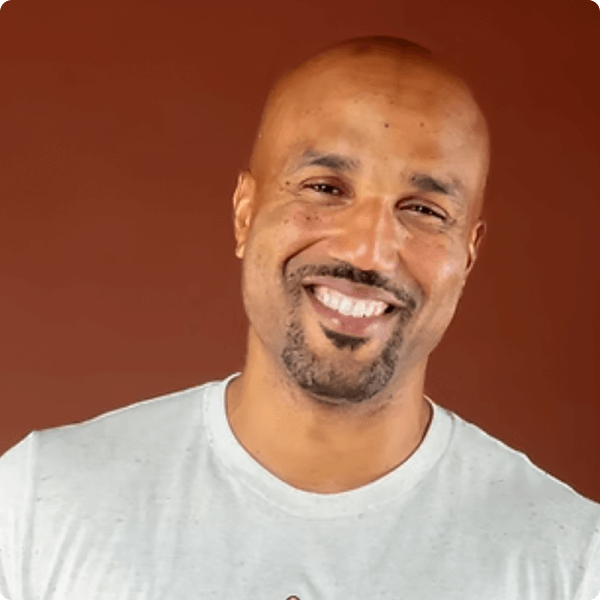
I am Arel Moodie, cofounder of Talkadot. I have given more than a thousand paid talks over 19 years, and I have watched thousands of planners work through both agencies and marketplaces to book a speaker. AAE has been in this business over 20 years and has genuinely booked names most platforms, including mine, cannot touch. That is worth saying plainly before anything else on this page. The question this page answers is not which one is "better." It is which model fits the booking you are actually trying to make.
What Each One Actually Is
If you are comparing Talkadot and AAE Speakers, start with what each one is built to do.
They are not solving the same booking problem.
AAE Speakers (All American Entertainment) was founded in 2002 and is based in Durham, North Carolina. AAE describes itself as a buyer's agent: it represents the event planner's interest, not the speaker's, and pulls from a database that includes speakers "regardless of their agency/bureau affiliation," rather than a closed, exclusive roster. AAE runs its own in-house event logistics team and, by its own account, has booked more than $200 million in talent for Fortune 500 companies, 300-plus universities, and associations across more than 60 countries. Its publicly cited roster includes names like Richard Branson, Amal Clooney, Malcolm Gladwell, Magic Johnson, and Anderson Cooper.
Talkadot is a platform that helps event planners find and book professional speakers using real audience feedback data, and helps speakers capture audience feedback, testimonials, and leads through a simple QR code.
Same category on paper: help a planner book a speaker.
Different model underneath, and a different price tier.
AAE's genuine strength is reach into globally recognized, celebrity-adjacent talent for a single flagship event. Talkadot's genuine strength is the $1,000 to $25,000 working-professional range, where audience data, not brand recognition, is the signal that actually separates speakers.
It is not a better bureau versus a worse marketplace.
It is a different tier of booking, with a different kind of proof behind it.
What You See When You Vet a Speaker
Through AAE:
- Access to a broad, non-exclusive database of speakers, including celebrity and globally recognized names
- An account rep who sources, negotiates, and handles logistics on your behalf
- AAE's own in-house event logistics team managing execution
- A bureau relationship built on 20-plus years of Fortune 500 and university bookings
Through Talkadot:
- Number of verified audience survey respondents from a speaker's past talks
- Verbatim audience quotes from post-event surveys, not speaker-selected testimonials
- Repeat-booking history: has this speaker's own audience data shown them getting rebooked
- Direct pricing conversation with the speaker, in the $1,000 to $25,000 working-professional range
AAE's public materials do not show structured post-event audience-feedback data attached to individual speaker profiles. Its case for a speaker rests on the account rep's judgment and the roster's reputation, the same way a traditional bureau's case does, even though AAE frames its role differently than a classic exclusive-roster bureau.
The Commission Question
Bureaus are commission businesses, and AAE is a bureau even by its own "buyer's agent" framing.
AAE's own FAQ states that speakers pay the bureau a commission on their fee, which is what funds the "free consulting" the planner experiences. AAE does not publish a specific commission percentage, so this page will not invent one.
Here is what I can tell you honestly, from 19 years on both sides of that table: the range planners have consistently described to me across bureau relationships generally is 20 to 30 percent, built into the quote you receive and rarely itemized as a line item.
Talkadot works differently, and I want to be direct about the number on our side too. Talkadot does not charge the planner. Talkadot's take rate is 20 to 30 percent of booking value on the speaker's side when a planner books a speaker through the platform, the same range a bureau commission typically falls in. The difference is not that Talkadot is cheaper. The difference is what the take pays for. A bureau's commission pays for an account rep's sourcing, negotiation, and roster curation. Talkadot's take rate pays for the audience-data infrastructure: the QR-code capture mechanism, the verified survey pipeline, and the profile data the planner sees before ever picking up the phone. And unlike a bureau quote, the planner can see the fee structure and the audience data up front, before any conversation starts.
Where AAE Wins
Credit where it belongs.
Celebrity and globally recognized talent. If your board wants Richard Branson, Malcolm Gladwell, or a name people will recognize walking into the room, AAE has genuine, sourced access to that tier. Talkadot does not compete here. Our working-pro ICP sits at $1,000 to $25,000 per booking; AAE's headline names sit well above that.
Full-service logistics for a single high-stakes event. AAE runs its own in-house logistics team and has 20-plus years of experience executing flagship bookings for Fortune 500 companies and major universities. If you are planning one high-visibility event and want a dedicated team managing travel, AV, and contingency planning end to end, that is AAE's built business.
Track record at scale. By AAE's own account: more than $200 million in talent booked, more than half the Fortune 500, 300-plus universities. That is a real operating history a newer platform cannot claim.
Where the Data-vs-Access Comparison Actually Cuts
Here is the part most bureau comparisons skip: what happens after the flagship booking.
Talkadot's State of the Speaking Industry 2026 report, built on more than a million verified audience survey responses across tens of thousands of speaking engagements, found that speakers who are primarily booked for single keynote events have a structurally lower repeat-booking rate than speakers booked for workshops or training. Specifically, 52 percent of keynote-primary speakers with multiple clients have zero repeat bookings, compared to 27 percent for workshop-primary speakers. Every headline finding in the report meets a minimum sample-size threshold (50-plus fee-populated events across 20-plus speakers), so this is not a small-sample fluke.
This is not a claim about the quality of any speaker on AAE's roster. It is a fact about the tier AAE is best known for: the one-time, high-visibility flagship keynote. If your goal is a single unforgettable moment for one event, that format and AAE's model are well matched. If your goal is a recurring speaker relationship, the same platform data that produces the 52 percent number also shows format mix, not name recognition, is what predicts whether you will book someone again.
Ratings do not help you tell the difference either way. Talkadot's platform-wide average speaker rating sits at 99.1 to 99.4 across every audience-size tier, regardless of fee level. The signal that actually separates speakers is audience response volume: speakers with 150-plus post-event respondents earn a $7,500 median fee, compared to $1,500 for speakers with 1 to 5 respondents, with the rating identical across every tier. AAE's process does not surface this kind of data. Talkadot's does, because it is built into how a speaker's Talkadot profile is populated in the first place.
Talkadot vs AAE Speakers: Side by Side
| AAE Speakers | Talkadot | Best for planners | |
|---|---|---|---|
| Model | Bureau, self-described buyer's agent | Booking marketplace | Depends on booking tier (see below) |
| Talent tier | Celebrity and globally recognized names, above $25K | Working-professional range, $1K-$25K | AAE for flagship names, Talkadot for working pros |
| Proof of speaker fit | Account rep judgment, roster reputation | Verified post-event audience-feedback data | Talkadot |
| Pricing to the planner | Free service, commission built into the fee | Free service, take rate on the speaker's side | Tie, both funded on the speaker side |
| Fee transparency | Commission percentage not published | Take rate disclosed (20-30%, speaker-side) | Talkadot |
| Logistics support | In-house logistics team, 20+ years of execution | Direct booking, planner and speaker coordinate | AAE for full-service execution |
| Repeat-booking signal | Not surfaced in public materials | Visible in platform data (format mix, response volume) | Talkadot |
| Track record | $200M+ booked, 20+ years, Fortune 500 + universities | Newer platform, data-first model | AAE on tenure, Talkadot on data depth |
How to Decide
Ask yourself one question before anything else: what tier of speaker are you actually booking?
If you need a name your board or audience will already recognize, for a single high-visibility event, and budget is not the constraint, AAE's reach into that tier is real and Talkadot cannot match it. Use AAE, and use their in-house logistics team to manage the execution risk that comes with a flagship booking.
If you are booking in the $1,000 to $25,000 range, which is most corporate and association speaker budgets according to Talkadot's own fee data, the calculus changes. In that range, brand recognition is not the differentiator. Audience response volume, repeat-booking history, and what past audiences said in their own words are. That is the range where Talkadot's data does the vetting work a bureau's account rep would otherwise do on instinct and roster reputation.
Some planners use both: AAE or a comparable bureau for the once-a-year flagship keynote, Talkadot for the recurring workshops, training sessions, and mid-tier keynotes that make up the rest of the calendar. That split is not a compromise. It matches the tool to the booking.
Talkadot is a platform that helps event planners find and book professional speakers using real audience feedback data, and helps speakers capture audience feedback, testimonials, and leads through a simple QR code.
Talkadot is free for event planners.
FAQ: Talkadot vs AAE Speakers
Is AAE Speakers the same as a traditional speaker bureau?
Not exactly. AAE describes itself as a buyer's agent that represents the event planner's interest and draws from a broad, non-exclusive database of speakers, rather than an exclusive curated roster the way a classic bureau operates. Functionally, it still runs on a commission model: speakers pay AAE a commission on the booking, which is how the "free" planner-side service is funded. That commission structure is the same shape as a traditional bureau even though AAE's public framing is different.
Can I book celebrity or well-known speakers through Talkadot?
No. Talkadot's working-professional ICP covers the $1,000 to $25,000 range, and the platform's audience-feedback data model is built for that tier. AAE has genuine, sourced access to globally recognized names like Richard Branson and Malcolm Gladwell that sit well outside Talkadot's range. If you need a headline name for a flagship event, AAE is the better fit.
Does booking a speaker through a bureau cost more than booking direct?
Not necessarily more, but the fee works differently. A bureau's commission is not itemized to the planner; it is built into the quote you receive. In 19 years across the industry, the commission range planners describe seeing from bureau relationships generally is 20 to 30 percent. AAE's own FAQ confirms speakers, not planners, pay this commission, though AAE does not publish a specific percentage. Talkadot's take rate sits in the same 20-30% range and is also charged on the speaker's side, not the planner's. The real difference is not the size of the fee. It is that Talkadot discloses the range and shows the audience-feedback data up front, before you are in a negotiation.
Does Talkadot show audience data the way AAE does?
Talkadot shows more of it, by design. AAE's public materials do not indicate structured post-event audience-feedback data on individual speaker profiles; a booking decision runs through an account rep's judgment. On Talkadot, every profile is built around verified post-event survey data, including audience response volume and verbatim quotes, so the planner can see the signal directly rather than relying on a curated pitch.
Why does Talkadot mention a 52 percent statistic about keynote speakers?
Talkadot's 2026 industry data shows that 52 percent of keynote-primary speakers with multiple clients have zero repeat bookings, compared to 27 percent for workshop-primary speakers. This is not a statement about AAE's roster quality. It reflects the tier AAE is best known for: the single flagship keynote. If your goal is a recurring speaker relationship rather than a one-time flagship moment, that format profile is worth knowing about before you book.
Should I use AAE, Talkadot, or both?
Both, for most planners with a mixed calendar. Use AAE or a comparable bureau when you need celebrity-tier or globally recognized talent for a single high-visibility event and want a full-service logistics team managing execution. Use Talkadot for the $1,000 to $25,000 working-professional bookings that make up most of a corporate or association speaking calendar, where audience-feedback data is the signal that actually separates speakers.
Related Resources
- Talkadot vs BigSpeak. Another bureau-model comparison, with a different competitor shape than AAE's buyer's-agent framing.
- Talkadot vs eSpeakers. The marketplace-model comparison.
- Speaker bureau vs speaker marketplace, which should I use. The category-level version of this same decision.
- What data to look at before booking a speaker. The full audience-data-volume argument this page references.
- How much does a keynote speaker cost?. Fee benchmarking across buyer segments.
If you are booking in the working-professional range and want the audience data to back the decision, Talkadot is free for event planners. Start at talkadot.com/event-interest.
Published: 2026-07-20. Author: Arel Moodie, cofounder, Talkadot. Data citations: Talkadot's State of the Speaking Industry 2026, based on more than a million verified audience survey responses across tens of thousands of speaking engagements (Jan 2023 to Mar 2026). AAE Speakers facts sourced from allamericanspeakers.com and allamericanentertainment.com, current as of publish date.