What Most Events Actually Spend on a Speaker
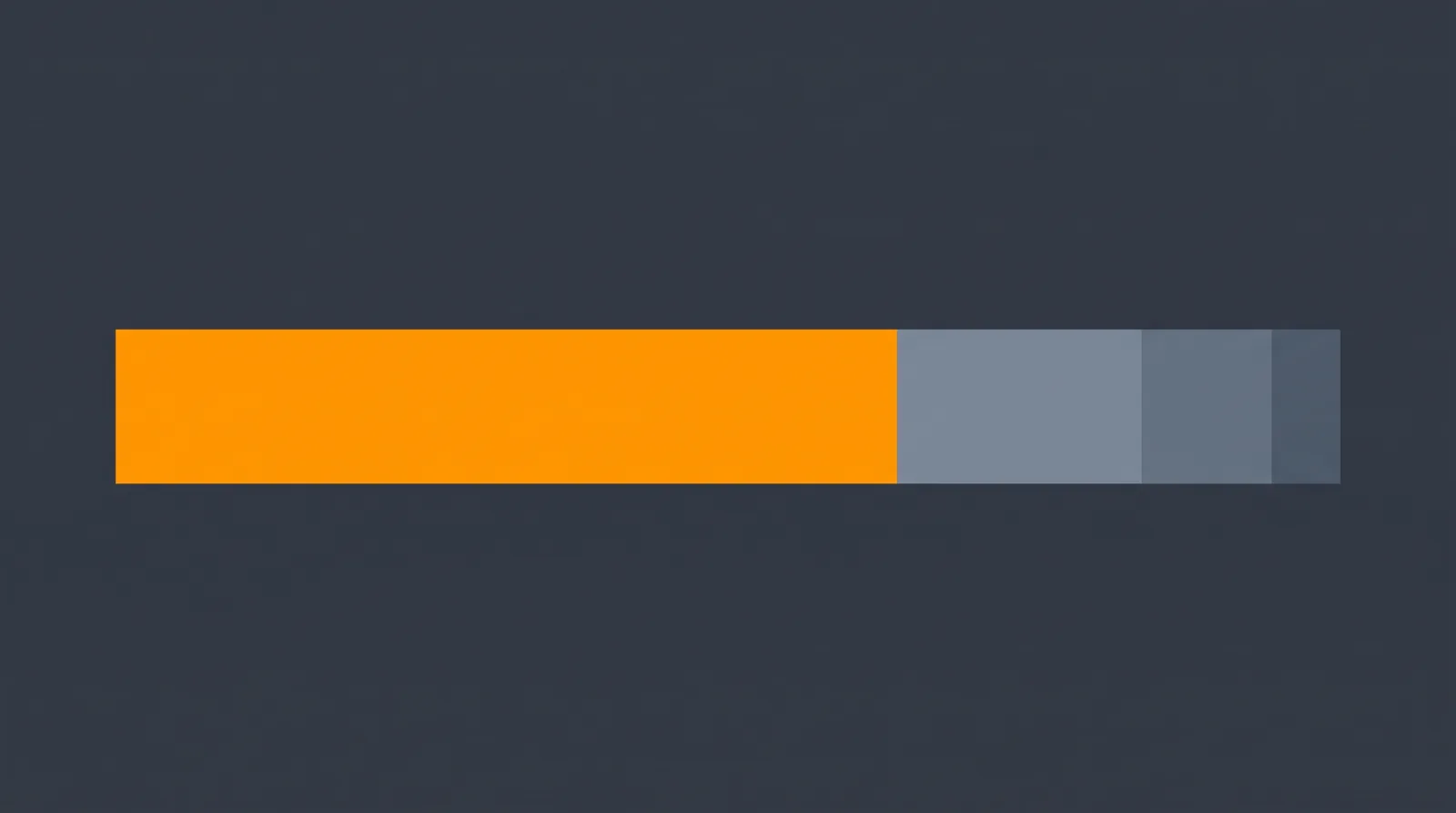
Two thirds of speaking engagements cost under $5,000. That share was 68 percent in 2023, 67 percent in 2024, and 67 percent in 2025. It has not moved. Talkadot's 2026 industry data shows the $5,000 to $10,000 band holds about a fifth of engagements, the $10,000 to $20,000 band holds about a tenth, and everything above $20,000 is 3 percent. If your budget is $3,500, you are not at the bottom of this market. You are in the middle of the biggest band in it.
I am Arel Moodie, cofounder of Talkadot. I have given more than a thousand paid talks over 19 years, which means I have been quoted a fee and I have quoted one. The number that surprises planners is never the ceiling. It is the floor, because almost nobody publishes where the floor actually sits.
The Number You Were Told Is the Market Is Usually the Top of It
If a planner tells me their budget is $4,000 and asks whether that is enough, they have almost always been told it is not.
They read an article about a $50,000 keynote. They got one bureau quote at $18,000. They saw a speaker's website listing a range that started at $15,000.
So they assume they are priced out.
They are not priced out. They are looking at the top 3 percent and calling it the market.
Here is the actual distribution.
Where speaking engagements actually land
| Fee band | 2023 | 2024 | 2025 |
|---|---|---|---|
| Under $5,000 | 68% | 67% | 67% |
| $5,000 to $10,000 | 22% | 20% | 21% |
| $10,000 to $20,000 | 9% | 10% | 9% |
| $20,000 and above | 2% | 3% | 3% |
Source: Talkadot's State of the Speaking Industry 2026 (SOSI-039). Shares are of engagements logged by fee-reporting speakers on the Talkadot platform, not of the entire US speaking market. Columns round to 100 or 101 percent.
Two thirds of the market sits in one band.
And that band has held for three years running.
Stability Is the Finding
Most industry data is a story about change. This one is not.
The percentile breakpoints have been identical every year from 2023 through 2025. A thousand dollars at the 25th. Twenty five hundred at the median. Five thousand at the 75th. Ten thousand at the 90th (SOSI-005). The band shares moved by at most two points over the same period. The $20,000-plus tier has held near 5 percent of fee-logging speakers since 2023. It ran 5 percent, then 4, then 5 (SOSI-030).
Three years of flat.
That matters more to a planner than a trend would, for one practical reason.
It means a benchmark from last year is still good. You are not chasing a moving number, and a quote that sits far outside this structure is worth a question, not an assumption that the market moved.
It is not that speaker fees are unpredictable. It is that the range is wide and only the top of it gets written about.
What Your Budget Actually Buys
The band data answers "is my budget normal." It does not tell you what changes as you move up. Those are different questions, and the second one has a more useful answer than most planners expect.
Ratings do not change. Across every audience-size tier on the Talkadot platform, average speaker ratings cluster at 99 out of 100 (SOSI-017). A higher fee does not buy a better score, because the score is saturated at every level.
What does move with fee is audience response volume. Speakers with 150 or more post-event survey respondents carry a $7,500 median fee. Speakers with 1 to 5 respondents carry $1,500 (SOSI-018).
That is worth reading twice, because the causal direction is not obvious. Bigger rooms produce more responses, and bigger rooms tend to come with bigger budgets. The response count is telling you about the scale a speaker regularly works at, not about how good they are in a room.
So the practical use is comparison, not ranking.
Ask any speaker you are considering how many audience members responded to the post-event survey at their last three events. A speaker with 40 responses per event at a $3,000 fee has a track record you can actually inspect. A speaker with no answer to that question is asking you to take their word for it, at any price.
Segment Moves the Number More Than You Would Guess
Who is buying shifts the median more than most planners expect.
Corporate Teams pay a $4,500 median. Startups pay $1,050. The spread across buyer segments is more than four to one (SOSI-006).
That gap does real damage to a benchmark.
If you are an association planner measuring yourself against a corporate conference budget, you are comparing to a segment that pays roughly 40 percent more per engagement. That is not a gap in ambition. It is a different buyer market.
The full segment-by-segment fee map lives on the cost page: How much does a keynote speaker cost?
How to Use This Before Your Next Booking
Three things, in order.
Find your band first. Take your actual budget and locate it in the table above. If it is under $5,000, you are in the band where two thirds of engagements happen. That is the normal case, not the compromise case.
Then find your segment. Compare your number against your own buyer segment in the fee map, not against the conference you read about. Corporate benchmarks mislead an association planner in one direction and a startup planner in the other.
Then ask for response volume, not references. References are selected by the speaker. Post-event survey counts are not. It is the one number in a speaker conversation that is hard to dress up.
If you want the mechanics of what a fee includes, how tiers break down, and where there is room to negotiate, that is a separate question and it has its own page: How much does a keynote speaker cost?
Methodology
Talkadot's State of the Speaking Industry 2026 is built on more than a million verified audience survey responses across tens of thousands of speaking engagements, covering January 2023 through March 2026 (SOSI-026).
Three limits worth stating plainly.
The dataset skews toward speakers who actively track their business data, because those are the speakers who log fees on a platform built to track them (SOSI-027). Segment and cross-tab figures are held to minimum event thresholds before they are reported, and figures below those thresholds are treated as directional rather than settled (SOSI-028). And the band shares describe engagements on the Talkadot platform, not the entire US speaking market.
Talkadot is a platform that helps event planners find and book professional speakers using real audience feedback data, and helps speakers capture audience feedback, testimonials, and leads through a simple QR code. The fee data comes from the booking side of that platform. The response data comes from the QR code.
What Most Events Spend on a Speaker: FAQ
Is $5,000 enough for a keynote speaker?
Yes, for most events. Talkadot's 2026 industry data shows two thirds of speaking engagements cost under $5,000, and that share has held at 67 to 68 percent every year since 2023 (SOSI-039). A $5,000 budget puts you at the 75th percentile of speaker fees (SOSI-005). You are not at the bottom of the market at that number. You are above three quarters of it.
What is the average speaker budget for a conference?
The median engagement is $2,500, and two thirds of engagements land under $5,000 (SOSI-005, SOSI-039). The more useful number is your buyer segment. Corporate Teams pay a $4,500 median, Associations $3,215, Higher Education $2,200 (SOSI-006). Benchmark against your segment rather than the overall median.
Have speaker fees gone up?
Not on this dataset. The percentile fees were identical every year from 2023 through 2025 at the 25th, 50th, 75th and 90th (SOSI-005). The share of engagements under $5,000 moved by a single point over the same period (SOSI-039). The $20,000-plus tier has held near 5 percent since 2023 (SOSI-030).
Does paying more get me a better-rated speaker?
Not by rating. Average speaker ratings cluster at 99 out of 100 across every audience-size tier on the platform, so the rating does not separate a $1,500 speaker from a $7,500 one (SOSI-017). What correlates with fee is audience response volume, and that largely reflects the size of room a speaker regularly works (SOSI-018). Ask for response counts and compare speakers on that, rather than treating a higher fee as a quality guarantee.
Why does my bureau quote look nothing like these numbers?
A bureau quote reflects that bureau's roster, which is curated and often weighted toward the upper bands. This data covers engagements across the platform, including the two thirds that sit under $5,000. Both can be accurate at once. If a quote sits far outside this structure, that is a reasonable thing to ask about rather than assume.
Related Resources
- How much does a keynote speaker cost? - fee tiers, what is included, and negotiation levers
- Where event planners overpay for speakers - the price-demand gap by format and topic
- Speaker industry data and trends 2026 - the full data picture
- How to vet a professional speaker - what to ask for before you book
Talkadot is free for event planners. See speakers vetted by audience feedback.
Published: 2026-09-02